








The FAA is fast-forwarding the American air traffic control system into the 21st century as it begins a massive modernization program to replace legacy computer systems so old that they depend on 3.5-in floppy disks and vintage programming to operate.
If you've ever flown over US territory, the only way to lean back in your seat and be really comfortable is to remain blissfully ignorant of how obsolete the air traffic control system is that keeps your flight safe and on time. America is one of the busiest airspaces in the world, yet the traffic control technology dates back to the 1980s and even before.
The urgency of bringing that technology up to date was thrown into sharp relief on November 13, when commercial flight departures across the US were temporarily grounded. The FAA attributed the disruption to new equipment overwhelming aging analog communications infrastructure – a stark demonstration of the difficulties of introducing 21st-century technology into systems designed decades ago.
Part of the reason is that the US is hostage to one of those paradoxes of history. By being one of the great pioneers in aircraft and getting them from A to B without having to rely solely on compass bearings or following roads and rivers, America not only developed one of the world's first and most advanced air traffic control systems, but it got stuck with some very out-of-date systems.
It's a bit like what happened in Britain with the railways. The British invented the railway and had the most advanced system in the world. Unfortunately, that means that today the country has to deal with engineering works built during the reign of Queen Victoria that would be insanely expensive to replace. The same goes for European telephone systems that are the devil to modernise, while African regions that never had telephones in the first place can have state-of-the-art satellite systems from day one.
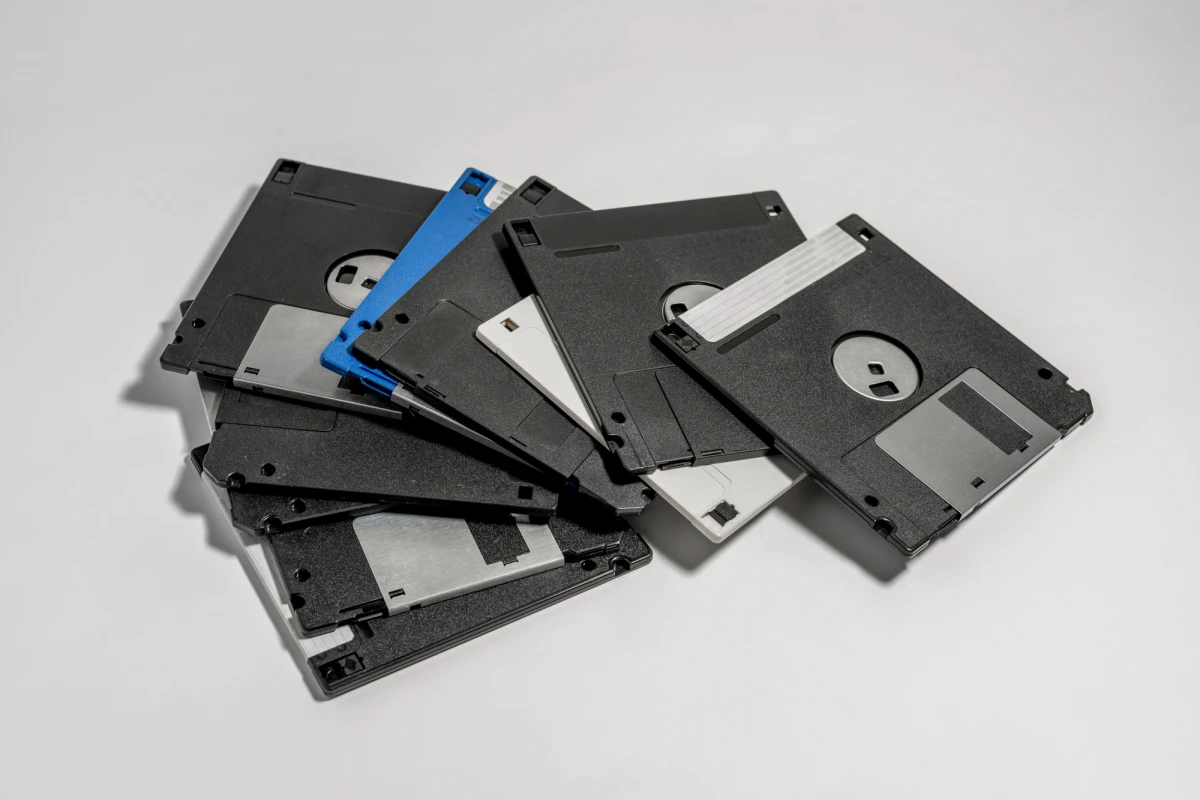
In the case of the US FAA, air traffic control depends on four vintage systems that provide real-time weather reporting, restricted airspace information, system configurations and other vital data that's all stored on 3.5-in magnetic floppy disks.
For those of you who are not as old as I am and can't recall the futuristic thrill of punch cards and paper tape memories, a "micro-floppy," as it's called, is a flexible vinyl disk impregnated with magnetic recording material and housed in a rigid plastic shell with a spring-loaded metal shutter. This miracle of technology can store between 720 KB and 1.44 MB of data, or the equivalent of 90 seconds of music or a very tiny image.
Today, it's best known as how you explain to children why a Save icon on the computer looks the way it does.
Along with the disks, the traffic control system runs on some very old programming languages, including Ada, Fortran, and baseline C. And yes, I learned how to write in them while listening to presentations on that new wonder metal called "bronze."
The upshot of all this is that the American system runs on a lot of very old tech whose manuals have yellowed with age. This is causing all sorts of problems, as you can imagine. Floppy disks degrade badly after about 15 years, and the hardware uses lots of mechanical parts and primitive electronics that need replacing with increasing frequency. This becomes more difficult over the years as parts become scarcer – especially now that Radio Shack is one with Nineveh and Tyre.
It also means that the system runs much slower than modern versions; it has very limited capacity, and moving data from one part to the other is often a tedious manual operation involving moving disks around and using paper flight strips.
Ironically, one advantage is that the old system is nearly impervious to cyberattack because it's incompatible with full internet access.
Now, the FAA is replacing the old systems across 435 sites by the end of 2028 with a new platform called the Enterprise – Information Display System (E-IDS). It consolidates real-time weather and operational data into a single, secure, glass-cockpit-style display for controllers. Manual data transfers are being phased out in favor of digital data streams, IP voice switches, and fiber-optic lines – replacing the agency's aging copper telecom wiring – alongside a separate AI-assisted platform called Strategic Management of Airspace, Routes and Trajectories (SMART) that analyzes flight and weather data to predict airspace congestion before delays cascade.
"E-IDS gives air traffic controllers the information they need to make timely decisions and keep the flying public safe," said FAA Administrator Bryan Bedford. "We’re moving away from outdated, manual processes and replacing technology that once relied on floppy disks with a modern system that allows controllers to instantly share critical flight alerts, restricted airspace schedules and pilot reports across the National Airspace System."
Oh, and to put this into perspective, the US ICBM system is also being upgraded. Until 2019, the US ICBM system ran on 8-inch floppies dating back to the 1960s.
Source: FAA


