
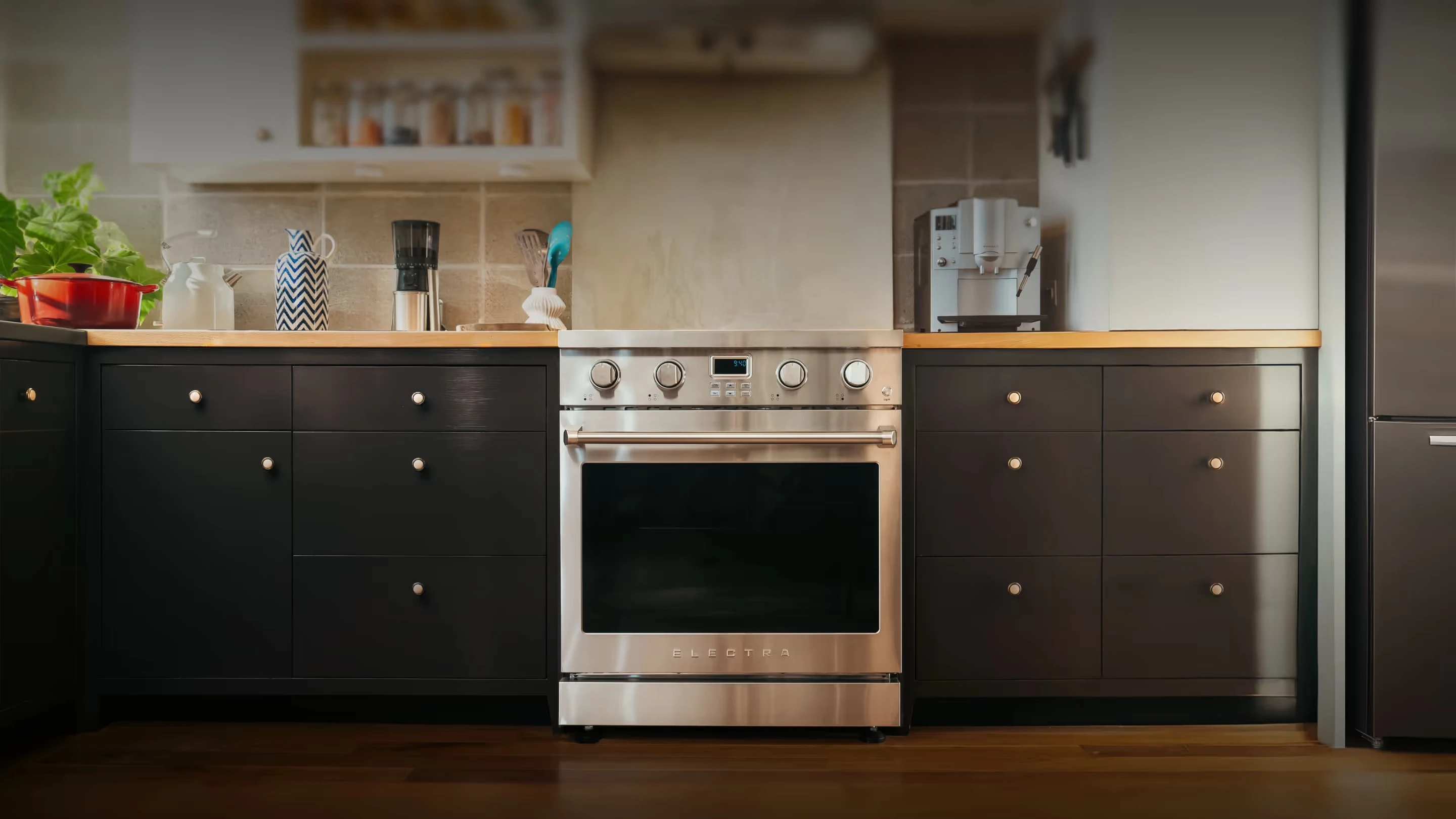

Battery-driven induction is starting to look like the next wave in cooking, with its superior performance potential and its compatibility with standard home wiring. It’s also got all the general advantages of induction over traditional electric and gas stoves, such as more precision, better efficiency, lower fire-risk, and the avoiding of unhealthy gas seepage.
It's a new concept, however, with the first such cooker to hit the market, Copper’s Charlie, becoming available across the US only in August. And our piece on the Charlie raised a few eyebrows not only for the stove’s novelty but also for its US$6,000 price tag.
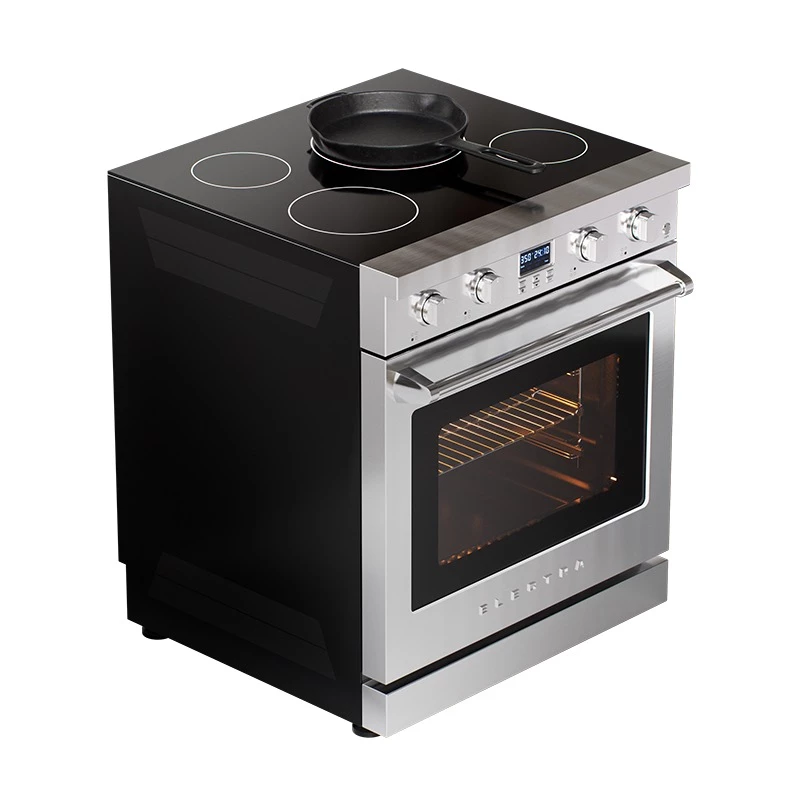
So it’s good to see a competitor putting a stove on pre-order that offers much of what the Charlie brings for two thirds of that. The Electra, from New York City-based startup Electra Research, is a four-element range with induction cooking on top and a fan-forced convection oven beneath, all supplied directly from a 5-kWh lithium-iron-phosphate (LFP) battery that charges from a standard domestic power socket.
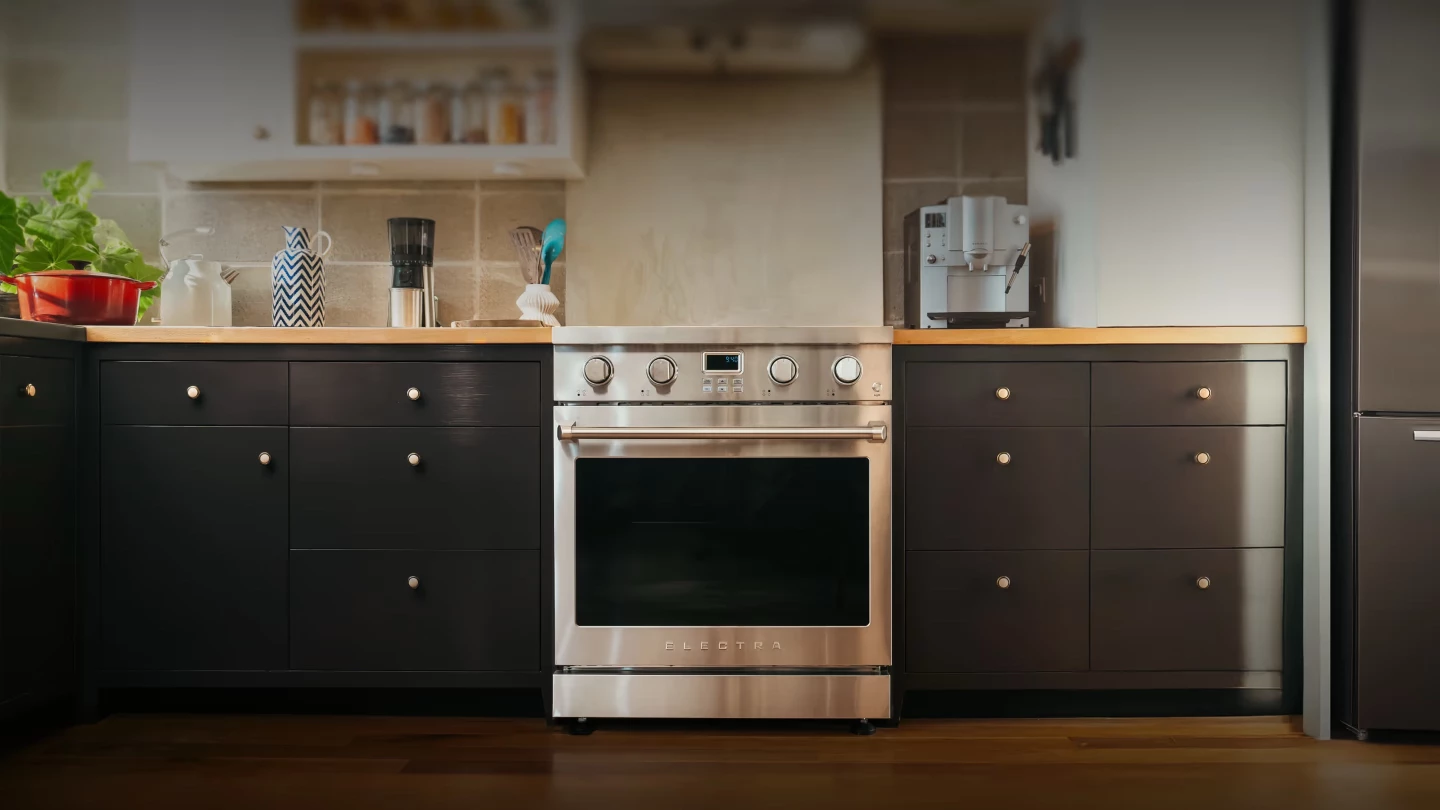
At $4,000 the Electra is still an expensive stove when lined up against direct-mains-cabled induction competitors. But its interposing of the battery between your household electricity supply and its current-hungry elements allows you to install it without a home-wiring upgrade that otherwise might be required, and that could get expensive. Or might not be achievable – for an individual owner of an apartment, for example.
The battery also lets engineers design the stove to draw more current than even a wiring upgrade might allow, which can bring results such as short warm-up times for the oven and simultaneous use of high power on all four induction hobs.
The Electra’s software can connect to your Wi-Fi network so that the battery can be set to charge at off-peak times, when electricity is usually cheaper. And the battery can power the stove alone during an outage: Electra Research estimates that, from a full charge, it could boil enough water to make pasta for 48 people, so in an emergency it should easily cover a candle-lit dinner party for 10.
Electra points out that adding battery capacity at home allows electricity suppliers to rely more on renewable sources. That’s from the spreading out of power demands over 24 hours: the battery, rather than the electricity grid, handles peaks in demand, such as when everyone fires up their stoves to cook dinner. The batteries can then recharge at times of lower demand, or when solar and wind generators are most productive.
The company says it will be getting the Electra to US customers from February 2026, with shipping a flat $250 on top of the price.
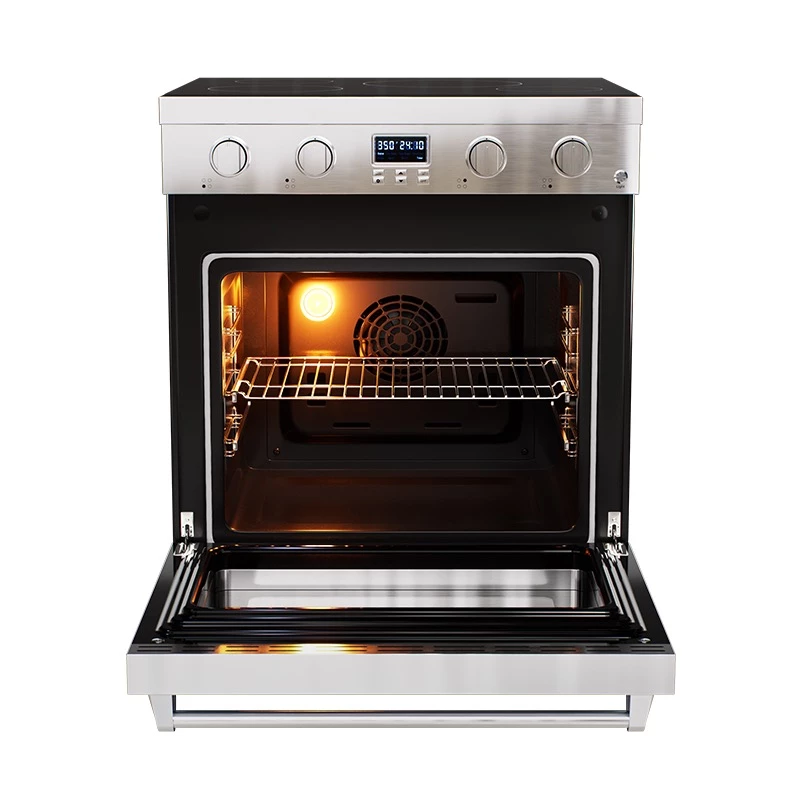
It’s taken a different approach from Copper’s to the cooktop’s specification, providing hobs in multiple sizes and with lower maximum power outputs. The stovetop is a standard 30 in (76 cm) wide, and supports 10-in (25-cm), 7-in (18 cm), and two 6-in (15-cm) elements, with power outputs of 1.8 kW each for the larger two and 900 W each for the smaller. That’s significantly less heating capacity than is offered by the Charlie, with its four 8-in (20-cm) elements that each supply 2.8 kW.
That’s not necessarily a bad thing, even if it does mean you’ll be waiting longer to heat big pots of water and you can’t heat four of them quickly at once. After all, typically we’re heating one big pot or using one big pan at high-heat at a time, with the rest of a cooktop devoted to less power-hungry tasks. The lower-powered elements may also offer smaller steps between power settings (although that will depend on how many settings they have: the Charlie’s have 21). Happily, the Electra mirrors the Charlie in using knobs rather than a touchscreen for power control.
The induction cooktops I’ve used have been closer to the Electra than the Charlie in layout, and I’ve been very impressed with their speed and precision. Nevertheless, I’ll hazard a guess that the Charlie offers a more versatile and sophisticated cooking experience than the Electra.
When it comes to the oven any differences are less obvious, with the Electra housing 1.8-kW upper and lower radiant elements. A 1.3-kW third element in the rear wall is said to facilitate air-frying, heating air that’s fanned through it.
Again like the Charlie, the battery’s charging rate is variable in case you want to run a second high-current appliance simultaneously on the same circuit.
Overall then, we’ve now seen three battery-supplied induction stove designs coming on the market, and arguably each serves different customer needs. For those interested in exploring the performance available from the technology, there is the Impulse cooktop with its four 10-kW hobs – but it's priced at $6,000-$7,000 for the cooktop alone, and is not necessarily space-compatible with your existing under-bench oven.
For people looking to install a battery-driven induction range with performance that parallels high-power direct-mains designs, there’s the Charlie. Others less focused on maximizing performance and more on the health, safety and efficiency benefits of induction cooking might find the Electra meets their needs and at a friendlier price-point.
For the rest of us, there’s the wait-and-see option. There’s a lot going on for people who find pleasure in preparing great meals.
Product page: Electra Induction Stove