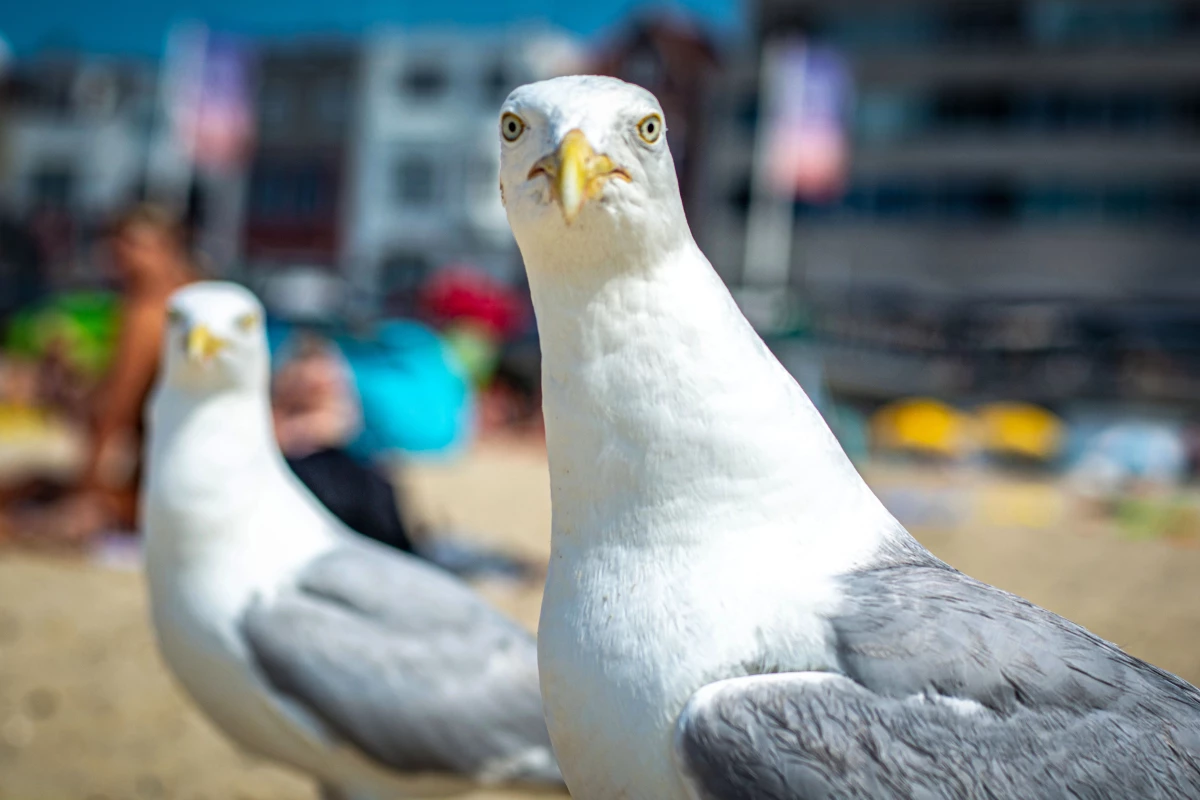



You won't find us endorsing aggression towards animals very often, however, scientists have discovered that raising your voice to seagulls – especially if you're male – will make them think twice about stealing your food. It's simply science.
University of Exeter researchers, who sound like they've had some battles with seagulls in their time, have found a way to deter the shorebirds from invading your space. And while it may not win you any friends at the beach or in the park, it won't prompt calls to animal welfare from bystanders.
Looking for the best way to deter opportunistic herring gulls (Larus argentatus), the researchers placed a container of fries on the ground to entice the birds, which triggered a series of voice recordings that varied in tone and volume. When an inquisitive gull approached, the audio recording of a male voice stating “No, stay away, that’s my food" was played – either in a neutral spoken tone or with a more aggressive delivery. A third recording, this time the sound of a robin, was also tested.
Overall, 61 gulls in nine seaside towns took part in the experiment, and one stimulus clearly made them take flight within seconds: Shouting. Speaking in a normal voice made gulls more cautious and less likely to approach the food, but only a small number actually flew away – most simply hesitated or walked off.
Robin song, used as the neutral baseline, had virtually no effect at all. According to the University of Exeter, most gulls stayed beside the food throughout the robin playback, showing no signs of alarm.
“We found that urban gulls were more vigilant and pecked less at the food container when we played them a male voice, whether it was speaking or shouting,” said Dr Neeltje Boogert from the Centre for Ecology and Conservation at the University of Exeter. “But the difference was that the gulls were more likely to fly away at the shouting and more likely to walk away at the speaking.
“So when trying to scare off a gull that’s trying to steal your food, talking might stop them in their tracks but shouting is more effective at making them fly away," the researcher added.
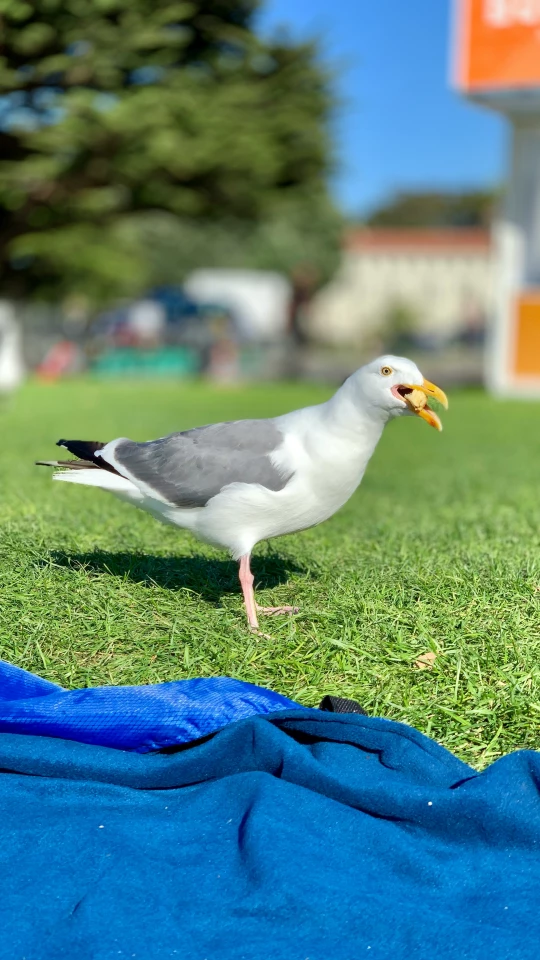
The recordings – volunteered by five participants – also had a consistent impact despite varied voices, leading the researchers to believe that it's not what's said but how the message is delivered that makes the difference. It suggests that the gulls can perceive, and react to, the acoustic properties in our voices.
“Normally when someone is shouting, it’s scary because it’s a loud noise, but in this case all the noises were the same volume, and it was just the way the words were being said that was different,” said Boogert. “So it seems that gulls pay attention to the way we say things, which we don’t think has been seen before in any wild species, only in those domesticated species that have been bred around humans for generations, such as dogs, pigs and horses.”
Seagulls – and many urban birds, such as pigeons – are vulnerable to mistreatment from the humans they share their habitat with, which the researchers also want to bring attention to. Ultimately, you don't need to chase birds or throw objects at them to get them to back off – just tell them, loudly, how you feel.
“Most gulls aren’t bold enough to steal food from a person, I think they’ve become quite vilified,” said Boogert. “What we don’t want is people injuring them. They are a species of conservation concern, and this experiment shows there are peaceful ways to deter them that don’t involve physical contact.”
This may not be the most robust experimentation – it doesn't take into consideration the physical presence of humans surrounding the food target, for one, nor do we know if the chastising had a lasting impact on behavior – but it may help you fend off these lunchtime invaders without causing harm to anyone involved.
And it's not the first time scientists have tackled this interspecies battle – with researchers also finding that "staring down" a gull will make them think twice about snatching a snack.
The research was published in the journal Biology Letters.
Source: University of Exeter