


The most egg-shaped of all the egg campers, the British-developed Barefoot Caravan has been wowing camper fanatics with its shapely fiberglass since launching over a decade ago. Despite its compact, curvy size, it also boasts a 6.1-ft-peak (1.9-m) cabin with a private bath and convertible dinette. As with other RVs, though, Barefoot pricing has risen steadily and is now close to double what it was 11 years ago. Happily, Barefoot has developed the new Bothy model to roll pricing back in time while simplifying the layout into a lighter, more spacious offering. It's a compelling entry point to the egg-camping experience.
Molded fiberglass trailers are really having their moment. Dating back to the 1960s, they're far from new but have long been relegated to something of a niche market, being more expensive and limited in size in comparison to mass-market trailers. While they're definitely known for superior construction and long-lasting durability approaching heirloom levels, most RV buyers are content to give up some quality for a lower-priced product.
But we've seen a rather quick succession of molded fiberglass trailers hit the market in the past few months alone. Most recently, it was the dual-axle Awaken Morningstar, and in the weeks preceding that, we saw a pair of small egg campers in the all-terrain-prepped Scamp X and downsized Escape 13. And a couple weeks before those two wheeled eggs launched, Barefoot was presenting the all-new Bothy at the Motorhome & Caravan Show in Birmingham, UK.
We understand why folks have long plunked trailers like the Scamp and Escape into the "egg camper" carton, but they really only loosely resemble actual eggs. The curves of the Barefoot camper, on the other hand, recreate those of an actual egg more faithfully than any other egg camper we've seen, including the one that wore the name EggCamper. More specifically, the Barefoot looks like an egg placed on its side, complete with a wide base at the rear and narrow peak at the front.

The curves hit the eye just right, but the price is another story. To be quite honest, small camper pricing has risen so steadily over the past decade, we can't even recall if we were offended, pleasantly surprised or neutral when we reported on the Barefoot's original £21,950 (approx. US$29,625) base price. What we do know, though, is that price looks like an absolute steal in 2026, when that same model, now called the Barefoot Classic, starts at £39,950 ($53,925). And while Barefoot does offer a "Lite" model for £5,000 less, its other models only drive base price up and over £40K.
Barefoot itself must have realized that its pricing had climbed to a level that left potential buyers out in the cold, and it put together the new Bothy as a viable solution. The simplified, lightweight model doesn't roll pricing right back to 2015 level, but it does pull it quite close to yesteryear's sticker with a £25,500 ($34,425) starting point.
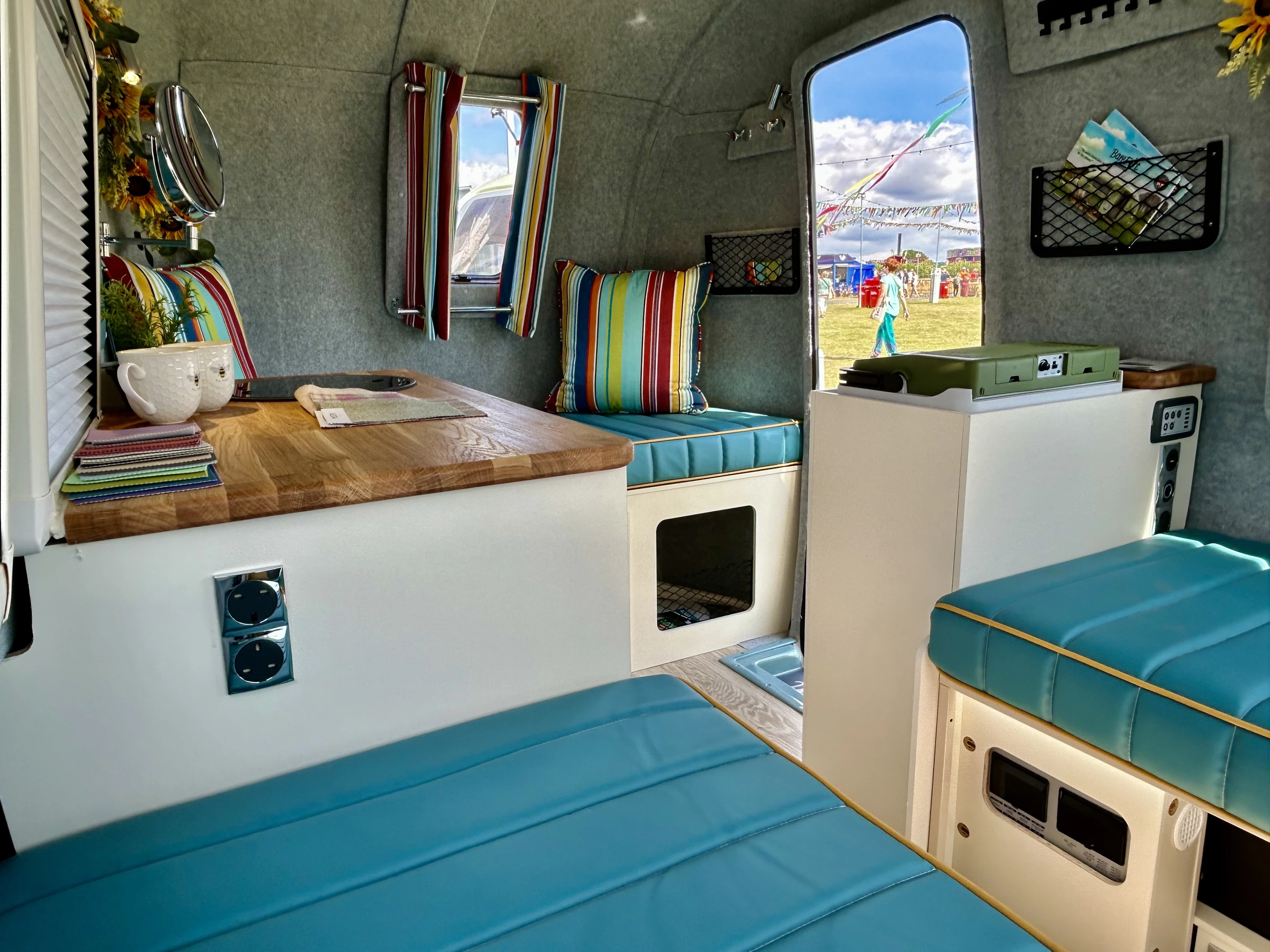
So what do you lose to achieve that big price drop? The dedicated bathroom is the first and most notable feature to go, and while we generally hate to see the bathroom deleted, Barefoot does mitigate the loss by including a Thetford portable toilet. Also, the Barefoot's slim, cramped wet bath compartment never looked like the most comfortable to use, so opening up that space might ultimately improve life on the road. For instance, the highest point in the trailer roof is at the rear over the deleted bathroom, so the Bothy has a slightly higher interior peak of 6.3 feet (1.9 m).
Bothy campers can always set up a cheap pop-up privacy tent outside the trailer for the portable toilet and perhaps a shower system and can then fully enjoy a more spacious, comfortable room-on-the-road for three seasons' worth of camping.
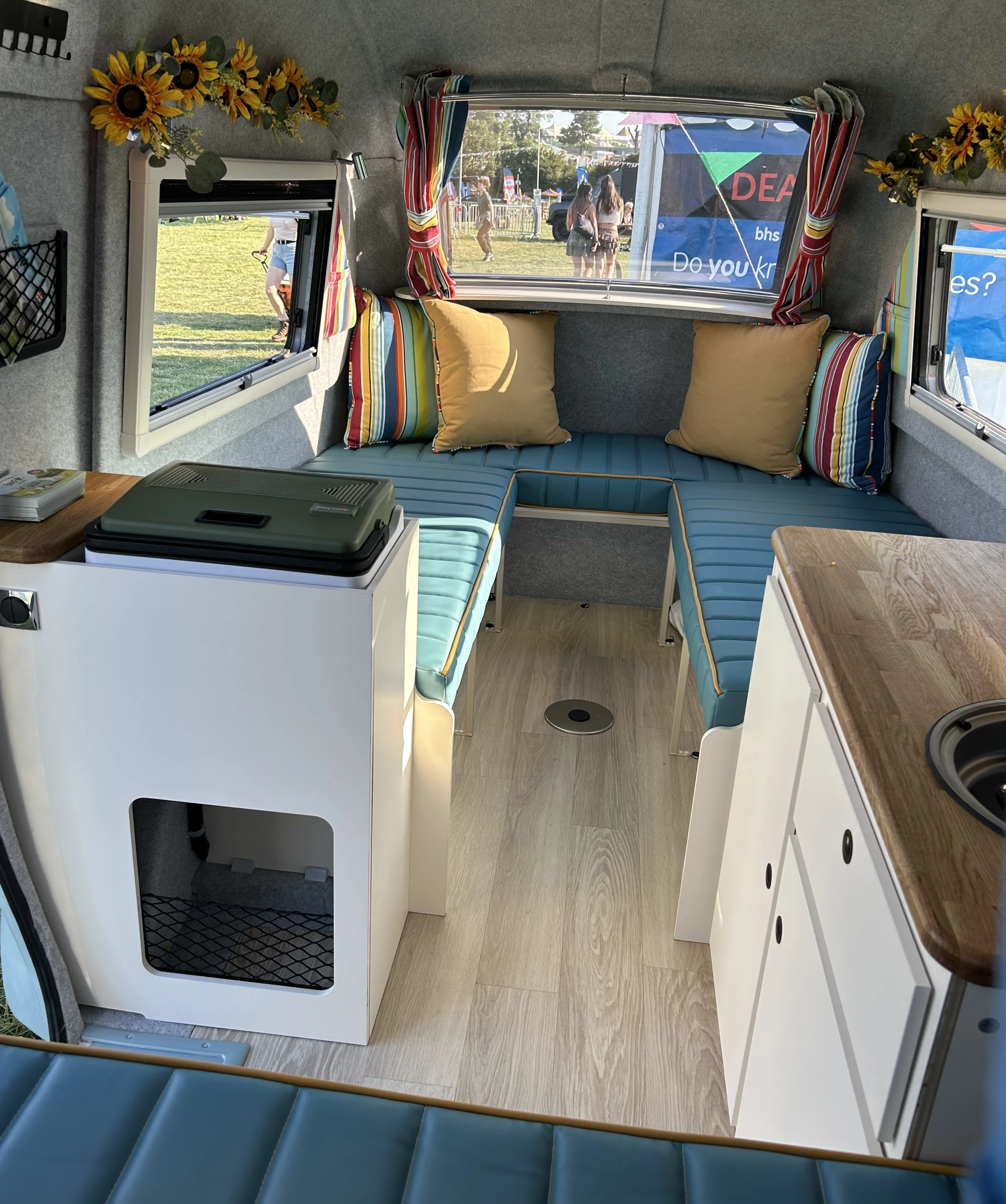
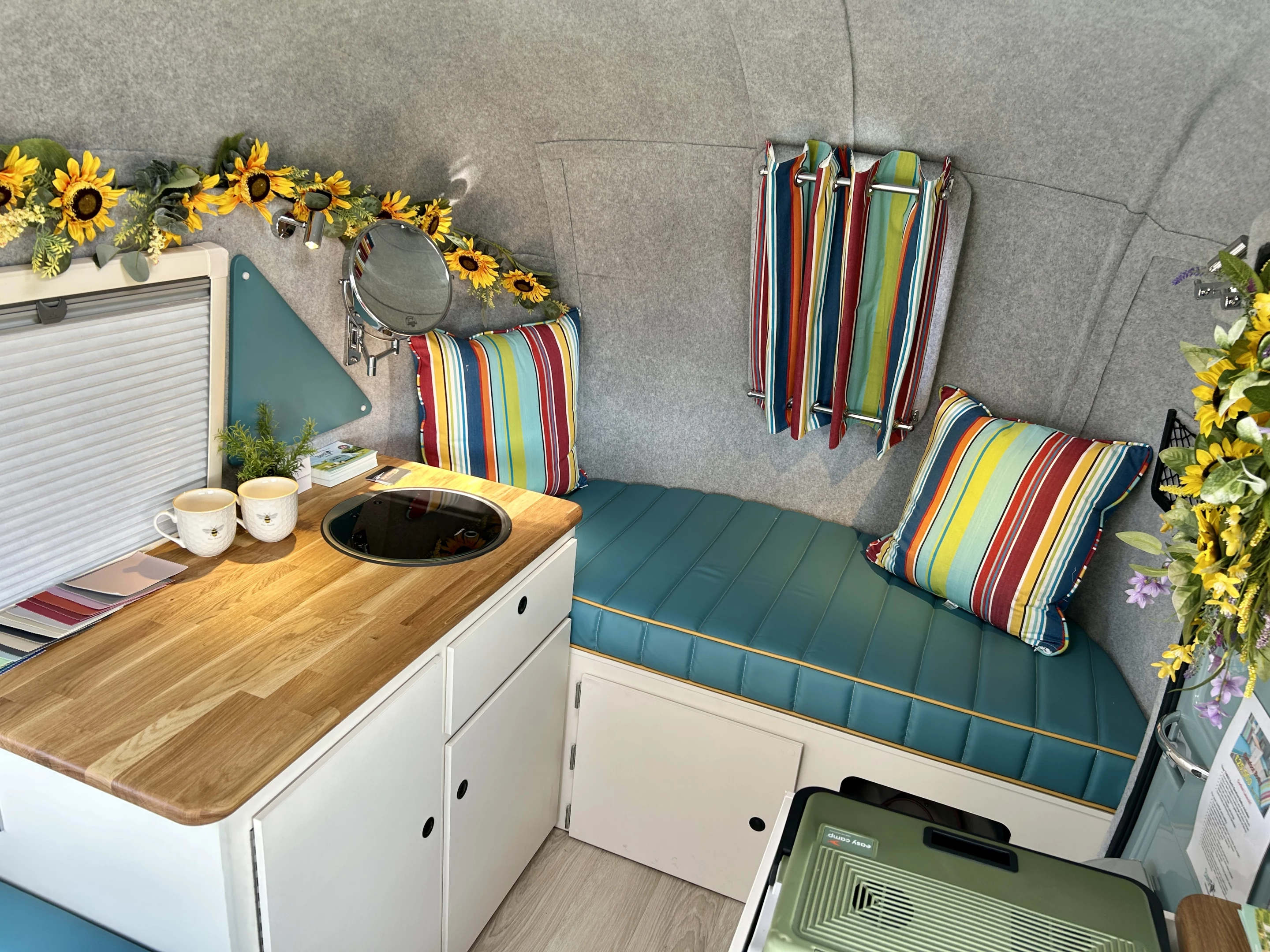
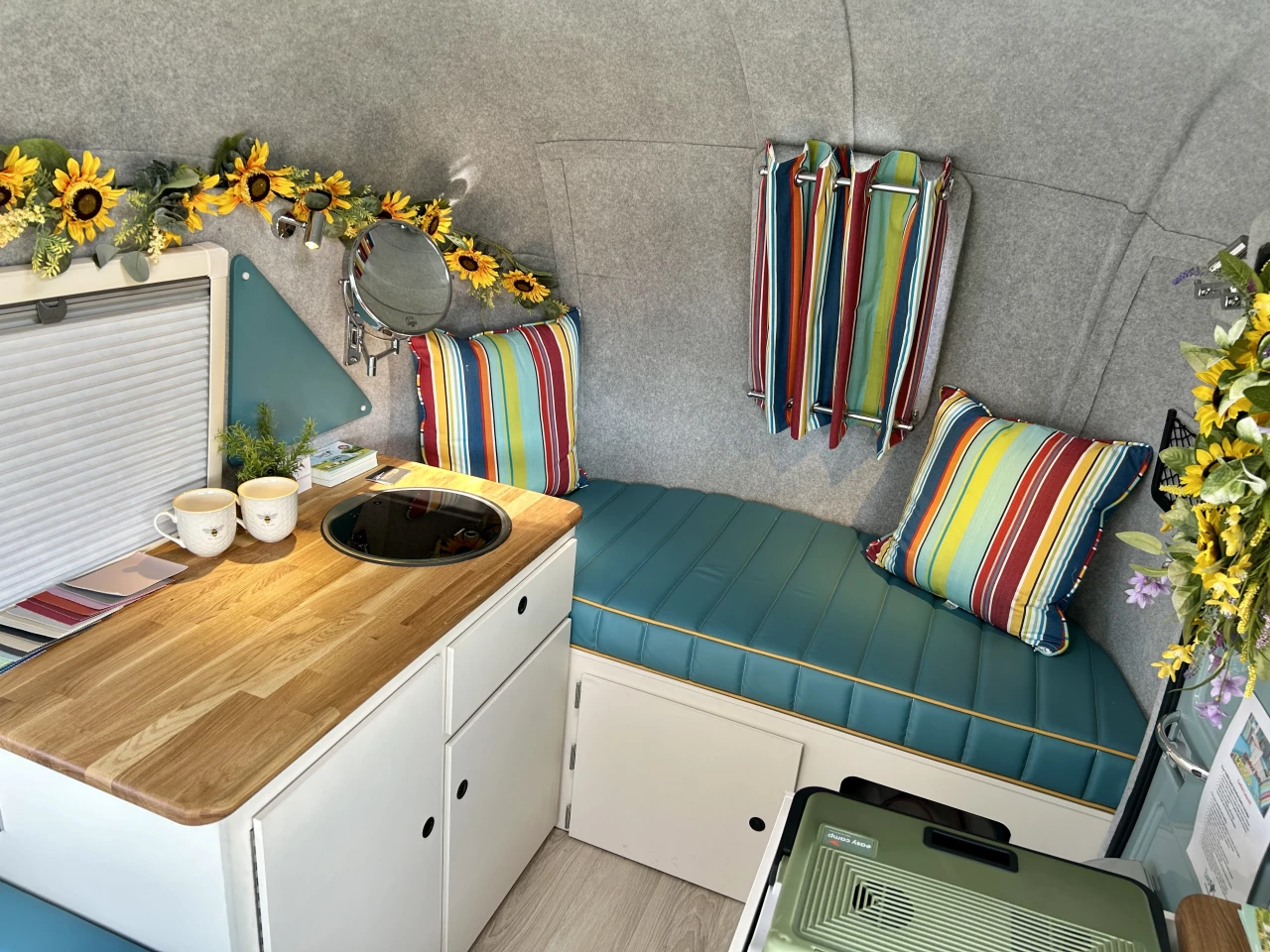
Barefoot fills out the space left by the bathroom's removal with a new cushioned bench that boosts the Bothy's sleeping capacity to three berths, versus the Classic's two. At 69 x 28 in (176 x 71-cm), that bed will be best-suited to a child and definitely a bit small for an adult man of average height or more.
Barefoot also simplifies the kitchen, deleting the dual-burner stove to shorten the main block, which now houses just the Dometic bowl sink piped to fresh and waste water tanks, an open worktop, and under-counter drawers and cabinets. The company pulls out the under-counter door fridge from the Classic and replaces it with a smaller 24-L top-loading electric cool box on the block across the aisle.
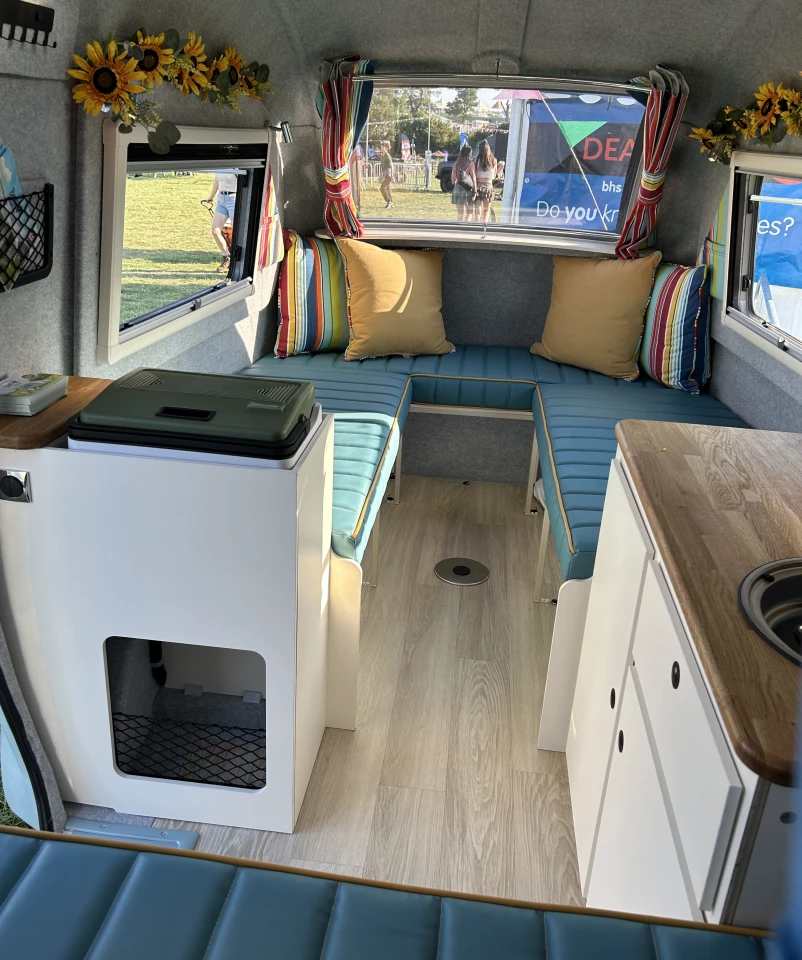
The front of the trailer houses the wraparound sofa dinette just inside the large picture window. The removable table stows away at night to clear space for accessing the two individual 75 x 28-in (191 x 71-cm) single beds. The two beds can also be adjoined into a single double bed with an optional kit.

The Bothy still includes a 110-Ah leisure battery with control panel and shore power hookup. It does not, however, have the standard Truma Combi air/water heater, interior LED lighting, retro digital Bluetooth radio/speaker, or wine rack packaged in the Classic.
Construction-wise, that baby-blue eggshell is the same fiberglass monocoque as used for the Classic and other models, backed by a 10-year warranty. The specific exterior dimensions check in at 16.7 x 6.3 x 7.7 feet (508 x 192 x 236 cm, L x W x H), but the lightened amenity set drops weight by over 550 lb (250 kg) compared to the Classic, giving the Bothy a base weight of 1,556 lb (706 kg) before any optional add-ons.
Barefoot offers the Bothy atop a chassis prepped to handle either a 1,653- or 1,874-lb (750- or 850-kg) maximum weight, giving buyers a choice as to how much weight in cargo they can carry. A payload of less than 100 lb (45 kg) seems quite slim for a caravan so we'd definitely be opting for the 1,874-lb option.
All in all, the Bothy seems like a great little Barefoot variant in line with the relatively recent surge in pared-down, entry-level additions we've seen from small trailer builders around the US and beyond. Barefoot's biggest selling point has always been that fiberglass shell, both because of its unique aesthetic and its robust single-piece construction. Having a more open floor plan with a lighter tow weight makes a lot of sense, especially at nearly £15K less.
Sadly, though the Bothy has proven quite popular in the UK since launching last autumn, there are no immediate plans to bring it to the United States, where NuCamp serves as the exclusive manufacturer and distributor of the US-spec Barefoot trailer. Hopefully, the Bothy will make it over eventually.
Source: Barefoot Caravans