Hepatitis C is a tiny virus with a significant impact. It's a small RNA virus that spreads through the blood and infects the liver. Even though today's medicines can cure it, hepatitis C remains a major global health challenge. Around 50 million people worldwide live with this infection, and every year, about 242,000 people die, mostly because long‑term infection can scar the liver or lead to liver cancer.
Right now, there's only one quick, FDA‑approved test for detecting the hepatitis C virus (HCV). But there's a catch: if the result is negative, the machine can take up to an hour to confirm it. That's longer than most routine visits at a doctor's office or at substance‑use treatment centers, where people often can't wait around. Because the final confirmatory test has to be done in a lab, many people never make it through the full process. That delay keeps them from starting treatment quickly, especially those who already face hurdles getting care.
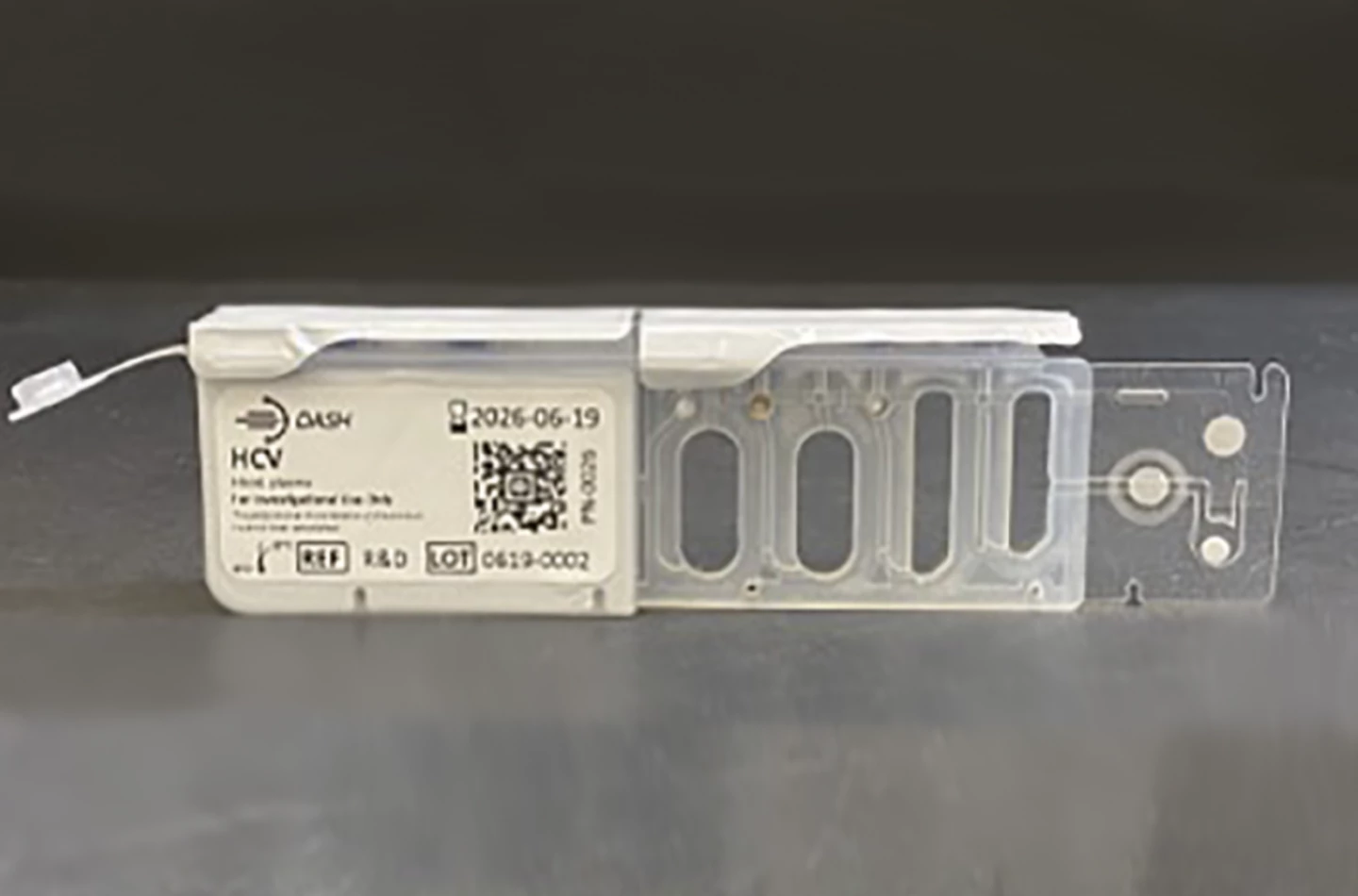
Scientists at Northwestern University have now developed a new rapid test for hepatitis C. It is easy to use, highly sensitive, and made for point-of-care places like clinics, community centers, and outreach programs. The test gives results in just 15 minutes, which is up to 75% faster than other rapid HCV molecular tests. That speed is not only convenient, it changes the game. Clinicians can diagnose and start treatment in the same visit.
"We were able to develop a diagnostic test that can be performed at the point of care during a patient's clinical visit, which could enable same-day diagnosis and treatment in support of HCV elimination efforts," explained corresponding author Sally McFall.
Testing for hepatitis C usually involves two steps. First, a test checks for antibodies, signs that someone has ever been exposed to the virus. Second, a molecular test looks for the virus itself (HCV RNA or a core antigen) to confirm whether the infection is still active.
That first test for hepatitis C can be done right in the clinic, but the second confirmatory test usually has to be sent to a central lab. In low-resource settings, where molecular testing is expensive and limited, this gap is even more pronounced, making fast, on-site molecular testing especially important.
The new test’s high analytical sensitivity translated into strong real-world performance. In an independent study at Johns Hopkins University, researchers tested 97 HCV-positive samples and 20 HCV-negative samples. The results matched standard laboratory tests perfectly.
The test is sensitive and accurate enough to detect all six major hepatitis C genotypes and can be performed on both whole blood and plasma samples.
Claudia Hawkins, a co-author on the new research, says the real world implications of such a short turnaround on test results could be massive.
"By reducing delays and simplifying testing pathways, it has the potential to save millions of lives from the devastating liver-related complications of untreated HCV," Hawkins said.
The research is published in The Journal of Infectious Diseases.
Source: Northwestern University