In the South China Sea, near the Paracel Islands, the aqua-colored waters of an expansive shallow reef platform suddenly gives way to a near vertical shaft of vast darkness – an ocean sinkhole almost entirely devoid of oxygen and, in turn, marine life as we know it.
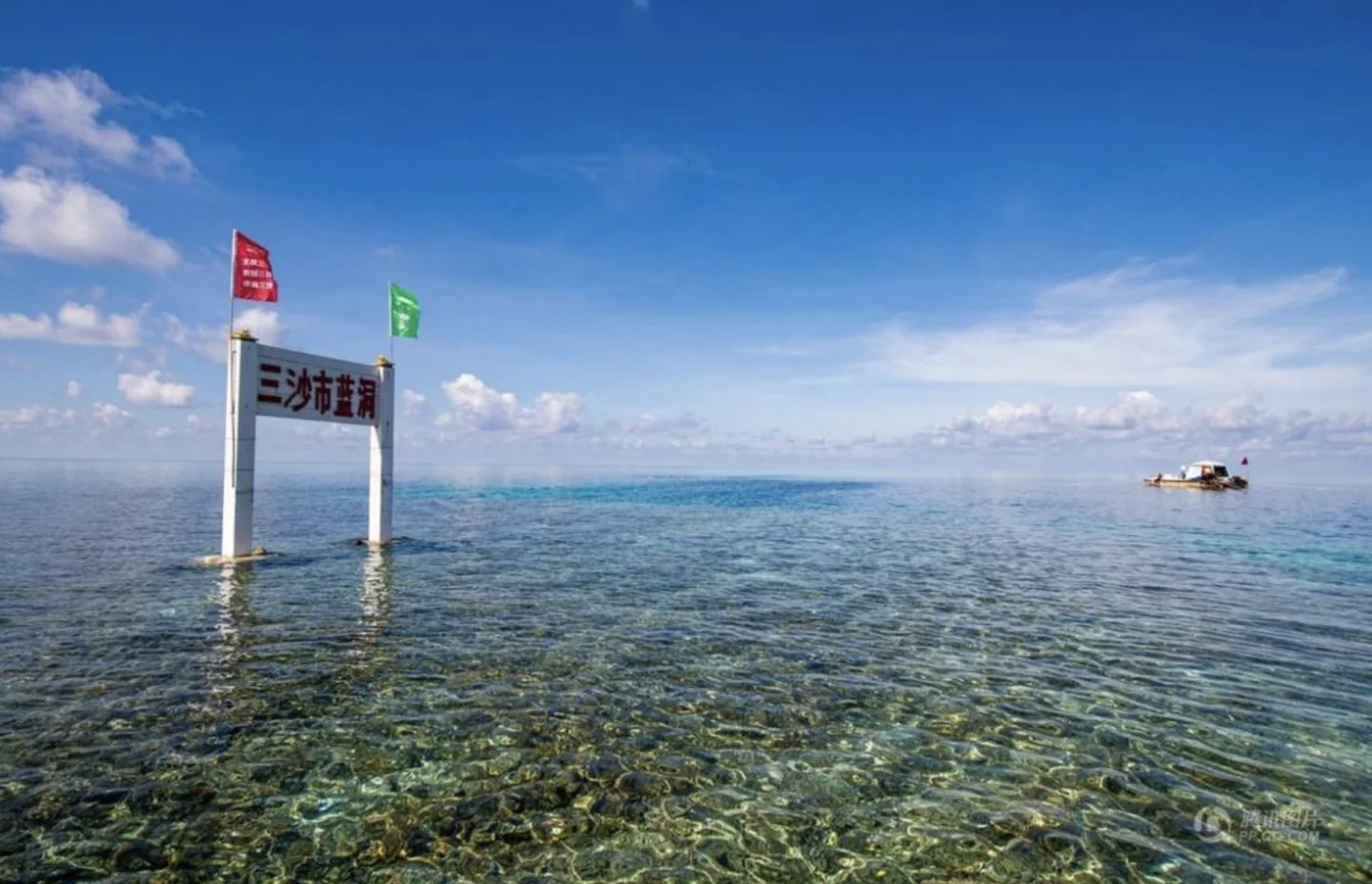
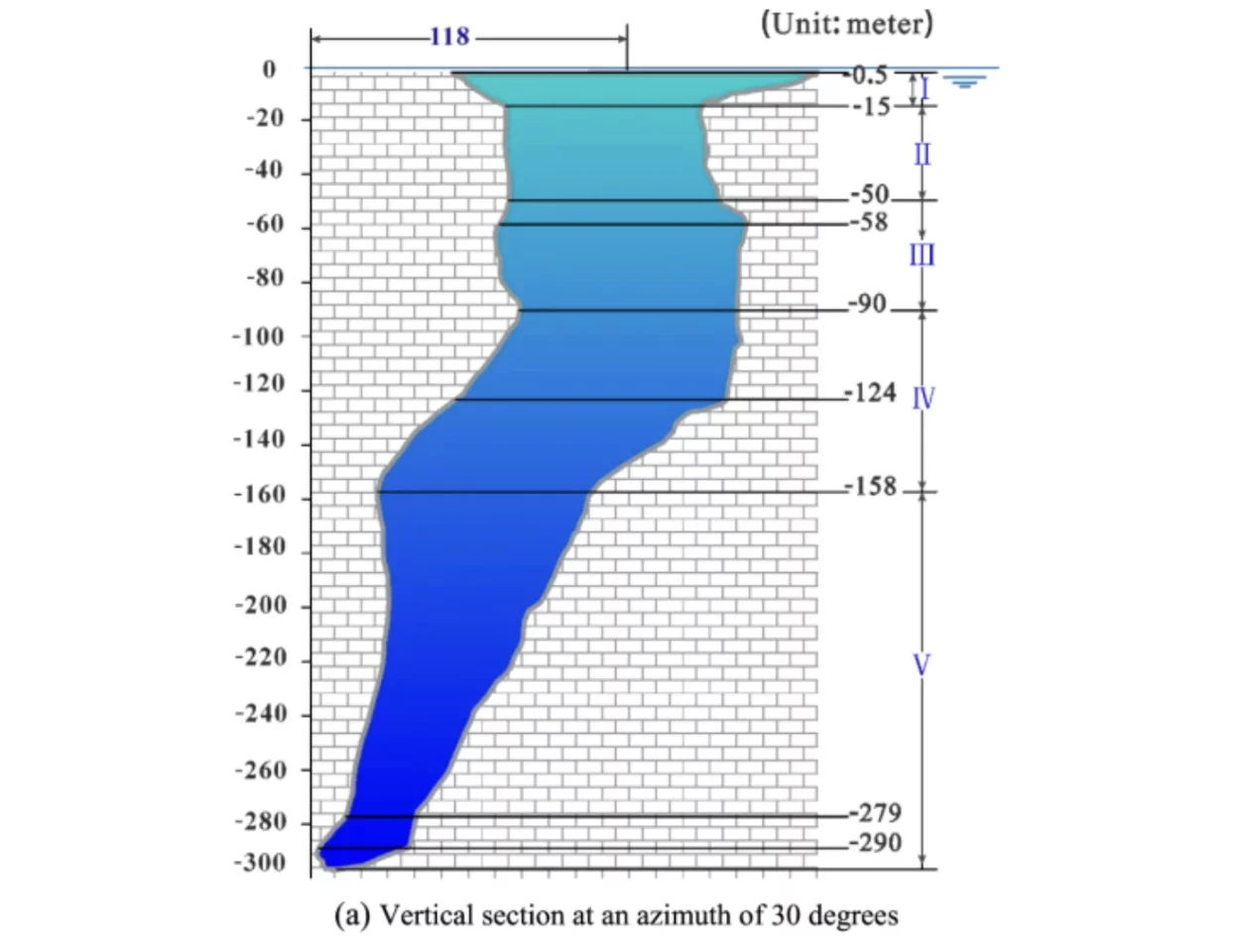
This is the Dragon Hole, or more formally Sansha's Yongle Blue Hole (YBH), which stretches 162.3 m (535 ft) at its widest point and plunges 301 m (998 ft). And there's still very little we know about life inside the hole, despite the abundant reef biodiversity that surrounds it. There's no algae, plant life or fish that can survive deeper than about 100 m (330 ft) from the surface.
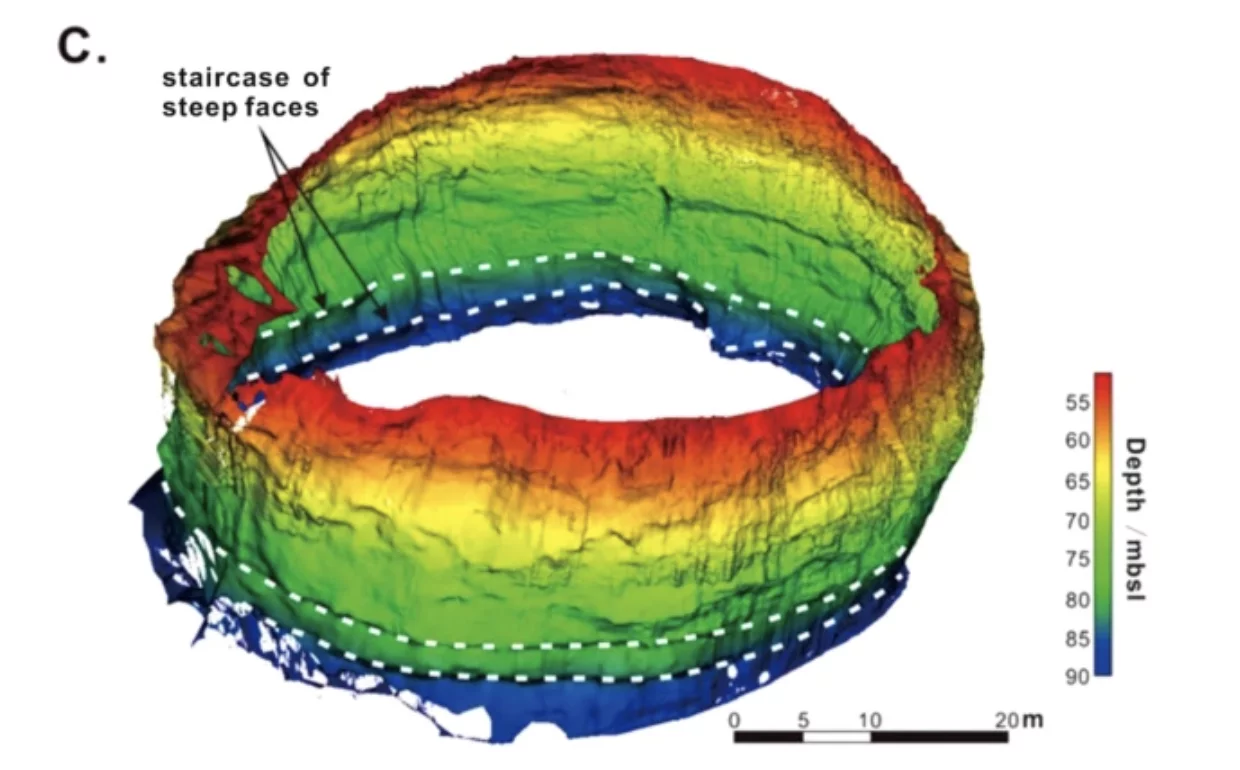
In 2016, Chinese scientists became the first to measure the blue void, however, it's been around for centuries. One of China's most popular novels, Journey to the West, features it as where the Monkey King Sun Wukong found his golden cudgel. Considering this 16th-century tale, attributed to Wu Cheng'en, has details of it, it's safe to say the Dragon Hole has been part of folklore for a long time. As far as we can determine, scientists believe the carbonate karst hole was shaped when sea levels were lower, with rainwater dissolving limestone and carving vertical "steps" into the hole's "walls." When the sea level rose again, the chasm flooded, creating the submerged sinkhole (blue hole).
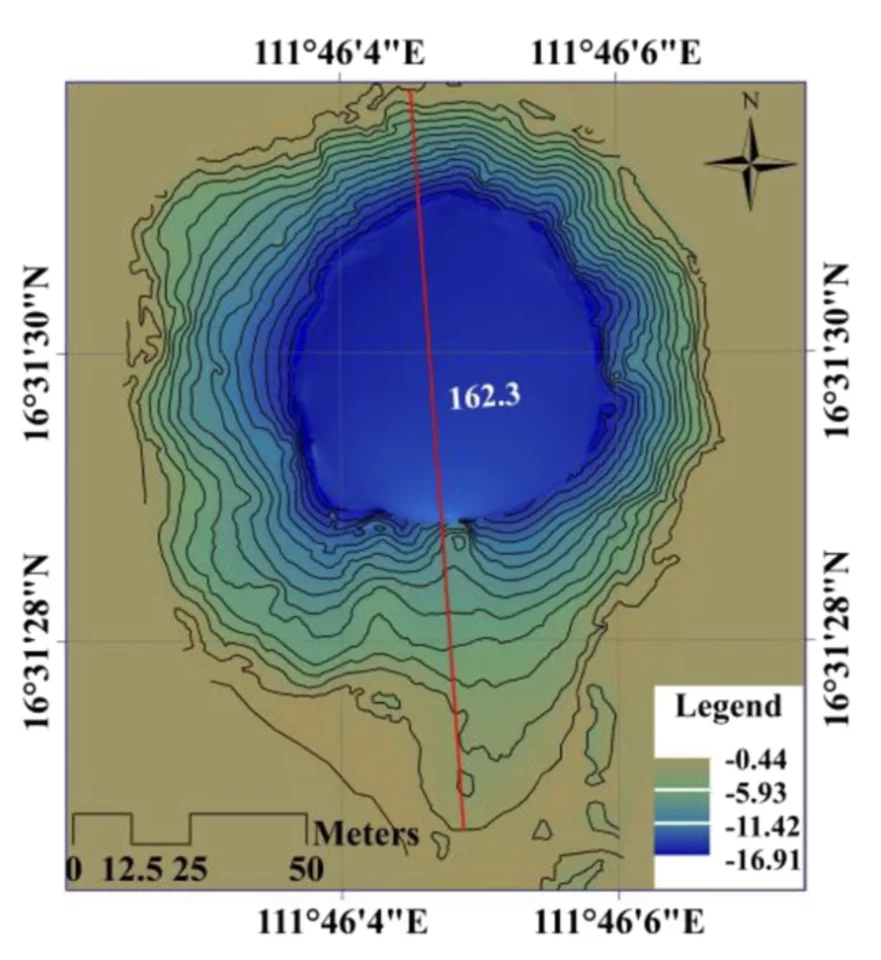
At the time of its 2016 mapping, it was deemed the deepest of its kind on the planet, eclipsing Dean’s Blue Hole in the Bahamas, Egypt's Dahab Blue Hole, the Belize Great Blue Hole and Malta's Gozo Blue Hole. While preliminary studies now suggest that Taam Ja’ off the coast of Mexico’s Yucatán Peninsula has taken the record as deepest ocean sinkhole – at an estimated 420-m (1,378-ft) depth – we don't yet know a lot about life inside that one.
And there are a few features that make Dragon Hole unique. Unlike most underwater caves or sinkholes tied to land-based systems, this blue hole is found in an offshore coral reef platform, far from land. And it's not its depth that makes it extraordinary – it's what is inside it. Below that surface layer that houses some adaptable marine life, there's not much else, because the water remains stagnant and devoid of oxygen and light.
In most parts of the ocean around the world, wind, waves and currents mix surface waters downward, delivering oxygen to deeper areas. But Dragon Hole's steep walls and narrow opening prevent such mixing, so the water inside has stratified into distinct layers that rarely, if ever, interact with the surrounding sea water.
Measurements by Chinese marine scientists from institutions including the First Institute of Oceanography (FIO) and local Sansha teams conducted the initial comprehensive surveys of Yongle Blue Hole. The study revealed that oxygen concentrations drop rapidly with depth, reaching zero well above the midpoint of the hole. Below this threshold, the water is permanently anoxic – incapable of supporting fish, plants or algae. It does, however, show signs of diverse microscopic life able to forego sunlight for energy.
Researchers have identified microbial communities living in the anoxic depths, sustained not by the Sun but chemical energy. These microbes rely on chemosynthesis – a process in which organisms derive energy from chemical reactions involving compounds such as sulfur, rather than through photosynthesis – not unlike the microorganisms found in the spider-filled Sulfur Cave.
Such marine ecosystems are rare and poorly understood, and Dragon Hole offers scientists a natural laboratory for studying biological extremes. Similar microbial processes are thought to resemble some of the earliest life systems on Earth – and possibly those that could exist on other planets with subsurface oceans.
In 2023, scientists expanded our knowledge of low-oxygen marine environments and microbial survival by studying the Dragon Hole where they discovered a fascinating mix of species defined by distinct vertical layers. In the hole, life drops away quickly as oxygen disappears, below the surface (Oxic Zone) and transition levels (Suboxic Zone); at 100-140 m (330-460 ft), the third layer called the Anoxic Zone I is almost completely dominated by sulfur-oxidizing bacteria. At the deepest part of this layer, these bacteria make up around 90% of all microbes in the water. Instead of relying on oxygen or sunlight, these organisms use sulfur compounds as an energy source, through a process known as chemosynthesis. The dominant groups were found to be colorless sulfur bacteria and purple non-sulfur bacteria, with two genera in particular standing out – Thiomicrorhabdus and Sulfurimonas. These microbes are specially adapted to oxygen-free, chemically harsh environments – the kind that's otherwise deadly for marine life.
Below 140 m (460 ft), the environment shifts into Anoxic Zone II, a deeper and chemically more stable layer that extends to the bottom. Here, nitrate disappears entirely and hydrogen sulfide accumulates, signaling a fundamental change in how energy flows through the system. Sulfur oxidation gives way to sulfate reduction, and microbes becomes both more diverse and more strictly anaerobic. Desulfatiglans emerges as a dominant player, alongside sulfate-reducing bacteria such as Desulfobacter, Desulfovibrio, and Desulfobulbus, organisms that actively generate hydrogen sulfide as part of their metabolism.
This zone also hosts a broader mix of anaerobic specialists, including green sulfur bacteria such as Prosthecochloris, as well as groups like Chloroflexi and Parcubacteria. While life here is metabolically slower than in the zone above, it's more diverse and forms a tightly coupled, self-contained sulfur cycle with no connection to the oxygenated ocean near the surface.
Together, these stacked anoxic layers turn the Dragon Hole into something more than a vertical cave in the sea, with stratified microbial ecosystems, each governed by their own chemistry and energy requirements for survival.
To understand this ecosystem more deeply, the researchers extracted samples and attempted to grow microbes back in the lab. They successfully isolated 294 different bacterial strains using a range of growth conditions. Notably, among the anaerobic (oxygen-free) bacteria, 22.2% appeared to be previously unknown species, suggesting Dragon Hole may host entirely new forms of life. The study also found a clear difference between free-living bacteria, which float independently in the water column, and particle-attached bacteria, which cling to sinking debris. This split suggests the microbes have multiple survival strategies that work alongside each other in this extreme environment.
In September, scientists learnt even more about life in the hole, glimpsing into its “virome” (viral community) across those four distinct layers. They identified 1,730 viral operational taxonomic units (vOTUs), with more than 70% assigned to classes of tailed phages Caudoviricetes and Megaviricetes. They also found species in the families Kyanoviridae, Phycodnaviridae, and Mimiviridae. Yet deeper in the hole, the team found that the lower anoxic layers are dominated by previously unknown viruses – something that needs more investigation.
And, to date, this is the extent of our knowledge of the Dragon Hole. But what makes it unusual is its depth, isolation and stability. Most blue holes experience some degree of water exchange with the surrounding ocean, but there's little of that here. This is why it's of huge interest to scientists – it's remained largely isolated from external biological inputs since it filled with water, and it's unlikely to change anytime soon, with or without human influence.
Source: Scientific Reports