






Fast fashion drastically changed the world by making clothes cheaper and more affordable than ever, but it came with a huge environmental cost. This has pushed scientists to look for new, more sustainable materials that could replace conventional synthetic fabrics.
Fungi is a very promising alternative. Recently, we’ve covered fungi-based leather. This time, a group of Chinese researchers at Shenzhen Institutes of Advanced Technology (SIAT) came up with an even more futuristic idea: if fungi is a living organism, can it then be turned into a living fabric? The answer is what they call a “programmable fungal platform for living textiles.”
It’s not literally “programmable” – there are no electronics or computer chips involved. The “programming” is possible because some of the fungi’s biological features were preserved after processing it into sheets of fabric-like material. This includes the ability to respond to the environment, grow, regenerate, change color, and even develop a self-cleaning coating.
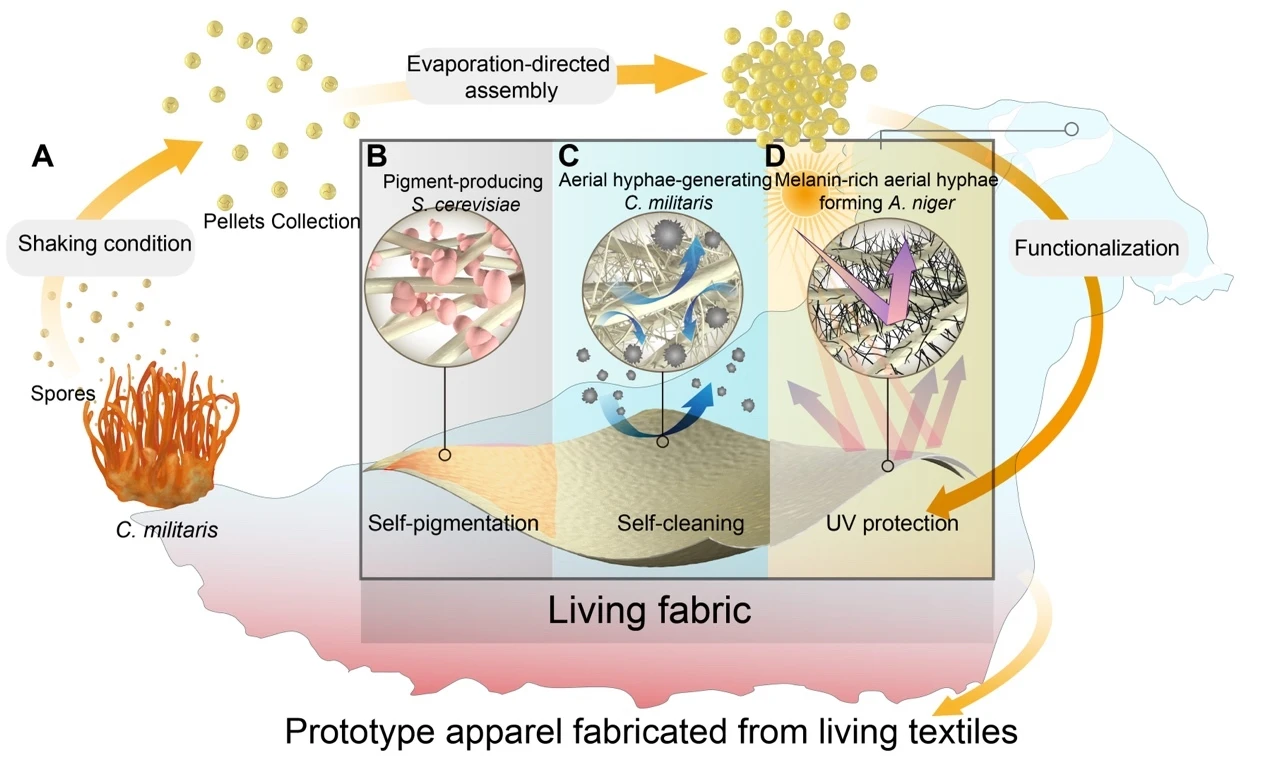
The researchers started by growing Cordyceps militaris fungus in liquid, where it formed small clumps of fungal threads called mycelial pellets. Those pellets were then placed into moulds and dried, allowing the fungal threads to come together and form a continuous sheet.
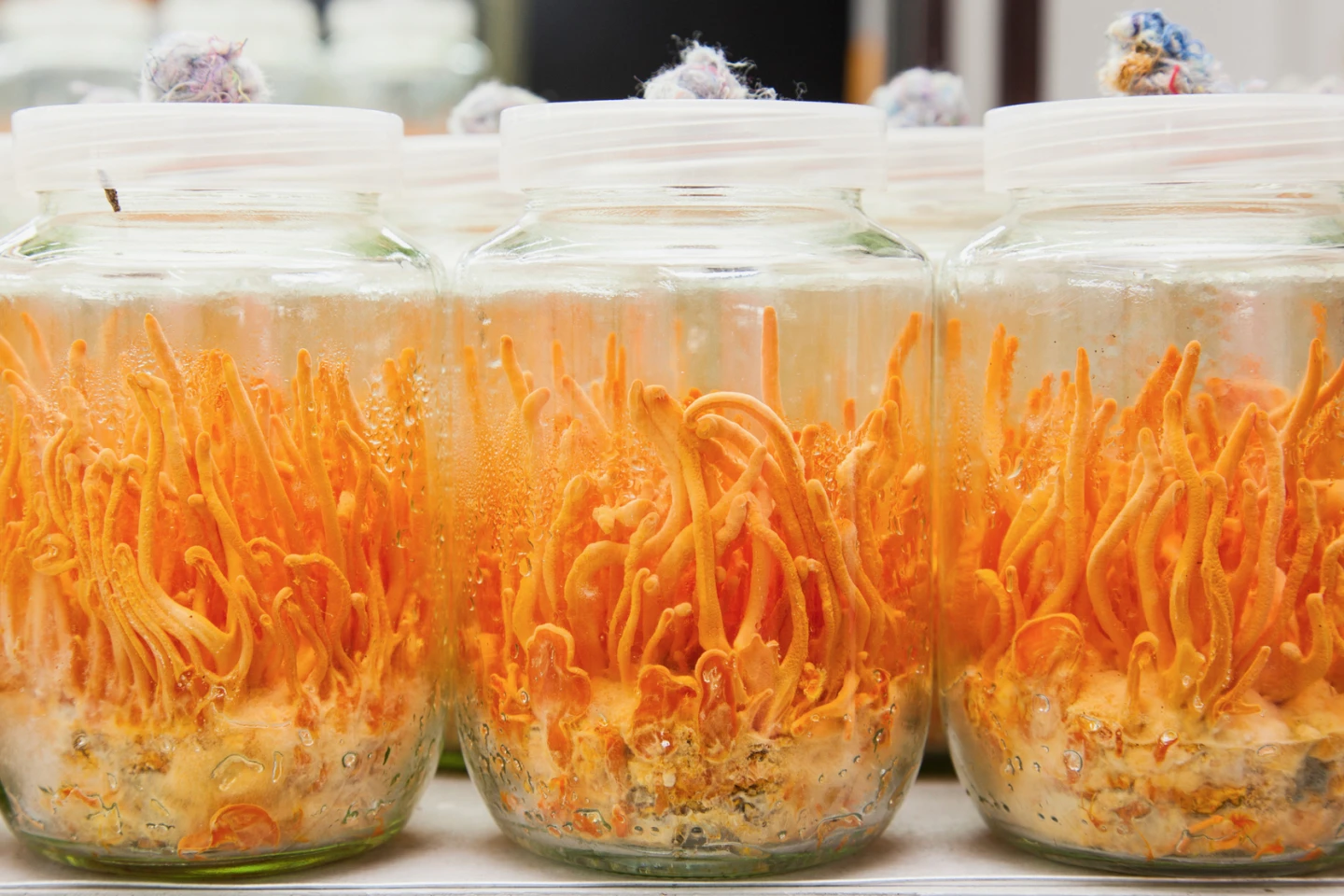
The problem with those sheets was how brittle they turned out. So, the researchers treated them with glycerol, which works as a softener. It made the fungal sheets much more flexible, so the resulting material could be folded, cut, and sewn, just like regular fabric. But the most exciting part of the experiment comes next.
The researchers added specially engineered yeast to the fungal material. Instead of relying on traditional textile dyes, the yeast produced different colors itself, including blue, red, orange, and purple. So, instead of applying pigment to the fabric, the cells essentially generated it themselves.
On top of that, the fungi was responsive to some nutrients. By applying them to the fabric under the humid conditions, the researchers could trigger the growth of fungal threads. This allowed the fabric not only to regenerate and repair the damaged parts, but also to form specific patterns.
Other nutrients made the fungi develop a water-repellent surface. They transformed the texture of the fabric, so water rolled off rather than soaking into it. The fungus basically created a water-resistant, self-cleaning coating without any external chemicals.
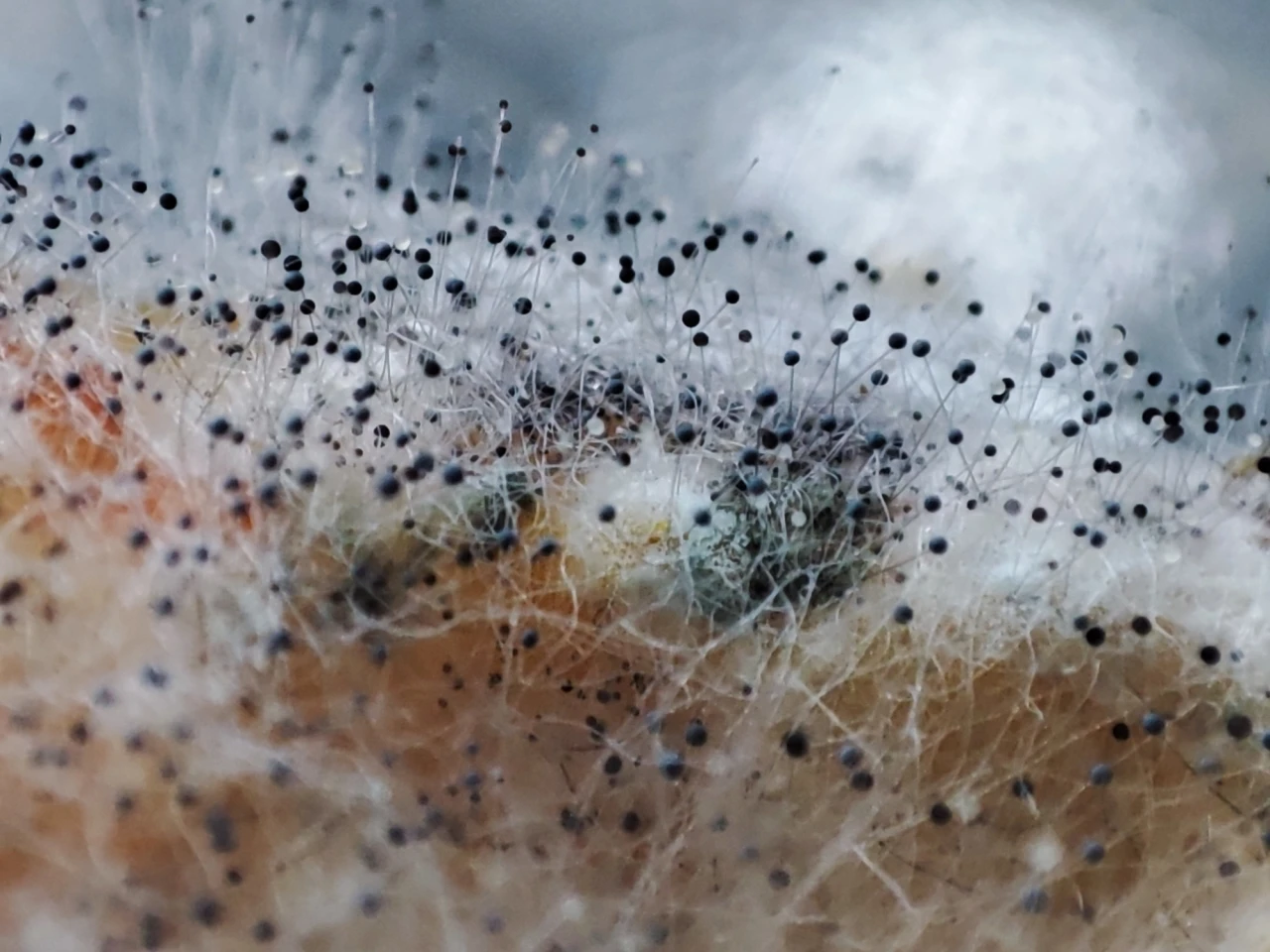
The scientists also tried growing a different type of fungus, Aspergillus niger, which features melanin-rich fungal threads (hyphae). This added UV protection to the material.
After all the laboratory tests proved successful, the researchers’ next goal was to show that this living material could actually have a real-world application, particularly in the fashion industry. So they made an actual dress out of it.
The dress consisted of a few pieces stitched together, each featuring a certain biological function. The main body used engineered yeast to produce a dark blue pigment, the hem was covered with fungal hyphae for water resistance, and the collar was made from petal-shaped pieces with nutrient-induced patterns.
The ability of this living material to regenerate could reduce waste and significantly extend the lifespan of clothing. Besides that, the dress was pretty quick and easy to recycle: it broke down in soil almost entirely within just 41 days.
There are still a lot of challenges to overcome before we see living fungal clothing in stores. The next big question to resolve would be scaling up production of the fabric and testing its washability and durability. The dress design can be a matter of personal taste, but from a scientific point of view this prototype undoubtedly gave us an amazing glimpse of what the future of sustainable fashion might look like.
A paper on the research was recently published in the journal Science Advances.
Source: SIAT


