Long before I wrote about science, I was a vampire. I worked at night, sucking blood in a hospital.
Being a clinical laboratory scientist who skulked around emergency rooms between sunset and sunrise, I was well accustomed to the superstitions surrounding personal tragedy. More than a few patients (and the occasional nurse or doctor) cross their fingers on quiet nights while eyeing full moons and awkwardly avoiding the number 13.
It’s hard to scientifically justify such antiquated myths. Then again, maybe people act differently on Friday the 13th? Perhaps the light of the full Moon makes it harder to sleep, increasing the chance of a fatigue-related incident? Or special holidays may make some more likely to self-harm?
As somebody who was born on Friday the 13th, University of Toronto statistician Jeffrey Rosenthal felt he had a personal interest in determining whether there were any correlations to justify in the first place, or if our suspicions are a case of confirmation bias.
“Scientific literacy is important to me,” Rosenthal told UofT News journalist Chris Sasaki. “I'm trying to convince people how important it is to understand how the world works and that we shouldn’t make up superstitions.”
Teaming up with Ontario Forensic Pathology Service forensic pathologist Jennifer Dmetrichuk, Rosenthal analyzed data taken from Ontario coroner records, looking for patterns that may signify an unusual number of deaths occurring during critical periods.
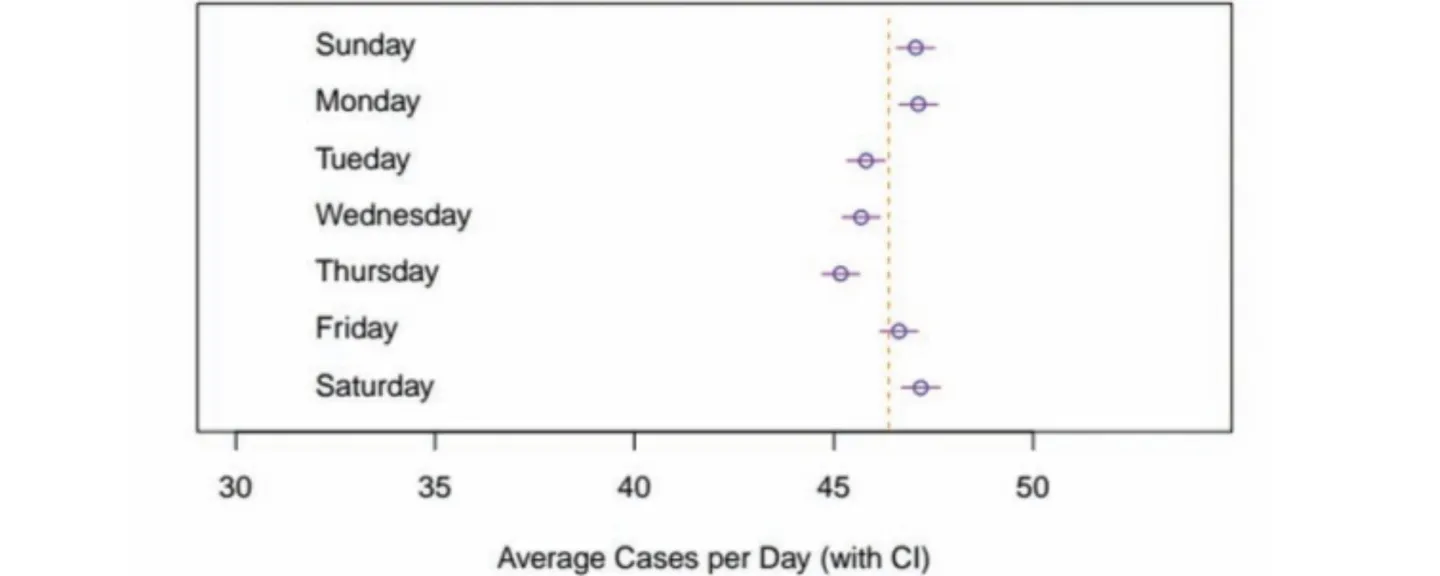
Between 2009 and 2023, an average of 46.38 people died each day in Ontario. Comparing that baseline to each of the Friday the 13ths and full Moon events, holiday periods such as Halloween, Christmas, and Valentine’s Day, and monthly and seasonal effects, the researchers hunted for any significant variations.
They found a total of 1,235 deaths over 27 Friday the 13ths, for a rate of 45.74 deaths each day. If anything, this makes those insidious Fridays insignificantly safer than the state average for the period.
Full Moon times had an average death rate of 47.26 – a little higher, but nothing that should ring alarm bells. Even considering the surrounding days do little to change the average, these specific days and nights are no more deadly than the rest of the lunar cycle.
As for Halloween, there’s no reason to put extra staff on in the morgue. An average of 46.05 people died on the 15 Halloweens throughout the study period.
Are there any dates on the calendar that hospitals ought to circle in bold red ink? Rosenthal and Dmetrichuk did find some periods worth noting.
The week between Christmas Eve and New Year’s Eve was found to contain an average death rate of 53.14 across the study period, strongly hinting that something foreboding was taking place over what should be a relaxing break for many people.
Could it be an overindulgence in rank turkey meat? Electrocution from unchecked strings of blinking lights? A rise in men getting stuck in chimneys?
Ruling out a rise in death by suicide and vehicle fatalities, the researchers found heart attacks were behind the “bulge”, representing a clear peak in myocardial infarctions and pulmonary conditions that increased in colder months.
One finding that will come as no surprise to hospital staff is a variation across the week, with a slightly higher mortality rate between Friday and Monday – most likely as a result of drug overdoses.
Rosenthal and Dmetrichuk are far from the first to sift through health statistics in search of any indication that Friday the 13th may be unlucky. Time and again, the numbers show we have nothing to worry about.
That’s not to say patterns can’t be found if we look hard enough. According to one investigation of 13 categories (you just know they were asking for trouble), incidents of penetrating trauma were overrepresented on Friday the 13th. Another found that transport accidents increased by as much as 52 percent on this most superstitious of dates.
It may also depend on the specifics of a population. A study published last year on suicide rates surrounding traditional Chinese Valentine's Day – known as Qixi and celebrated on the seventh day of the seventh lunar month – and western Valentine’s Day in Taiwan found significant variations specific to gender and marriage status.
Human behavior is complex, leaving plenty of room for cultural quirks and intriguing outliers. If anything, the very search for meaning in the tides of patients that come and go in hospital admissions shows doctors, nurses, and vampires like myself are doing our best to make sense of a chaotic world with brains primed to relate empathically to other humans.
“People want to believe these things – that there's some force which gives meaning to what goes on,” says Rosenthal.
“And once these superstitions begin, they tend to snowball because people look for confirmation of their beliefs.”
This research was published in the journal Chance.
Source: UofT News