


Finnish-Estonian bikemaker Verge has been in plenty of headlines in the past few years. Now, it’s time for its spin-off partner company, Donut Lab, to get its fair share of eyeballs. The company has been working on solid-state battery tech for a while, and it seems it’s finally seeing some worthwhile results.
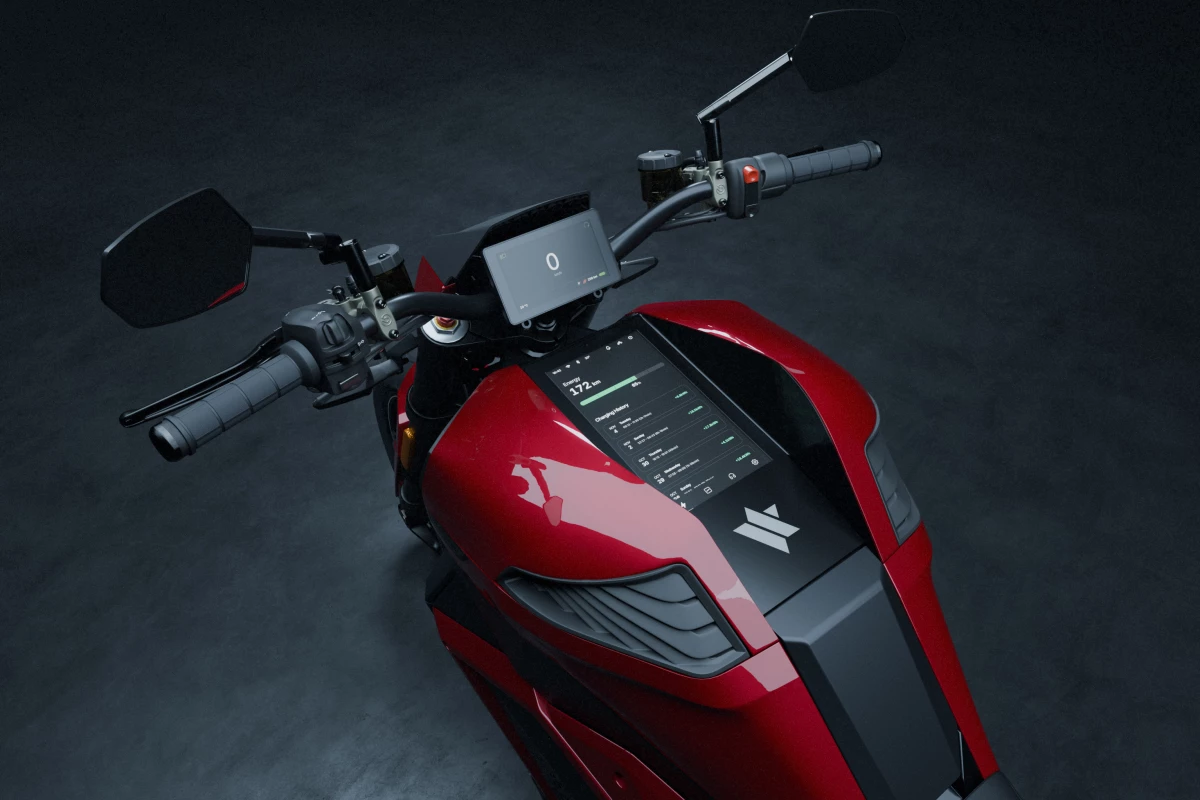
Donut Lab recently released its first pack-level charging test results – its fourth battery test with Verge Motorcycles. Its 18 -kWh battery pack maintained over 100 kW of charging power at a 5C rate for five minutes on the Verge TS Pro electric motorcycle.
These are some of the first real-world test numbers we’ve seen from Donut Lab’s battery in an electric motorcycle. The company presented a 400-Wh/kg solid-state cell at CES 2026 with claims of a 370-mile range, 100,000-cycle life, and a five-minute charging time, and most importantly, it was claimed to be cheaper to produce than lithium-ion batteries.
So it was about time Donut Lab got to supporting its bold claims with real-world numbers.

Donut Lab revealed that it was producing a solid-state EV battery back in January, and that deliveries would begin by the end of the quarter. That would effectively make the new Verge TS Pro the "world's first production vehicle with an all-solid-state battery." However, skepticism greeted these announcements right away.
What followed were three important tests with Finland's state-run VTT Technical Research Centre. The first test verified that the battery's cells do, in fact, support quick charge. The second test suggested that the battery cells could remain within a safe temperature range as long as there are sufficient heat sinks. The third test showed that the Donut Lab battery was not a supercapacitor as many were suggesting, but rather has a self-discharge rate comparable to a genuine battery.
What follows now is the fourth, and perhaps the most important test so far. Donut Lab connected a Verge TS Pro to a public fast-charger, which produced 100–103 kW of electricity for five minutes.
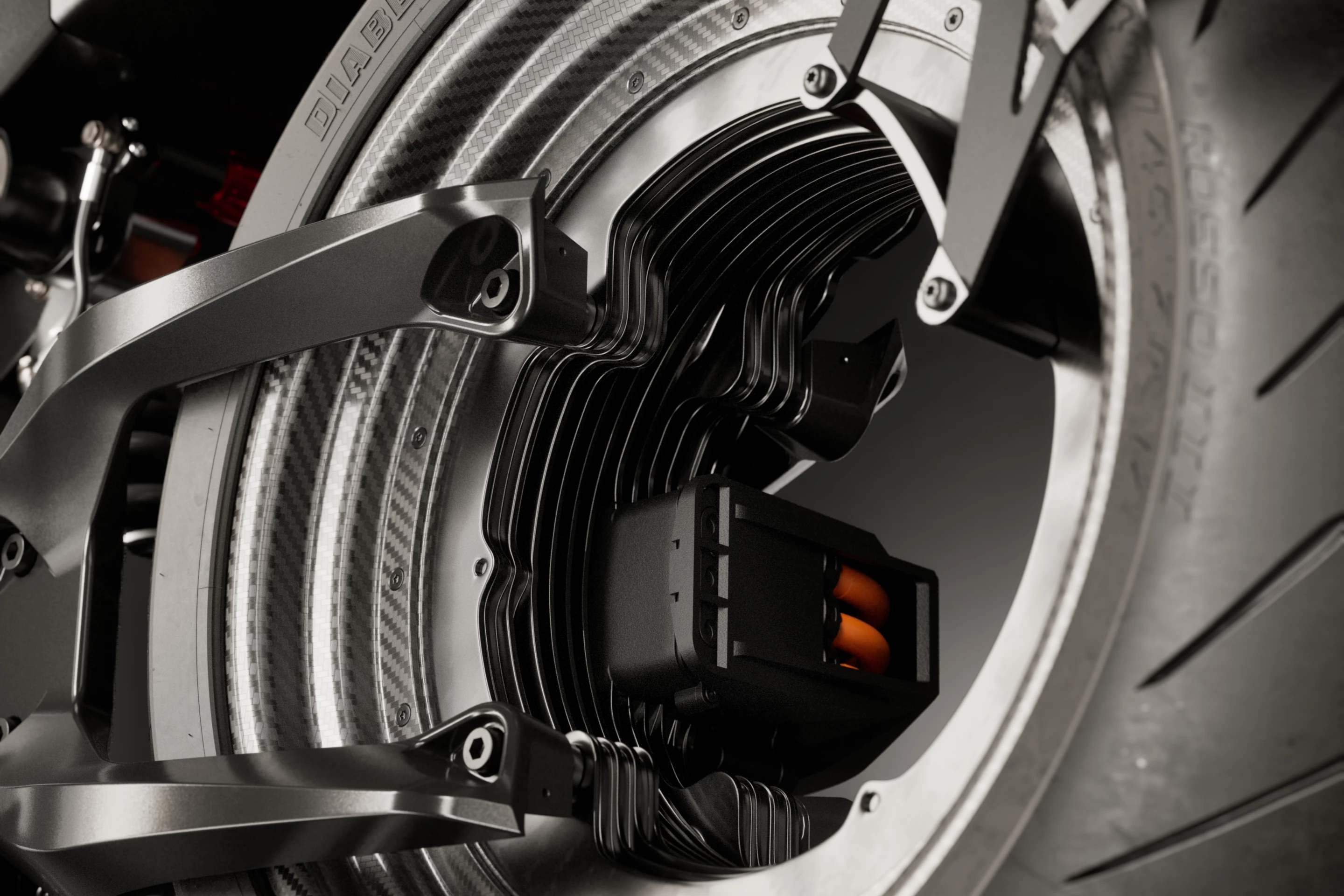
In this test, the battery pack charged from 10% to 50% in five minutes, reaching 70% in little over nine minutes, and subsequently reaching 80% in 12 minutes. This is all while using an air-cooled design instead of liquid cooling. That part is especially important because the majority of electric car battery packs (which are about five times bigger) use liquid cooling systems to maintain similar charging rates without thermal throttling.
What’s even more impressive is that these figures put the system among the fastest-charging electric motorcycles ever. And to see this on a real motorcycle makes this test even more instrumental – in contrast to previous experiments that concentrated on single cells in carefully regulated laboratory settings.
Anyone who knows anything about battery tech will tell you just how complicated fast charging on a motorcycle is, compared to cars. Due to tighter temperature limits and fewer cells sharing the load, and smaller battery packs typically limit charging speeds.
"The high energy density of our battery technology enables flexible battery pack design and superior performance even in more challenging applications, such as motorcycles, where space is limited, and system simplicity is key," says Ville Piippo, CTO at Donut Lab. "We are able to offer vehicle manufacturers packs with different energy capacities in the same physical size, with even the smallest packs having very high capacities."

Donut Lab's technology seems to maintain over 100 kW of charging power in such a compact architecture. But that’s not to say that the company has achieved all its goals. That’s because this test reaches only around half of the peak charging rates (of up to 200 kW) that the company had previously hinted at. As of this time, it’s uncertain if system design, charger constraints, or continuous optimization are to blame.
Donut Lab has also published another test conducted by VTT that evaluates the cell’s ability to operate safely after sustaining damage. A damaged cell was used, and it underwent 50 fast-charge cycles at 5C and five 1C cycles. There was no reported risk of fire or temperature rises. In this case, the damaged Donut Battery failed "gracefully," continuing to function safely at a lower capacity instead.
The company’s I Donut Believe webpage (pun intended, most probably) shows that more test results are about to be revealed.
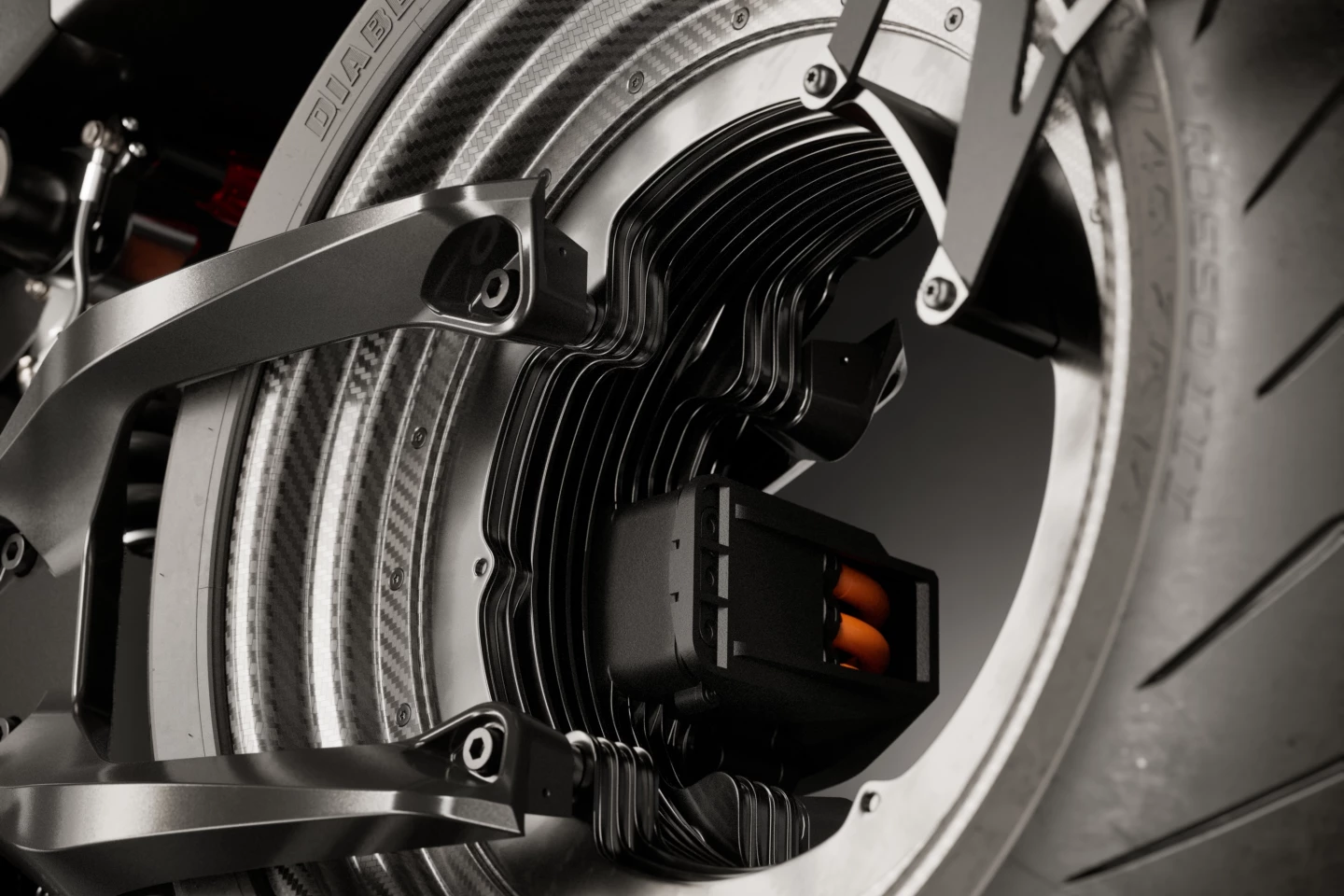
You could argue it’s more a PR stunt than anything else, but it does, however, validate something perhaps more significant: the company's technology can produce significant performance gains on a real motorcycle, and not only in the lab.
Maybe we’re not too far away from a real mass-market 5-minute charging electric motorcycle.
Source: Donut Lab