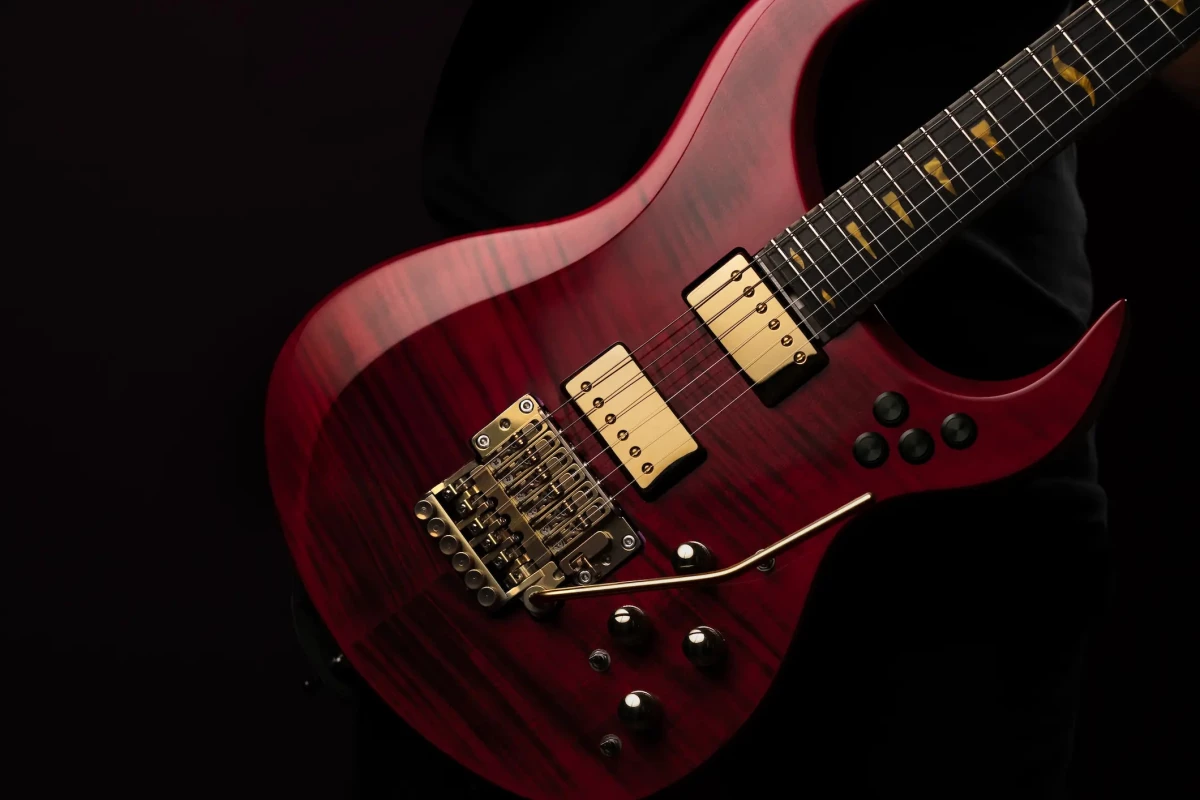



We're coming up on the 100th anniversary of the electric guitar, and it's been fascinating to hear how this simple instrument has altered the landscape of music in that time. It's mostly just wire, wood, and a wee bit of electronics that doesn't even need power.
As music has evolved, guitarists' need to be able to shape their tone to create new sounds has grown. That's why musicians get all excited about the latest gear that promise to unlock more and different facets of tone, whether it's in a pedal, amp, or a pickup.
Shark Guitars, out of Antalya, Turkey, is the latest brand on my radar trying to shake things up with a whole new approach to the instrument. The company's building a modular guitar with swappable parts, and onboard electronics like you've never seen before.
Shark says its 'Ocean Environment' platform lets players mix and match a wide range of its guitar bodies, necks, bridges, nuts, and effects. That's true for when you're customizing your build, and also once it's in your hands. The brand promises these components will always fit together reliably, thanks to the use of precision-machined titanium.

The platform and product catalog have been in the works since 2018, when founding partner and guitarist Cem Koksal started the company with an eye on the high-end electric guitar market. Shark has racked up six patents through its R&D process, opened a factory in Turkey that can craft 120 instruments a month, and has now opened its online store to accept custom orders.
Using the 3D custom guitar builder tool to specify your requirements gives you a sense of just how remarkable Shark's venture is. You can choose from four different body styles, and pair it with a wide range of necks – including a fretless option. Since the neck is modular, you can simply remove it for easy packing when you're hitting the road.
You can also get multiple necks with different profiles and fretboard configurations to go on the same guitar, and snap on whichever you need for a performance or recording session. That's nuts.
The platform also includes a plug-and-play pickup system: you can mount any pickup you like without the need for soldering, at the height you prefer. Each pickup module can be swapped out at a moment's notice, without the need for tools or even any configuration.
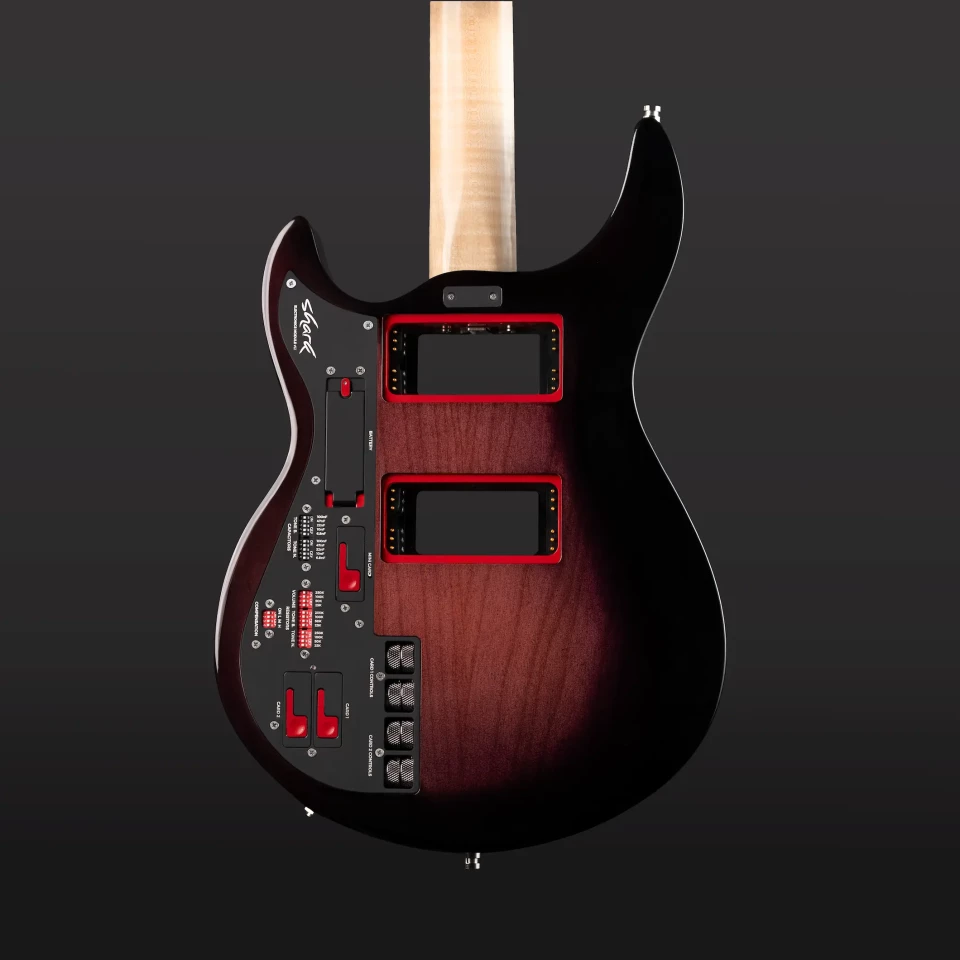
You can adjust the gain based on your pickups, so your output volume stays level between them. That means you can drop in a twangy single-coil alongside a burly humbucker, and they'll work together as if they've been wired to do so from the start.
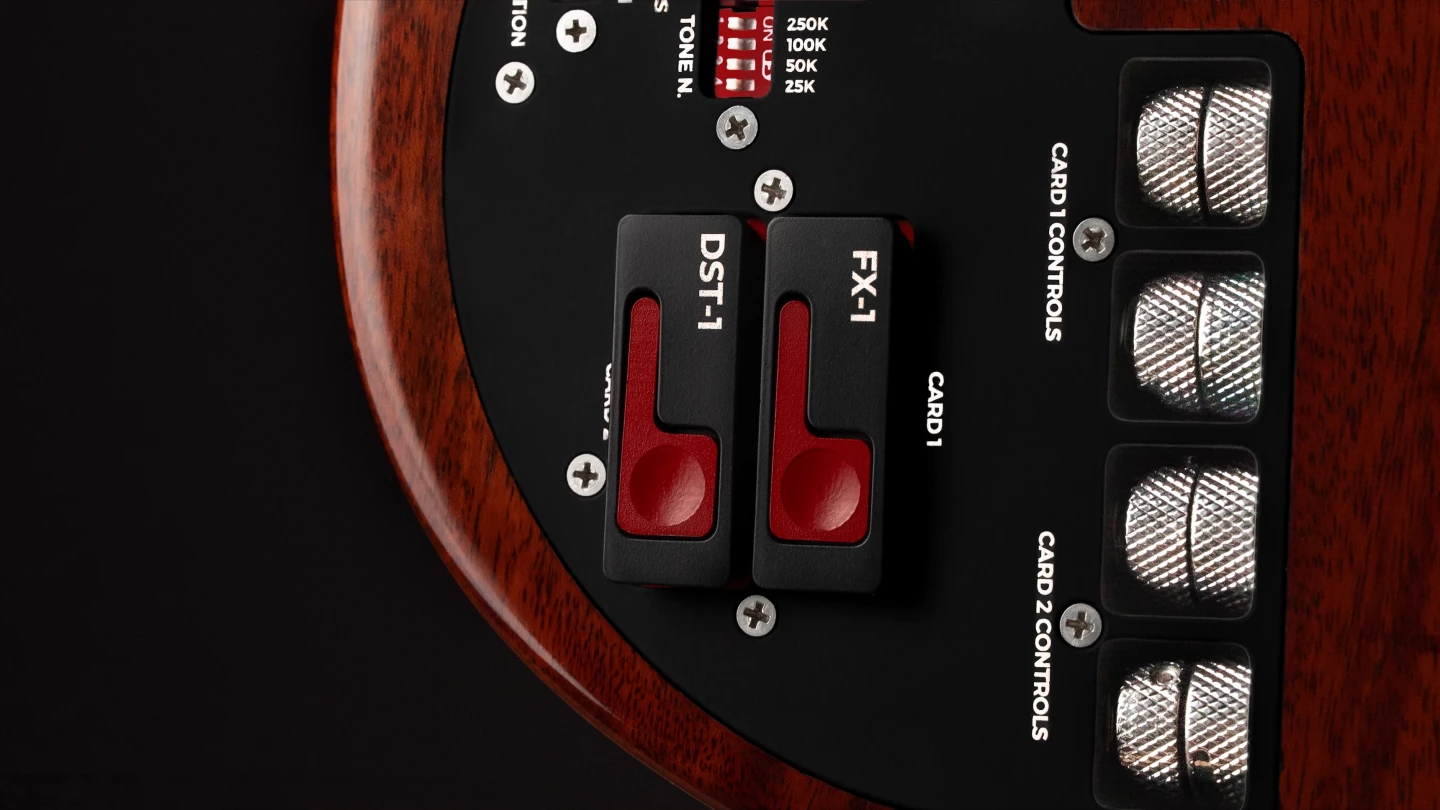
What you can't see from the front is an extensive electronics system – accessible on a rear panel – that manages your pickups, signal processing, and onboard effects. You can use its resistor and
capacitor adjustment system to shape the pickup tone and fine-tune their loudness compensation via DIP switches. That allows for a lot more control over tonal variations, well beyond what you can do with standard volume and tone knobs.
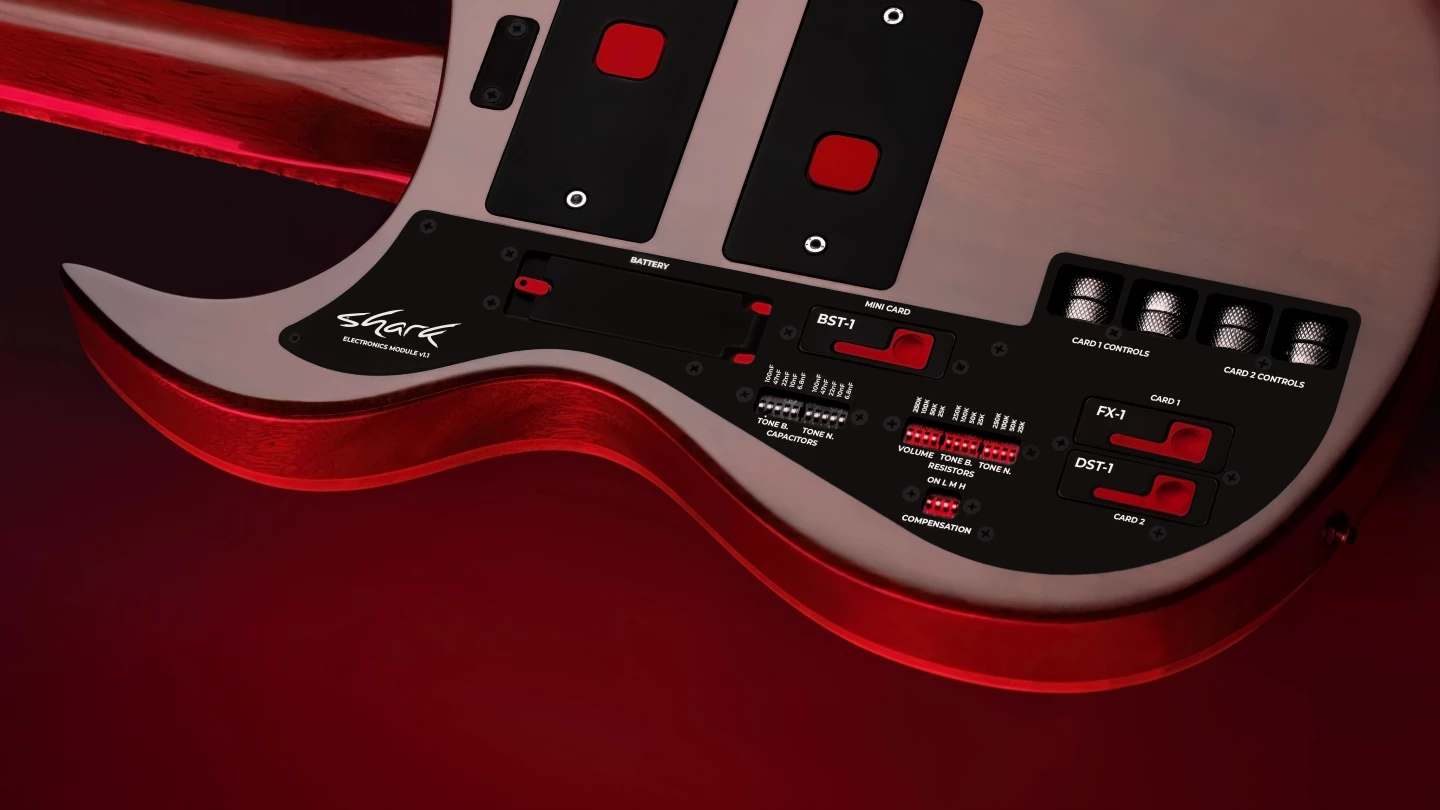
There are two versions of this electronics system. The higher-end one supports 'FX Cards' – compact cartridge-like devices that each act as individual effects pedals with all the control you'd get from a regular pedal.
Three cards can go into a guitar at any one time, and they can be controlled via four front-mounted buttons, and tweaked using eight knobs. Shark already offers 12 of these in analog and digital flavors, including overdrive, distortion, boost, fuzz, speaker simulation, and delay and reverb. Having these right on your guitar means fewer cables and less weighty gear to deal with – which can be especially nice if you're touring extensively.
Shark also makes a removable titanium nut that allows for quick neck changes and fretboard maintenance without restringing. This works with the tremolo and body-neck joint to allow you to free the neck for when you want to swap it for another, pack your gear and transport it safely, or get your hands dirty with fretboard maintenance tasks.
The modular bit isn't just a neat party trick. It also means Shark instruments can be disassembled and packed into manageable luggage, without worrying about the neck snapping in two in flight cargo hold. You can also carry spares – like an entire extra neck and ready-to-go backup pickups – more easily than ever before.
There have been other attempts to craft modular axes; Savannah, Georgia-based Reddick Guitars has fixed pickup configurations and control systems mounted on blocks that you can swap in and out of a guitar body. But Shark has taken the concept much further than any brand before it.
The company's creations will set you back by somewhere between US$4,000 and $6,000, depending on the components you choose. That'll likely attract professional players and seasoned enthusiasts initially, at which point it'll compete against major legacy brands that have been around for decades. What Shark has going for it though, is a clear-eyed view into the future.
Check out the brand and fiddle with the 3D guitar builder tool on Shark's site.