
Data Storage
-
 Microsoft has been perfecting a high-density storage technology that uses glass and ensures it stays intact for millennia. A breakthrough in how it writes data allows for the use of cheaply available borosilicate glass.
 -
 Scientists around the world have been one-upping each other in a bid to create the smallest QR code that can be reliably read. Now, researchers have set the bar real high with a QR code so tiny, you'll need an electron microscope to see it.
 -
 SanDisk's just released the tiniest 1-TB Type-C drive on the market today. It's like a stubby little dongle that you'd usually use as a wireless receiver for a mouse, and despite its diminutive size, it actually boasts pretty decent performance.
 -
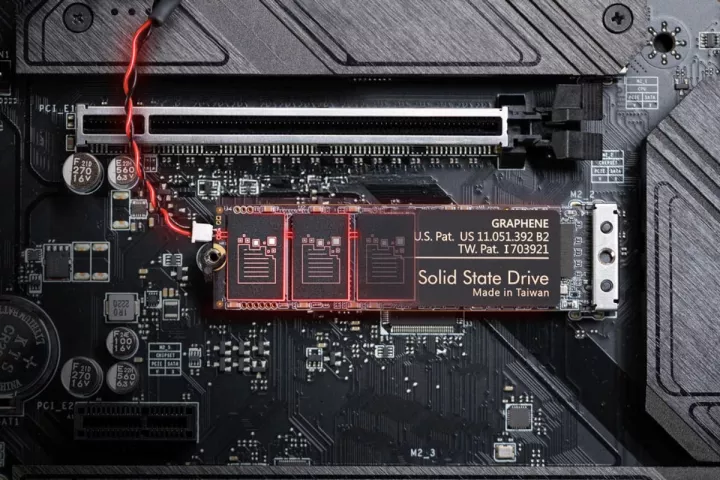 It's not every day that you come across a product where the standout feature is its ability to go kaput. Team Group's P250Q SSD can physically destroy itself at the push of a button, so your secrets go up in smoke before they fall into the wrong hands.
 -
 A team of chemists has developed a new type of magnetic molecule that could be the key to storing vast amounts of data on absolutely miniscule drives. That could be huge for data centers in the future.
 -
 Cuneiform, the world's oldest form of writing, involved making indentations in clay tablets. Scientists have now developed a data storage system that's like cuneiform on steroids – and it's capable of storing more data than a typical hard disc drive.
 -
 Scientists have stored the entire human genome on a five-dimensional crystal capable of storing up to 360 terabytes of information and is built to survive for billions of years. The tech could be used to create an enduring record of human, animal, and plant genomes.
 -
 A full DNA computer is a step closer, thanks to a new technology that could store petabytes of data in DNA for thousands or even millions of years. The system can also process data, as demonstrated by solving sudoku puzzles.
 -
 DNA is a much denser data storage medium than anything humans can design, but the problem is that it’s fragile. So now scientists have taken another page out of nature’s book and created artificial amber to protect data stored in DNA longer term.
 -
 Diamond is a promising material for data storage, and now scientists have demonstrated a new way to cram more data onto it, down to a single atom. The technique bypasses a physical limit by writing data to the same spots in different-colored light.
 -
 10,000 years in the future, explorers could end up getting rickrolled, thanks to a Global Music Vault due to be built in Norway. It features Microsoft’s Project Silica, a tough new data storage medium that’s never gonna give you up.
 -
 You may think that computer tape memories died out before Rubik's cubes came in, but IBM and Fujifilm have teamed up to develop a record-breaking new sixth-generation tape storage system that can backup a whopping 50 TB of data.
Load More