
Redox Flow Batteries
-
 A construction team in Switzerland is excavating a hole in the ground that'll end up being over 88 ft deep, and spanning the length of two soccer pitches. This pit will be home to the country's first redox flow battery for storing clean energy.
 -
 There is still some work to do in bringing current redox flow battery designs up to speed in terms of both performance and sustainability, but a new approach tackles the problem on both these fronts, by drawing on a compound commonly found in candles.
 -
 As a storage solution for renewable energy, scientists see great potential in what are known as redox flow batteries. A new design from Linköping University is a decidedly green version of this, being the first made from all-natural materials.
 -
 A team of engineers at Cornell has built a robotic fish powered by electric blood, which not only serves as an energy source, but acts hydraulically to create propulsion as well. This bio-inspired approach addresses one of the great challenges for small, untethered robots – mass vs. power.
 -
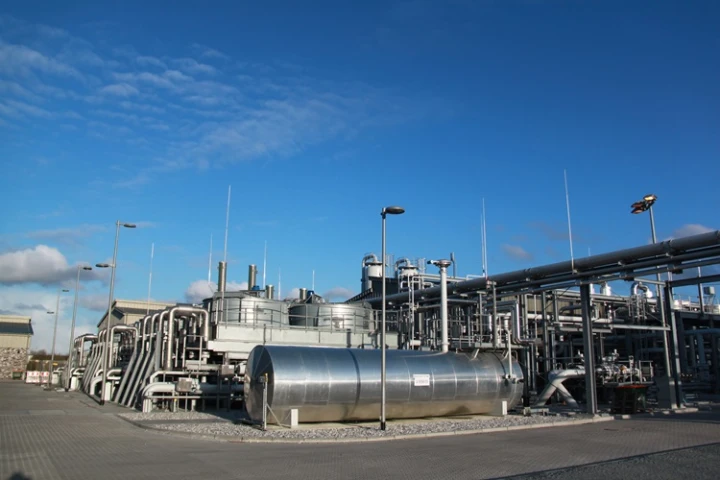 Just last week, Tesla announced it was building the world’s largest lithium-ion battery in Australia. Now a German energy company, Ewe Gasspeicher GmbH, is building a redox flow battery in underground salt caverns with enough output to supply a day’s worth of power to 75,000 homes.
 -
 A new flow battery technology promises to drastically lower the cost and sustainability of running energy storage systems. The battery uses low-cost and sustainable organic materials for electrolytes rather than the usual commodity metals, and it could be retrofitted to existing batteries.
 -
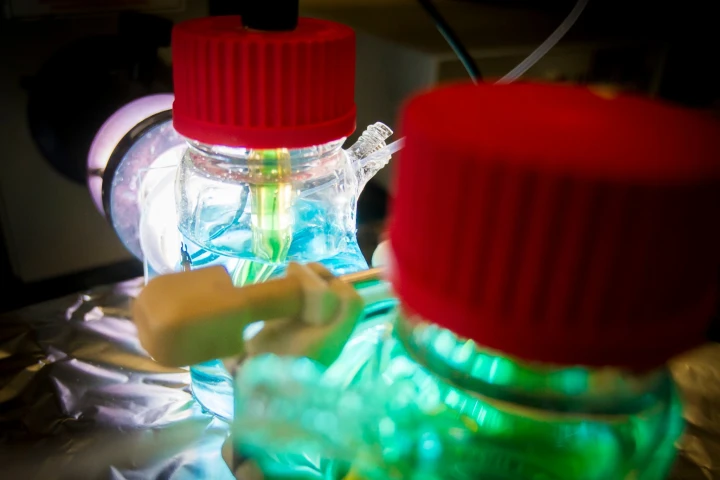 In an advance that could help photoelectrochemical cells (PECs) play a stronger role within the smart grid, researchers at the University of Texas, Arlington have found a way to store the electricity generated by this clean energy source for extended periods of time.
 -
 March 6, 2009 Swedish supercar manufacturer Koenigsegg , in conjunction with NLV Solar of Switzerland , is showing its full scale four-seater NLV Quant at th