
Sonar
-
 It's plenty easy to lose your bearings while scuba diving, which is why Garmin's new Descent S1 Smart Buoy could really come in handy. It helps submerged divers figure out where they are, plus it lets them communicate with their topside crew.
 -
 Two new technologies allow a single pair of glasses to track eye movements and read the wearer's facial expressions, respectively. The systems use sonar instead of cameras, for better battery life and increased user privacy.
 -
 Some people lack the power of speech, while others may find themselves in noisy settings where speaking voice commands out loud just won't work. Such folks might have use for the EchoSpeech glasses, which read their user's silently spoken words.
 -
 Engineers at Cornell University have developed a new wearable device that can monitor a person’s facial expressions through sonar and recreate them on a digital avatar. Removing cameras from the equation could alleviate privacy concerns.
 -
 It's important for fish farmers to keep track of the number of fish in their pens, but doing so involves going in and actually netting out some of the fish. According to new research, echo-sounding tech could soon serve as an easier alternative.
 -
 A Stanford team has demonstrated a unique system that can generate a strong sonar wave, and read and interpret the reflected signals, from an airborne platform. This raises the possibility of sonar-enabled drones that could finally map the sea floor.
 -
 Leonardo's ULISSES sonar system recently completed a live sea trial off the coast of Italy. By processing signals from up to 64 sonobuoys and dipping sensors, it was able to accurately locate multiple, simulated submarines.
 -
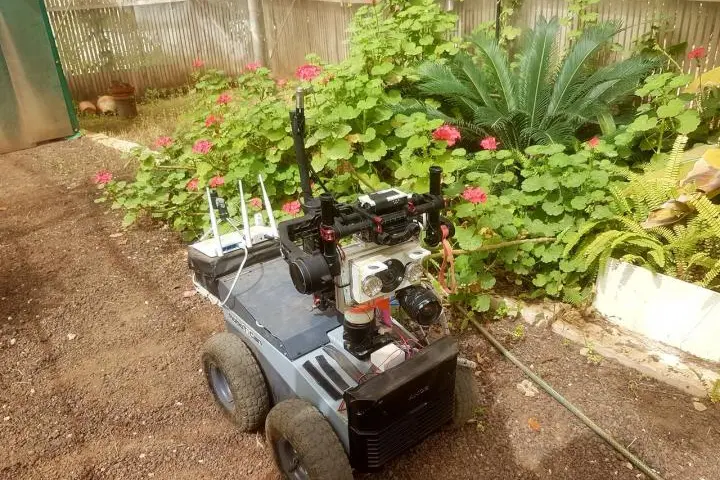 Scientists at Tel Aviv University have used the impressive echolocation abilities of bats as inspiration for a new robot, which is able to use ultrasound to autonomously navigate through an environment.
 -
 We’re increasingly seeing drones that cross over between sea and sky. Now engineers from North Carolina State University have developed the EagleRay XAV, an amphibious fixed-wing drone that can fly above or dive below the waves as needed.
 -
 Last year, we first heard about Fraunhofer's DEDAVE unmanned submersible. Then this July, we got word of an initiative aimed at locating sunken flight models of a famous Canadian jet fighter. Now, the two have come together – a DEDAVE has located a couple of of the models.
 -
 Rescue workers searching flood sites need to know what's under the water, but invariably that water is going to be very murky. Well, that's the main scenario for which the IrukaTact was created. It's a submersible haptic feedback glove that lets users "feel" what's below the surface.
 -
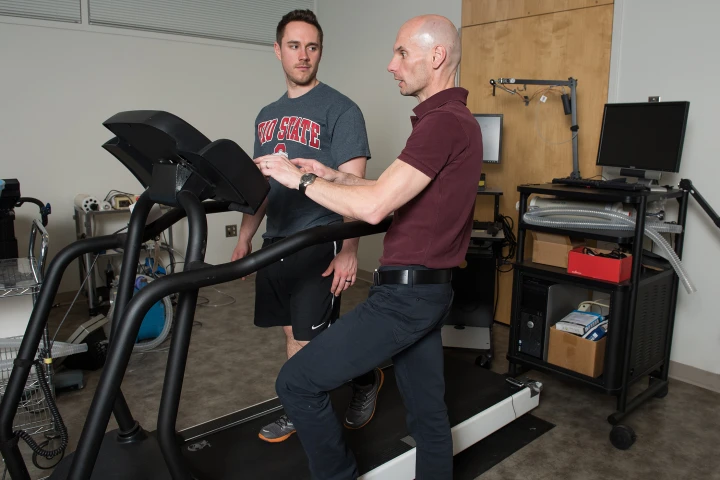 On treadmills, runners have to manually adjust the speed of the machine. Perhaps they won't have to for too longer, however. Scientists at The Ohio State University have developed a prototype treadmill that detects when its user's running speed changes, and adjusts its own speed accordingly.
Load More