
wearable electronics
-
 There are now a number of gloves that deliver tactile sensations to VR users' fingertips when they touch virtual objects. The Phantom glove is unique, however, in that it doesn't cover the fingers, leaving them free for real-world interactions.
 -
 The traditional white cane may never become completely obsolete, but there certainly are a number of devices that could give it a run for its money. One of the latest is the GUIDi, which guides blind users via cameras and buzzers on a belt.
 -
 Some cyclists (or other outdoorsy types) like having access to a lot of information, which is often spread out between different devices. The Lawk One AR Glasses, however, put everything together in one place.
 -
 If you're a really avid reader, you may resent the visual distractions that keep you from becoming thoroughly immersed in a book. That's where the Sol Reader comes in, as it fills your vision with text.
 -
 While we've seen multiple attempts to produce real-world odors in VR environments, many have involved cumbersome wearable devices. Chinese scientists have developed a much more streamlined system, which is applied to the skin below the user's nose.
 -
 Researchers have developed a new OLED display that can be stretched to more than twice its length while still maintaining light emission and a clear image. The development opens the door to a wide range of wearable electronics.
 -
 Most of us don't need special pants that let us know we're exhausted, but for hardcore athletes, such an alert could help stave off injuries. To that end, researchers created an electronic yarn that could detect fatigue based on movement patterns.
 -
 It can be frustrating when you're searching for an object, knowing that you may have looked right where it is without realizing you've done so. A new augmented reality system could help, by showing users where items are … even if they're hidden.
 -
 Although there already are experimental "telehaptic" systems that allow people to send and receive tactile sensations, they tend to be bulky and awkward. A new one is much slimmer and thus more practical, thanks to the use of piezoelectric materials.
 -
 Although many groups are developing power-generating "smart fabrics," the technology is often too complex to be scaled up to commercial use. Now, however, scientists have devised a method of embroidering electrical generators onto regular fabric.
 -
 Wearable electronics could soon be powered by dead microbes. New research out of UMass Amherst has demonstrated a biofilm that generates electricity from sweat, harnessing the corpses of dead bacteria – and it's at least as effective as a battery.
 -
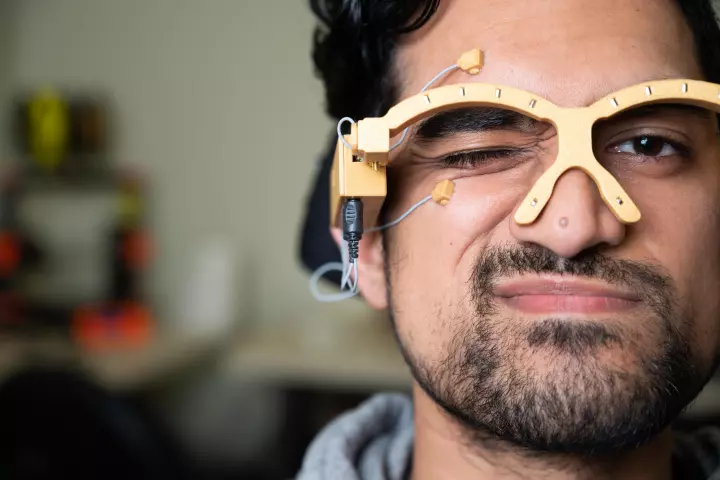 Although there are various systems that detect quadriplegics' head movements, most such setups are limited to the control of wheelchairs. Such is not the case, however, with the MagTrack system.
Load More