Around The Home

Turbo coffee pot cuts brew time in 1/2 via spiraling blades of fire

Turbo coffee pot cuts brew time in 1/2 via spiraling blades of fire
The new Turbo Moka looks to kickstart a new era of Italian coffee perfection
View 11 Images
The new Turbo Moka looks to kickstart a new era of Italian coffee perfection
1/11
The new Turbo Moka looks to kickstart a new era of Italian coffee perfection
The Turbo Moka lends a familiar but wholly unique look from nearly every angle
2/11
The Turbo Moka lends a familiar but wholly unique look from nearly every angle
More than just a striking look, the new spiral-bladed base delivers faster, more efficient coffee brewing
3/11
More than just a striking look, the new spiral-bladed base delivers faster, more efficient coffee brewing
Familiar but with an unmistakable twist ...
4/11
Familiar but with an unmistakable twist ...
The original Turbo Moka prototype did not have the clean aesthetics of the production model
5/11
The original Turbo Moka prototype did not have the clean aesthetics of the production model
It reminds us of a chunk of Twizzler, only much thicker and made from aluminum
6/11
It reminds us of a chunk of Twizzler, only much thicker and made from aluminum
The turbine inspiration becomes quite clear when viewing the Turbo Moka base on its side
7/11
The turbine inspiration becomes quite clear when viewing the Turbo Moka base on its side
Each Turbo Moka is crafted in Italy using a lost-wax molding process
8/11
Each Turbo Moka is crafted in Italy using a lost-wax molding process
The Turbo Moka functions much the same as the traditional moka pot – steam pressure from boiling water in the base chamber pushes the water up through the siphon, into the coffee grounds and out into the upper "pour" chamber
9/11
The Turbo Moka functions much the same as the traditional moka pot – steam pressure from boiling water in the base chamber pushes the water up through the siphon, into the coffee grounds and out like a geyser into the upper collection chamber, where it's ready to pour and serve
It's not designed specifically for the outdoors, but the Turbo Moka's compact size, gas stove optimization and fast brewing make it a natural for early, frigid campsite mornings following rough nights wrestling with foam mattresses only nominally thicker than a stick of gum
10/11
It's not designed specifically for the outdoors, but the Turbo Moka's compact size, gas stove optimization and fast brewing make it a natural for early, frigid campsite mornings following rough nights wrestling with foam mattresses only nominally thicker than a stick of gum
Traditional moka pot versus Turbo Moka pot design
11/11
Traditional moka pot versus Turbo Moka pot design
View gallery - 11 images

A sharp, new twist on the classic moka pot, the Turbo Moka packs a unique design that deletes the line between function and flair. The series of gnarled ridges and channels that encircle its base are designed to increase surface area and better focus flames on efficiency-boosted heating. Long story short, your morning coffee will make it to your mug in half the time.

It's not easy to improve upon a beautifully timeless and functional classic that's found itself the subject of design museum exhibits around the world. But that's exactly what Turbo Moka founder Matteo Frontini sets out to do by revising the near-century-old moka pot.

The original Turbo Moka prototype did not have the clean aesthetics of the production model

The original Moka pot was created in Italy in 1933 by Alfonso Bialetti. Not only did Bialetti invent the steam-powered brewing mechanics, he crafted the simple, shiny-aluminum vessel that's found its way to countless stoves around the globe ever since, transporting the rich taste of espresso out of cafes and into homes. If you close your eyes and think "Moka pot" or maybe "Italian espresso pot," it's likely a Bialetti pot that your mind's eye focuses in on.

While there are plenty of other moka pots of different styles out there, Bialetti's center-split inverted octagonal semi-pyramids have become synonymous with this particular piece of kitchen ware. The Bialetti company still sells these fascinating pieces of geometry today, and the Bialetti name remains an indelible part of coffee's past, present and future.
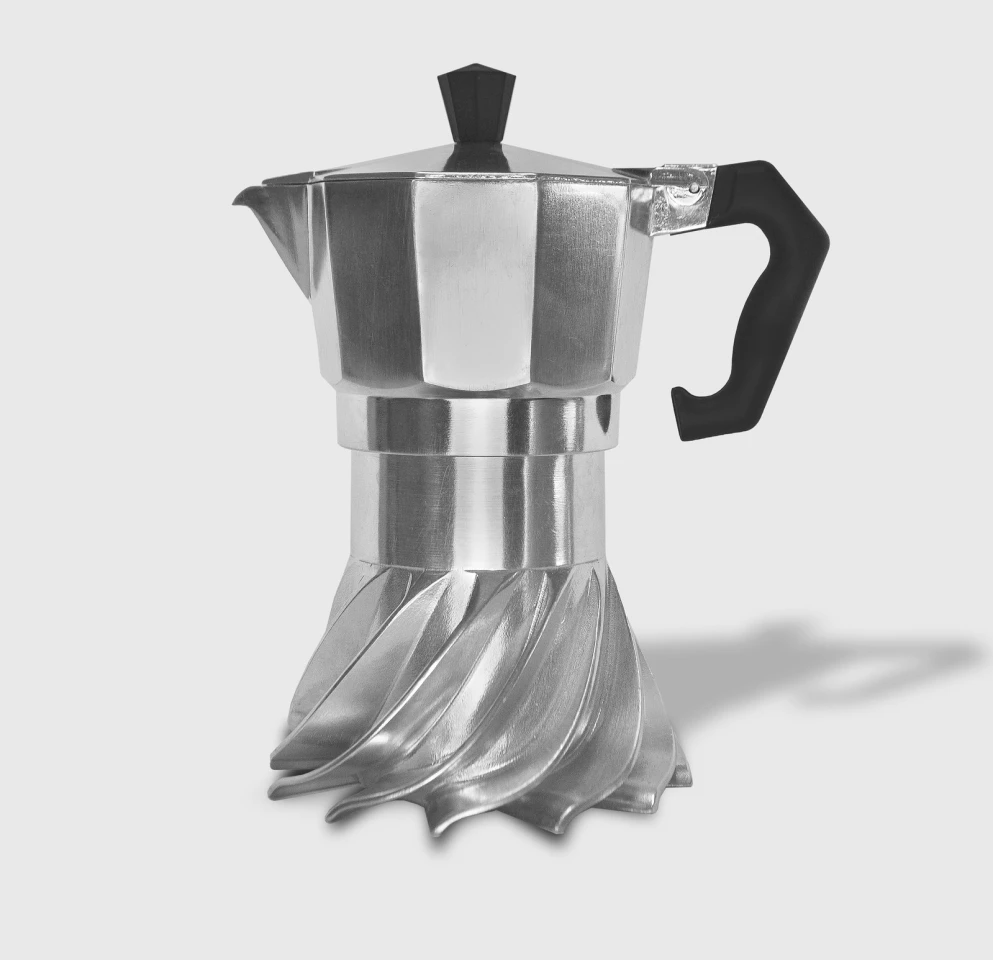
More than just a striking look, the new spiral-bladed base delivers faster, more efficient coffee brewing

Some might yell "blasphemy!" at the very idea of messing with such a longstanding, segment-defining design, but if all freethinkers thought that way, we'd still be locked in the distant past. A product developer by trade, Frontini determined to give the traditional moka pot a performance makeover without destroying its vintage appeal.

"Preserving tradition while rethinking how it fits into the future," his company states of its mission.
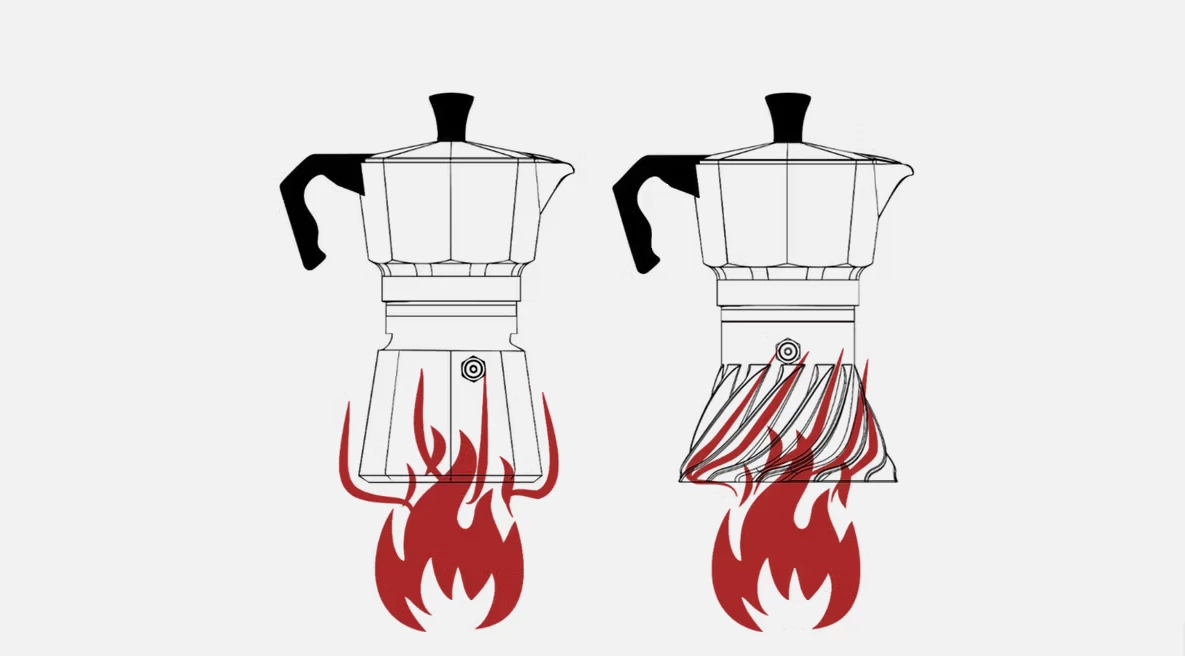
Traditional moka pot versus Turbo Moka pot design

In more specific terms, Frontini set about boosting the efficiency of the moka pot to better align with modern, environmentally conscious expectations. The swirly fins carved into the exterior of the base chamber nearly double the area with which the flame has to make contact, offering a 93-percent increase in surface area overall. The channels between those fins also help to direct and concentrate the flames, leading to improved heating efficiency that Turbo Moka claims cuts brewing time in half, using up to 50 percent less gas during the process.

It's the same general strategy JetBoil uses to increase the speed of water boiling in its all-in-one outdoor Personal Cooking Systems. The company's FluxRing heat exchanger replaces the flat pot base surface with a corrugated ring that increases surface area to speed up the heating and boiling processes. Some competitors in the space use similar designs.

It's not designed specifically for the outdoors, but the Turbo Moka's compact size, gas stove optimization and fast brewing make it a natural for early, frigid campsite mornings following rough nights wrestling with foam mattresses only nominally thicker than a stick of gum

We've also seen the strategy previously directed into the home kitchen on products like the Flare Pan and Turbo Pot. But whereas we're not always eager for our pasta water to boil immediately as we prepare other ingredients, we are always happy to see our coffee brew faster than expected.

What we find even more impressive about the Turbo Moka than its claims of halved timing is that Frontini and co have managed to achieve such improvements in an artistic way that complements rather than detracts from the original Moka pot design. Some might disagree, but we find the swept blades a striking accent that adds a (literal) modern twist without overwhelming the classic style.
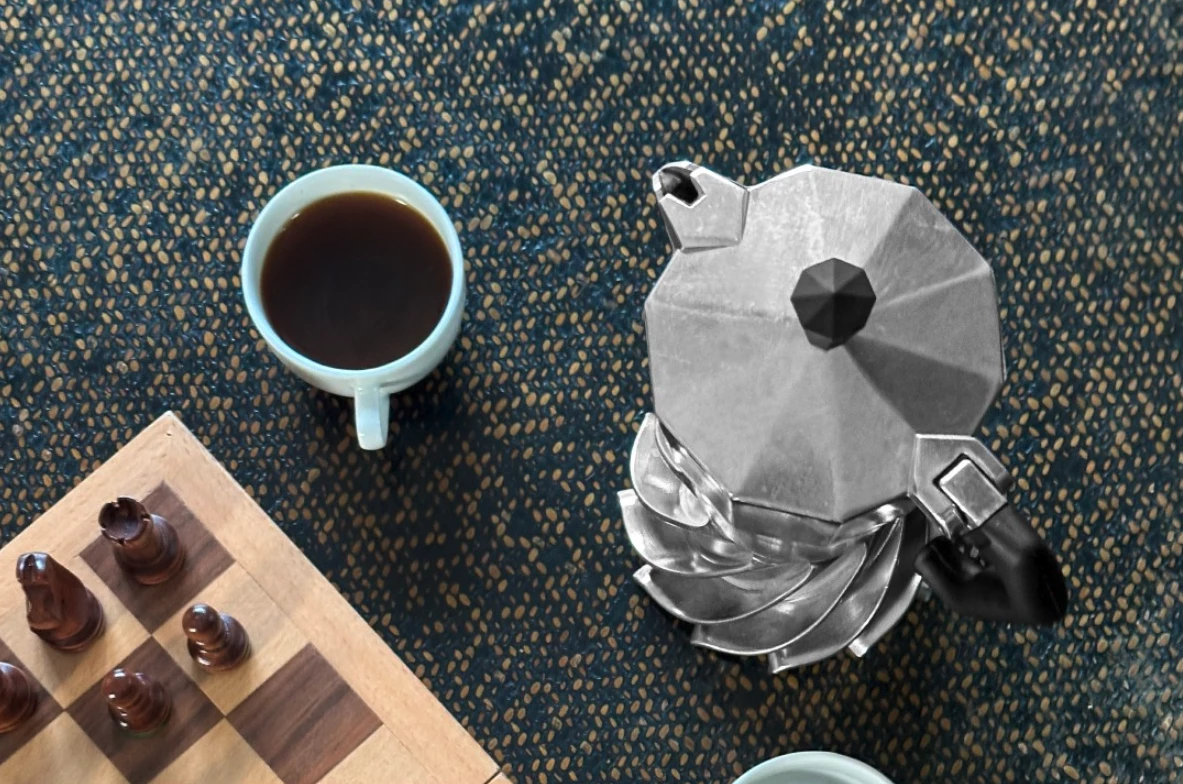
The Turbo Moka lends a familiar but wholly unique look from nearly every angle

The Turbo Moka is available now in a 3-cup (4.4-oz/130-ml) size for a price of €85 (approx. US$100). Each one is crafted out of aluminum in Piedmont, Italy using an age-old lost-wax casting process. While optimized for use with gas stoves, the new pot can also be used on an electric stove, albeit without the same speed benefits. Turbo also offers a €20 adapter for use with induction cooktops.

Source: Turbo Moka

New Atlas may receive commission if you purchase through our links

View gallery - 11 images
No comments
0 comments
There are no comments. Be the first!