If you’re shopping for a used car, you know just how instrumental the smallest details are. Price, brand, mileage, condition… you’re probably juggling everything at once, trying to find the perfect car that offers a mix of all these attributes. But here’s the most important factor you’re probably missing: reliability.
You don’t want to be sitting in your newly purchased pre-owned car first thing in the morning, only to have the bloody thing not fire up. Ouch. That’s where Consumer Reports' (CR) reliability study for used cars comes in.
The US Magazine ranks 26 auto brands from "most" to "least reliable" cars that are five to 10 years old – in this case, models from 2016 to 2021 from a survey sample of more than 140,000 vehicles – with Tesla ranking last.
CR focuses on 20 possible "trouble areas" and compares "a car's number of problems to the average number of problems for cars of that model year" to measure reliability and generate a ranking. The magazine’s experts subsequently determine a score by weighing the reported issues based on their severity.

Let’s have a look at this year's list in full. At the top, we have the usual suspects of Lexus, Toyota, and Mazda, which have been given an average reliability rating of 77, 73, and 58 (out of 100), respectively. Honda (57) and Acura (53) follow closely to round out the top five.
That rating is more or less in line with CR’s reliability report for new cars, which placed Toyota, Subaru, Lexus, Honda, and BMW (in that order) in the top five. That’s good news if you’re in the market for a pre-owned Japanese car. You’re much more likely not to go wrong with that decision.
You’ll find a bunch of popular European brands placed in the middle of the list with scores lingering around the 50 mark. The bottom of the list, meanwhile, is bombarded with American makers, with brands earning scores less than 40.
A few car brands are missing, including Porsche, Infiniti, Mitsubishi, and Fiat. That’s owing to insufficient data to rank them.
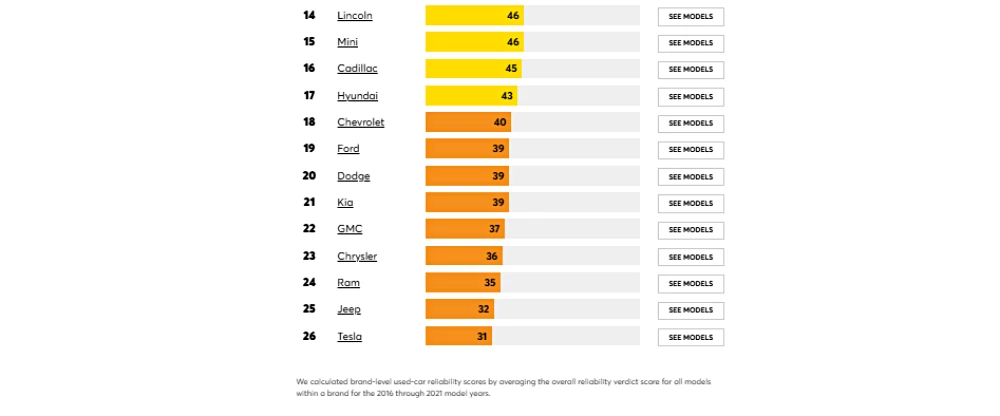
There, you’ll find the likes of Jeep, Chrysler, GMC, and Ram, but at the very bottom of that pile lies Tesla, with an abysmal reliability score of 31.
One is bound to wonder: How could cars with so few moving parts (relatively speaking) have the highest number of owner complaints? From a carmaker that is known for its state-of-the-art technology, performance, and wide network of charging stations that have made electric vehicles so darn accessible?
Well, Tesla’s reliability issues are nothing new: suspension, electronics, and build quality problems are some of the most common woes experienced by Tesla owners. But on closer examination, you realize what’s happened here. In the study, the Teslas assessed were primarily early Model S and Model X production runs, both models that were manufactured during the company's "production hell" phase between 2014 and 2019. Teslas from these batches were notorious for suspension issues, niggles with the temperature systems, to odd build-quality problems like broken door handles.
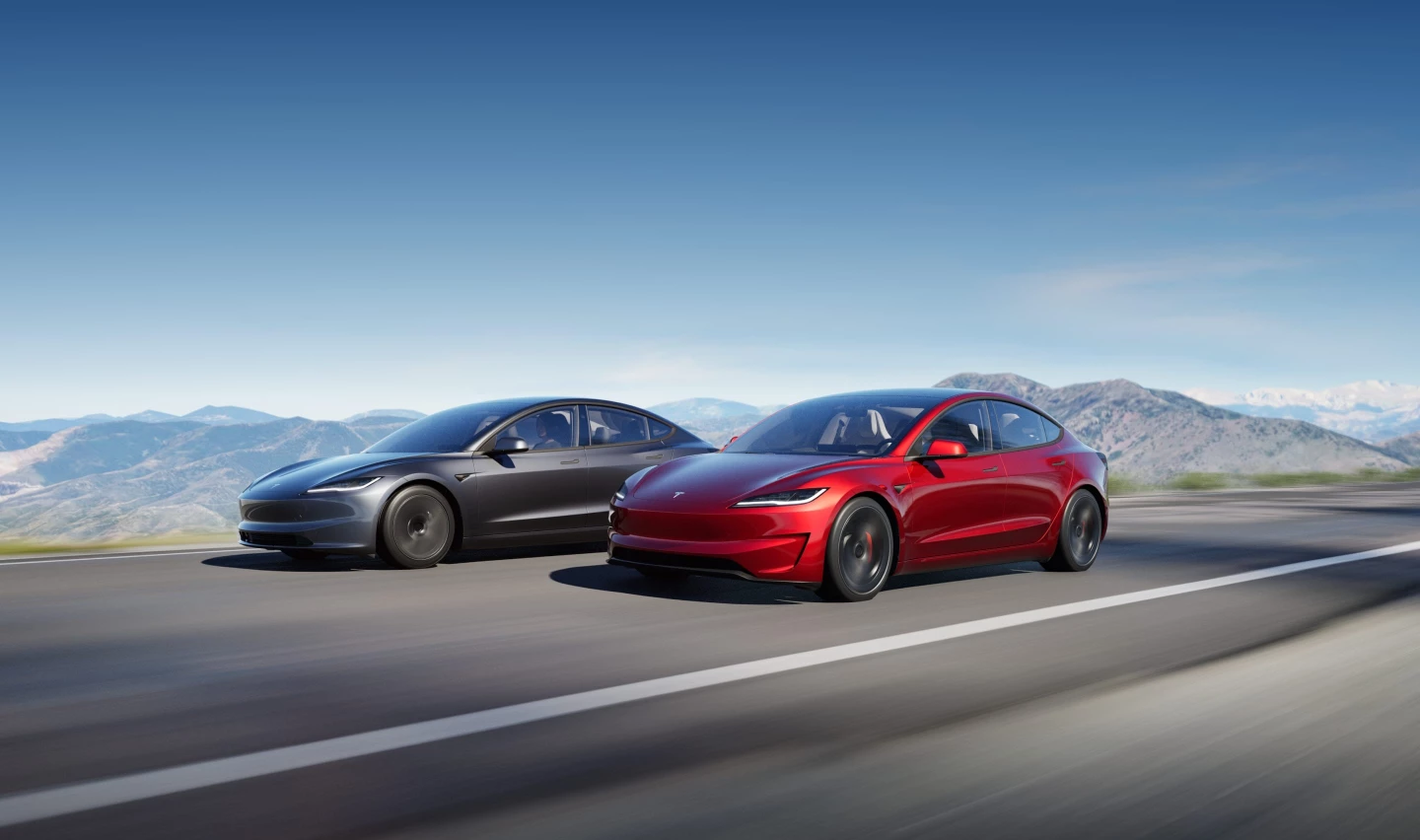
So, if anything, this report reveals more about the time period in which these Teslas were manufactured than it does about what Tesla is doing now. That difference is even more evident when you see how Tesla’s more recent models, like the Model 3 and Model Y, have been faring. CR’s own reliability study for new cars placed Tesla within the top 10, with the Model Y even receiving an "excellent" score comparable to well-known Japanese brands.
So what does this tell us? Well, if you were in the market for a used Tesla from, say, 2016, it would likely give you more problems than you anticipated – compared to a brand new EV from the carmaker. And the fact that used Teslas have dropped in value way quicker than other electric vehicles also reflects Consumer Reports' rankings.
It’s not just about Teslas – while rankings like these can give you a good overall idea about brand reliability ratings, it would be more helpful for you to look at individual car models and go from there.
Well, there you have it. What carmaker would you trust if you were in the market for a second-hand car?
Source: Consumer Reports