



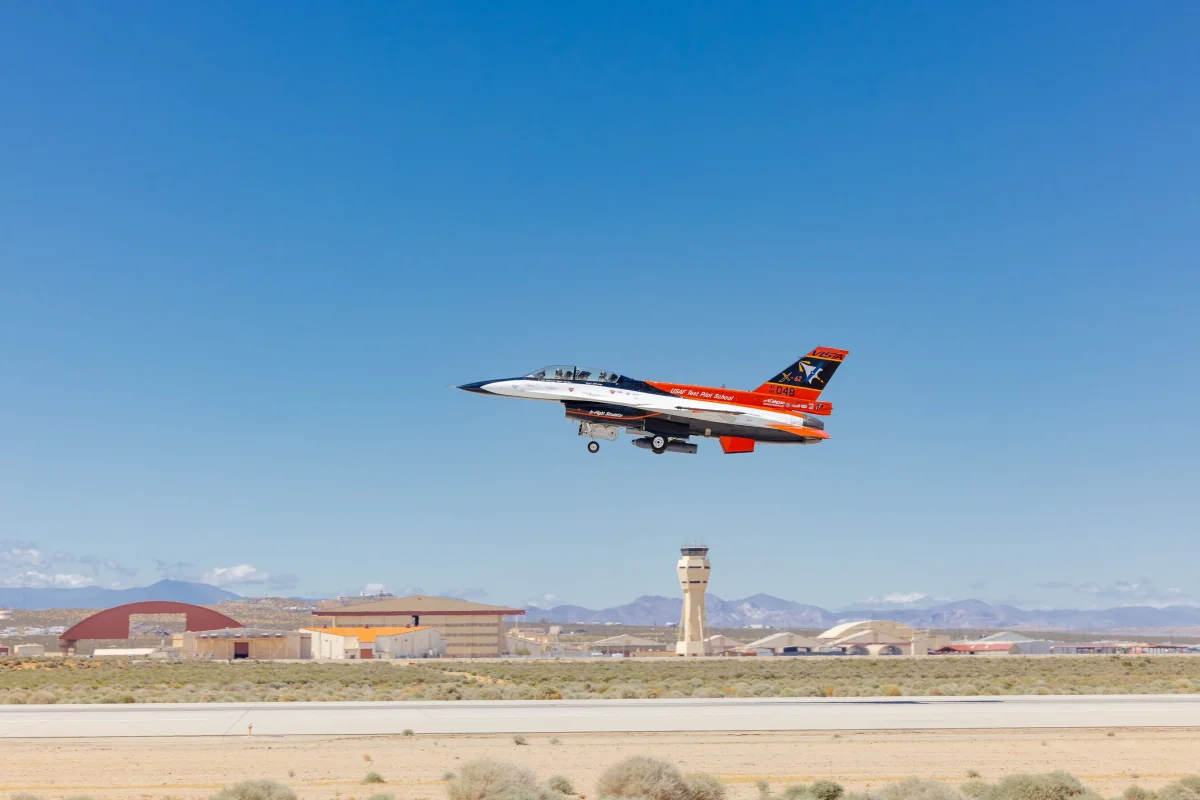



Autonomous air combat reached a major milestone in the skies over Edwards Air Force Base, California, as the X-62A VISTA test aircraft carried out full AI air intercept missions using live sensor data rather than simulated feeds.
How new technology, especially military technology, is tested can often be confusing if all you have to go on are occasional, not-very-in-depth news articles. It's easy to feel skeptical after reading, for example, that a laser weapon test shooting down a target drone involved the flight trajectory of the drone being preprogrammed into its tracking system.
While that may seem like cheating, engineering tests are designed to isolate and fix one problem at a time, requiring all other variables to be tightly controlled. In the laser example, engineers may have been evaluating the laser’s focusing mechanism, so they needed to make sure the laser's tracking mechanism wasn't complicating matters.
The same principle applies to developing autonomous flight systems for combat aircraft. Having a plane fly a full mission on its own is a lot more complicated than just going from point A to point B. Not only are highly complex aerodynamics at play, combined with the computer needing to work out how to complete its tasks, there's also how to handle a huge influx of real-time data from a suite of onboard sensors and off-board platforms.
Worse than that, real-world sensor data is often so ambiguous, incomplete, and riddled with noise that the only way to describe it is borderline chaotic.
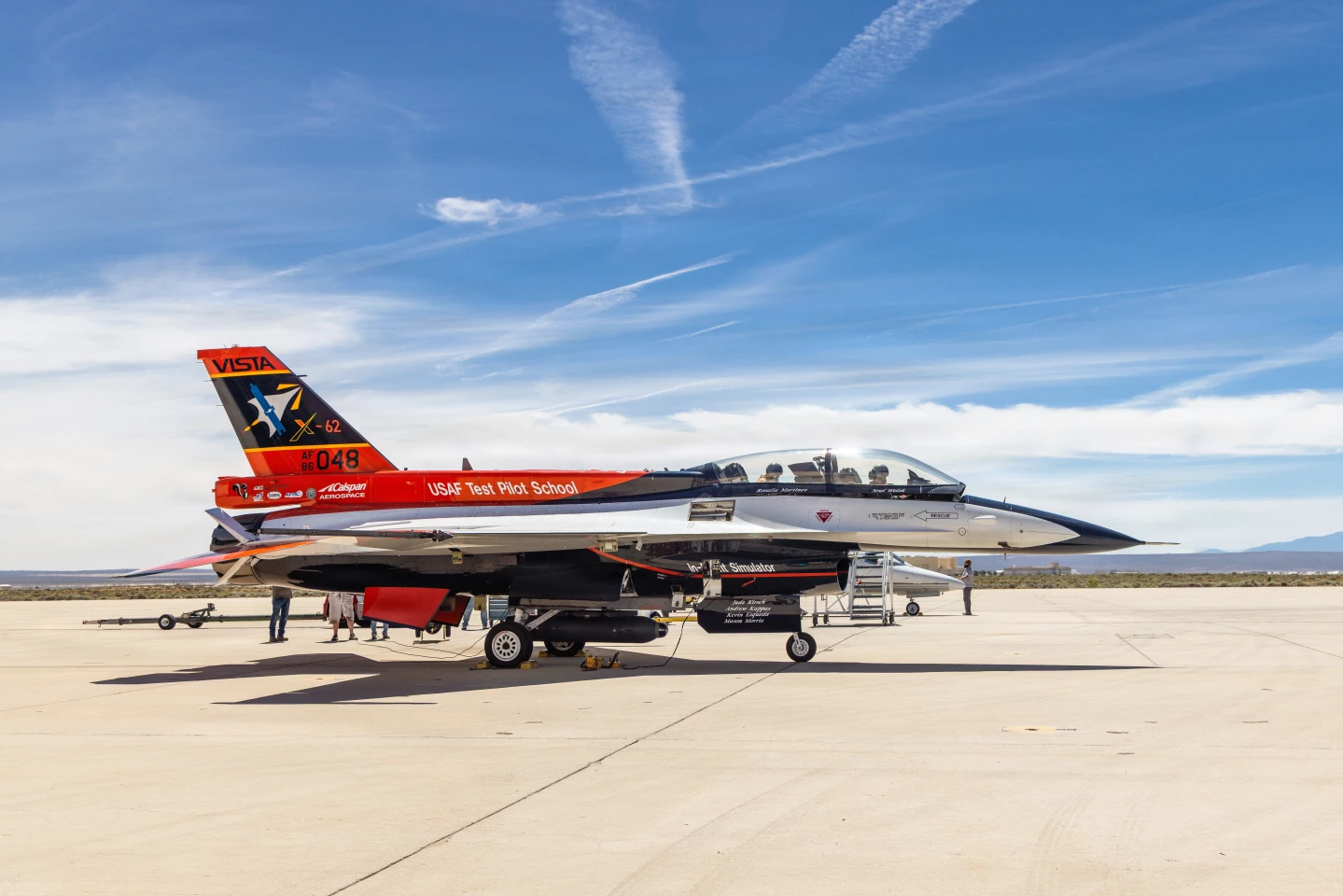
For this reason, the X-62A and similar experimental aircraft typically rely on digital simulations of various sensor input to simplify flight testing. A target aircraft might only exist as a simulated data file, as may radar signals, ground station input, or obstacles. That's also the reason all the test flights have a human safety pilot aboard – to comply with US Air Force protocols and to ensure that there's someone on hand if manual control is required.
During the recent HAVE HEAT test series, however, the X-62A ingested live, noisy target-tracking data from an optical sensor in its Legion Pod IRST (Infrared Search and Track) system. The AI interpreted this data to perform 27 tactical air intercepts against a live T-38 Talon "threat" aircraft across eight flights. In doing so, the aircraft successfully managed to close the problematic sensor-to-action loop as it shifted from automated navigation to dynamic, autonomous combat maneuvering.
It managed this using an "Supermassive" AI agent framework developed by Lockheed Martin's famous yet oh-so secret Skunk Works. According to the company, ground testing and full integration of the software on the X-62A took only three months.
Additionally, the Legion Pod allowed the X-62A to carry out its interceptions without active radar. Instead, it was able to maintain stealth by passively tracking the Talon's heat signature while remaining electronically silent.
"Our ongoing partnership with TPS is driving important progress with this latest flight test series demonstrating that our AI can effectively and reliably close the sensor‑to‑action loop aboard an operational combat aircraft," said Ron Fehlen, vice president and general manager, Lockheed Martin Skunk Works. "Our autonomous agents consumed classified infrared search and track feeds and executed combat‑critical maneuvers in real time. This achievement marks a decisive advance toward delivering AI‑augmented air dominance for the United States."
Source: Lockheed Martin


