








It’s often said that a monopoly can be bad for business. For years, two brands have had a monopoly of sorts in the intercom market: Cardo and Sena. Sure, there have been a few smaller players that've tried to muscle their way into the conversation now and then, but when it comes to premium helmet communication systems, these two have largely had the run of the place.
And that's not necessarily a bad thing. Both brands have built solid reputations over the years, offering riders increasingly sophisticated ways to stay connected on the road. But a lack of serious competition can also mean established players have fewer reasons to shake things up.
Enter RESO, a relatively new name looking to upset that comfortable little arrangement. Its Pilot Pro helmet intercom arrives with a rather ambitious feature list, promising everything from hybrid mesh connectivity and action camera integration to built-in GPS functionality and long battery life. I’ve had a couple of these intercom units for a few weeks, and boy, am I impressed?
Design
The first thing you'll notice about the intercom is that it doesn't look particularly interested in screaming for attention. I love that. Not in a million years would I want a hefty intercom with blingy colors and flashing lights stuck on the side of my helmet.
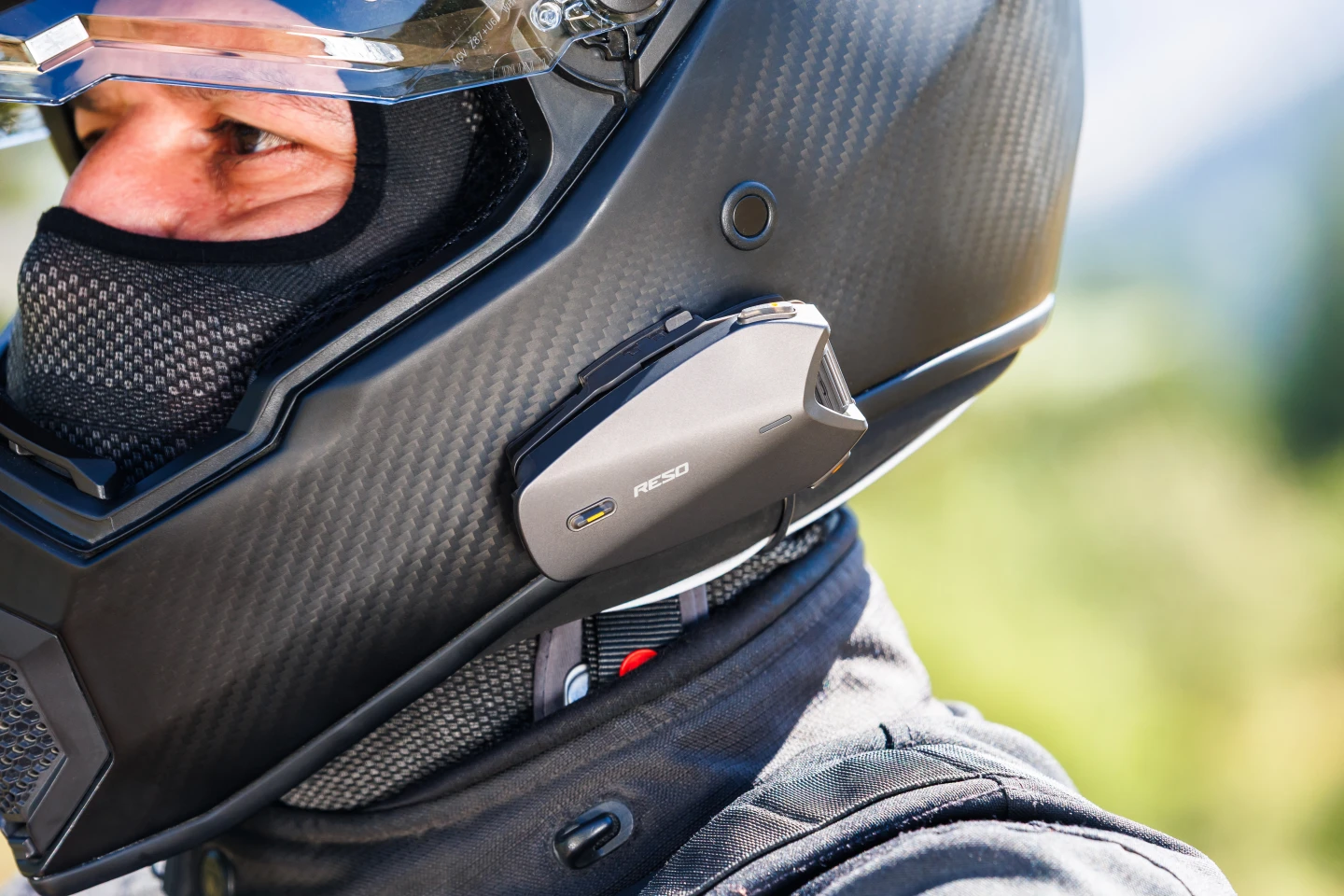
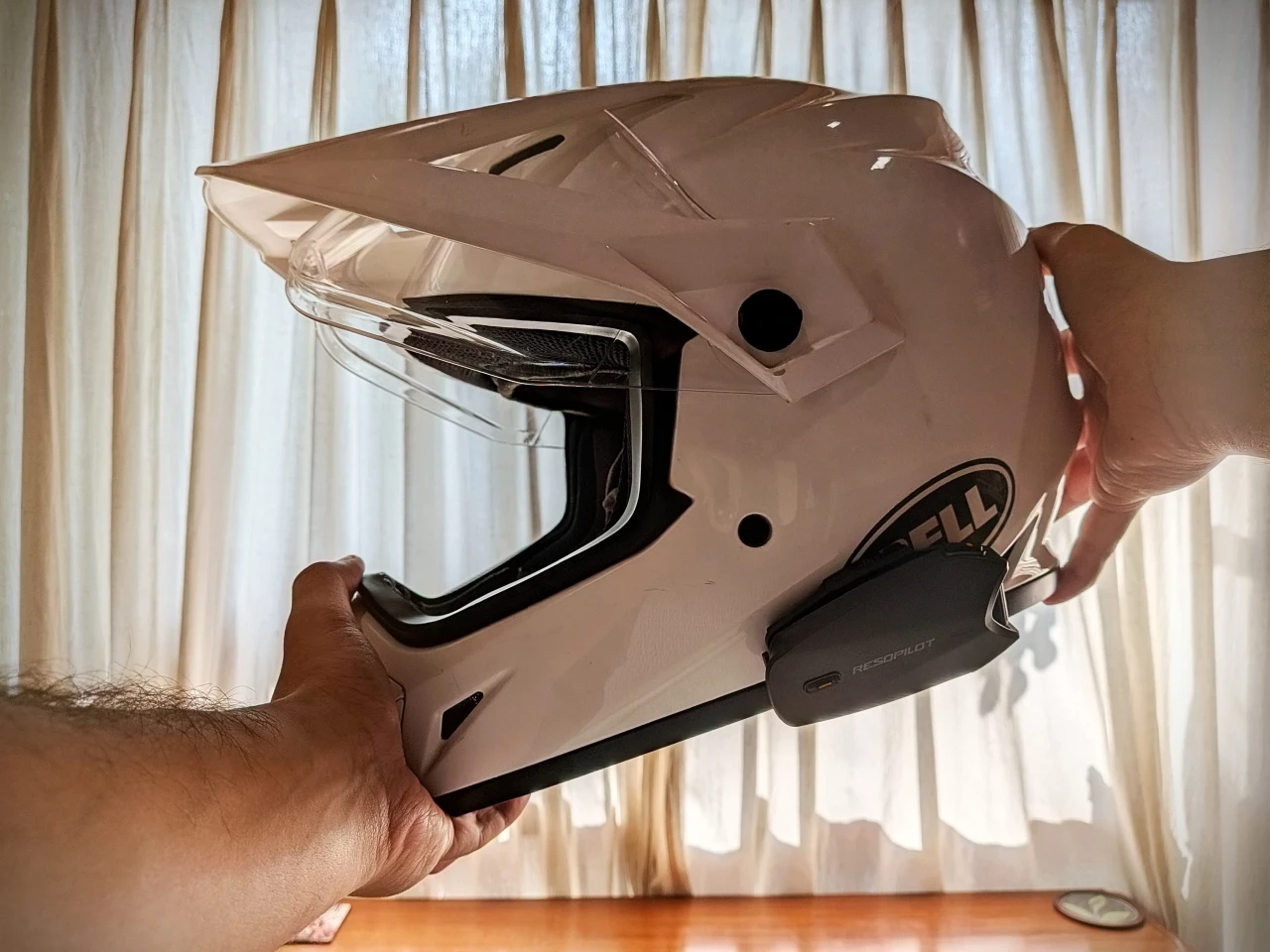
The Pilot Pro is fairly sleek and compact. The styling has a bit of a DJI influence, which isn't entirely surprising given that RESO says its team includes former DJI engineers. The main unit weighs approximately 65 g (2.29 oz) without its mounting base, so it doesn't add a particularly cumbersome lump to the side of your helmet.
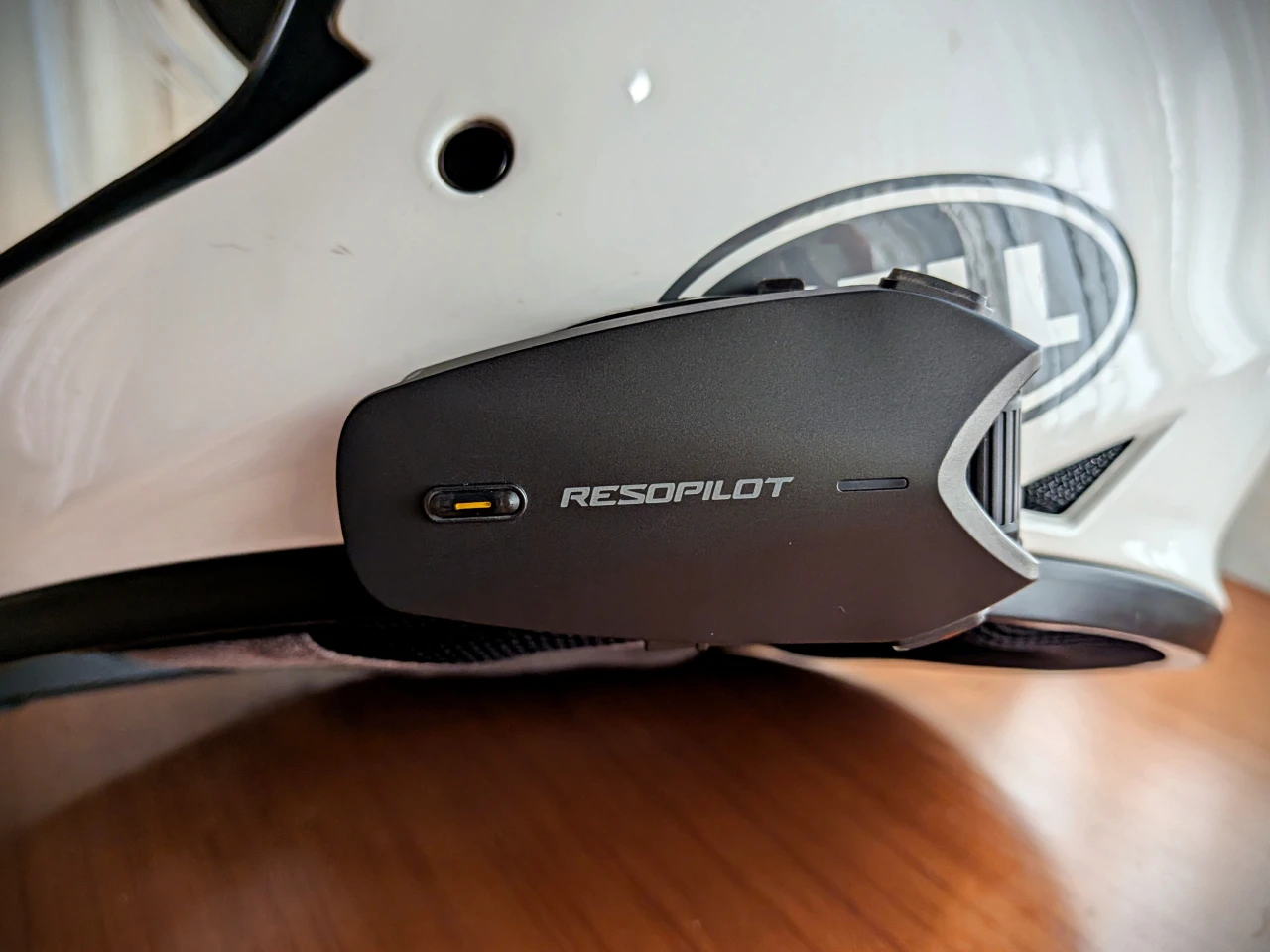
The buttons and volume control are sensibly laid out. My favorite bit is the magnetic mounting arrangement, which makes it easy to detach the unit when you leave your helmet behind. It's also IP67-rated for dust and water resistance, too, so getting caught in an unexpected downpour shouldn't be a reason to panic.
Installation
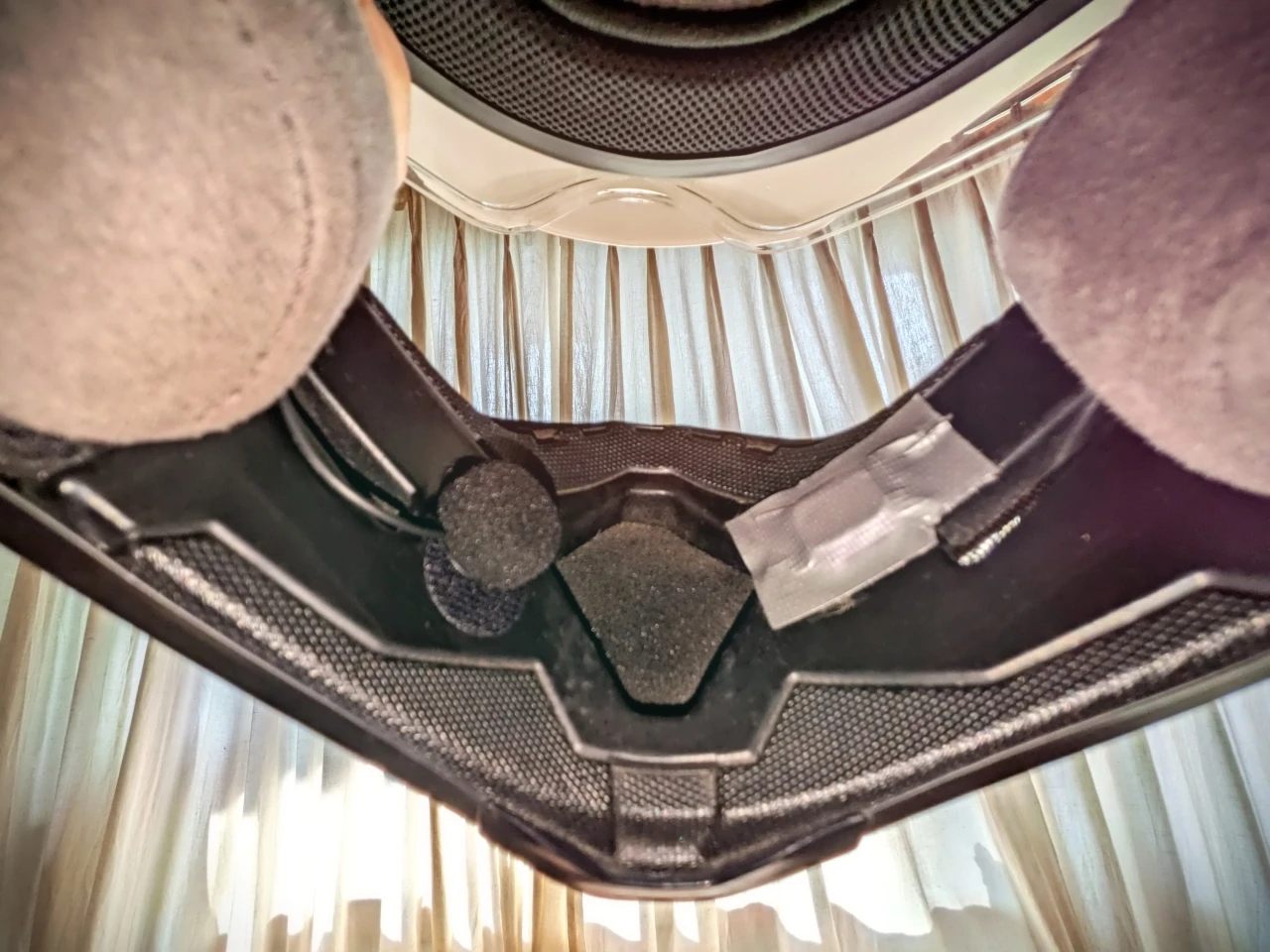
Installing a helmet intercom isn't exactly rocket science, especially in 2026 when there are tons of tutorial videos for those who still need guidance. You get 40-mm speakers, a wired microphone for full-face helmets, a boom microphone for open-face and modular helmets, Velcro pads, and the necessary mounting hardware, all in the box.
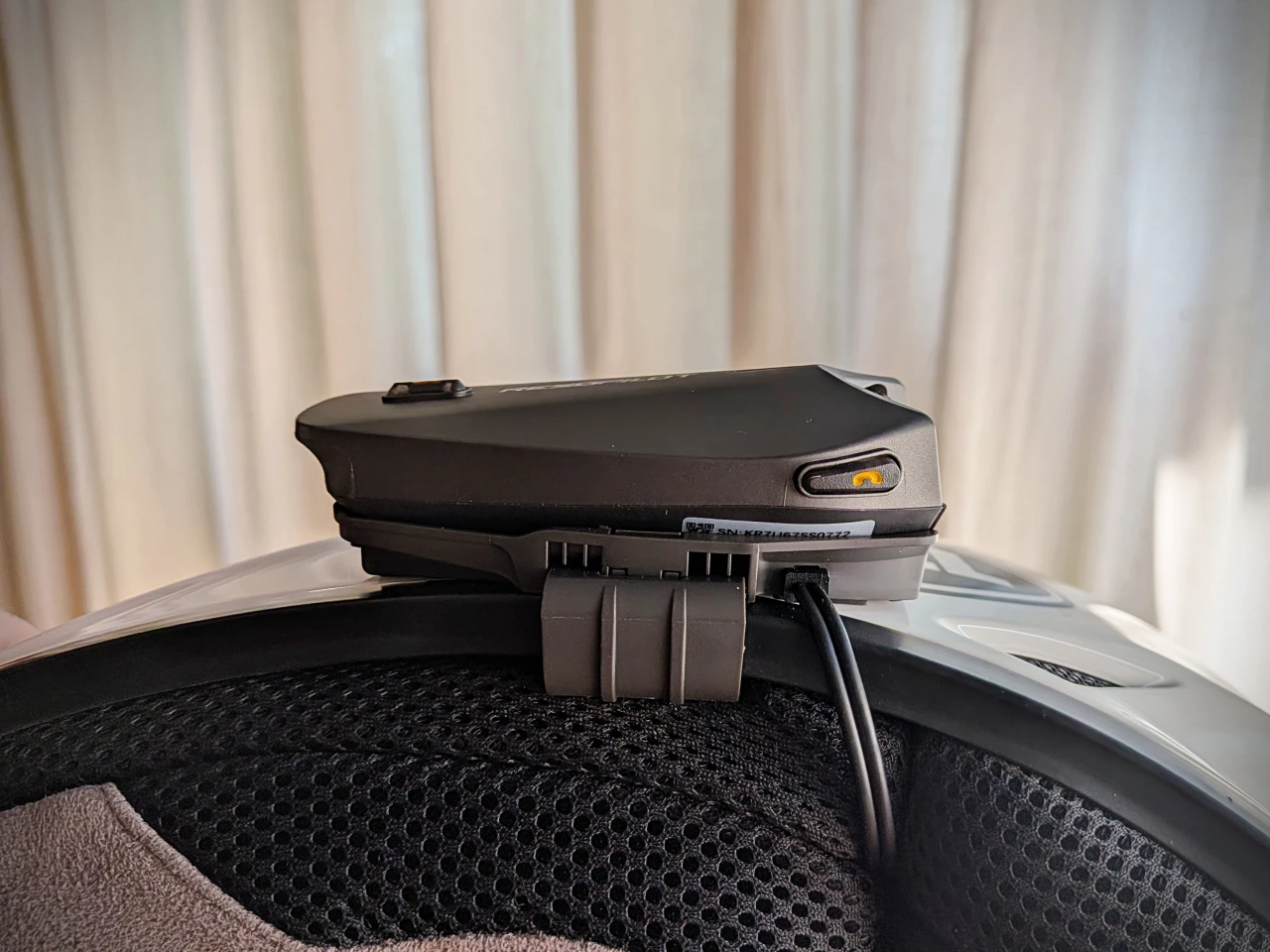
The speakers are small enough to slot into the ear pockets of most helmets, and the wires are long enough to connect everything nice and tidy. There’s an adhesive mounting arrangement that you can use or a clip mount, which is what I ended up using.
Setup and Pairing
This is where things start getting interesting. The RESO Pilot Pro connects to your smartphone over Bluetooth 5.2, and you can manage most of its more advanced functions through the companion RESO Link app.
Pairing the unit with your phone is relatively straightforward, while setting up a mesh group can be done through the physical controls, voice commands, or the phone app. Once the group is established, the system can automatically switch between hardware and software mesh connections through its DuoSync technology.
The voice assistant is another useful addition – although a bit irritating if you’re not used to it. There were times when ordinary conversation with my wife on the other end occasionally triggered commands unintentionally. That’s because the system doesn't require a specific wake-up prompt. Something I think RESO can improve with an OTA update.
But have to admit, for first-time users, there's a small learning curve here. The sheer number of functions and settings may make you spend some time getting familiar with the app before heading out.
Range
This is probably the Pilo Pro’s strongest suit. Traditional motorcycle intercoms rely on Bluetooth or proprietary mesh networking, with communication eventually dropping when you and your buddies move beyond the system's operating range.
RESO tackles that with DuoSync, which combines two different communication technologies. Its hardware mesh offers a claimed point-to-point range of up to 1.5 miles (2.5 km), with a maximum group communication range of 7.5 miles (12 km). RESO makes it possible through the mesh network's multi-hop communication, where connected riders help relay the signal across the group.
But when even that isn't enough, the system can switch to software mesh, which uses mobile internet connectivity to keep riders connected. In theory, this means your buddies could be several miles away and still carry on a conversation, provided everyone has a working internet connection.
The automatic switching between the two modes is arguably the cleverest part. You don't have to manually switch networks every time someone drops out of hardware mesh range.
There is, however, a rather obvious catch. Software mesh depends on mobile network coverage, so don't expect unlimited communication range when you're riding through remote mountain passes or deep into the wilderness without cellular connectivity. I haven’t had the unit long enough to test that in a no-internet area, but it’s worked flawlessly between my helmet and my wife’s helmet so far.
Controls
I'm a big believer in keeping motorcycle controls simple. You're already dealing with traffic, road conditions, navigation, and the occasional idiot trying to occupy the same piece of tarmac as you. The last thing you need is a complicated menu system attached to your helmet.
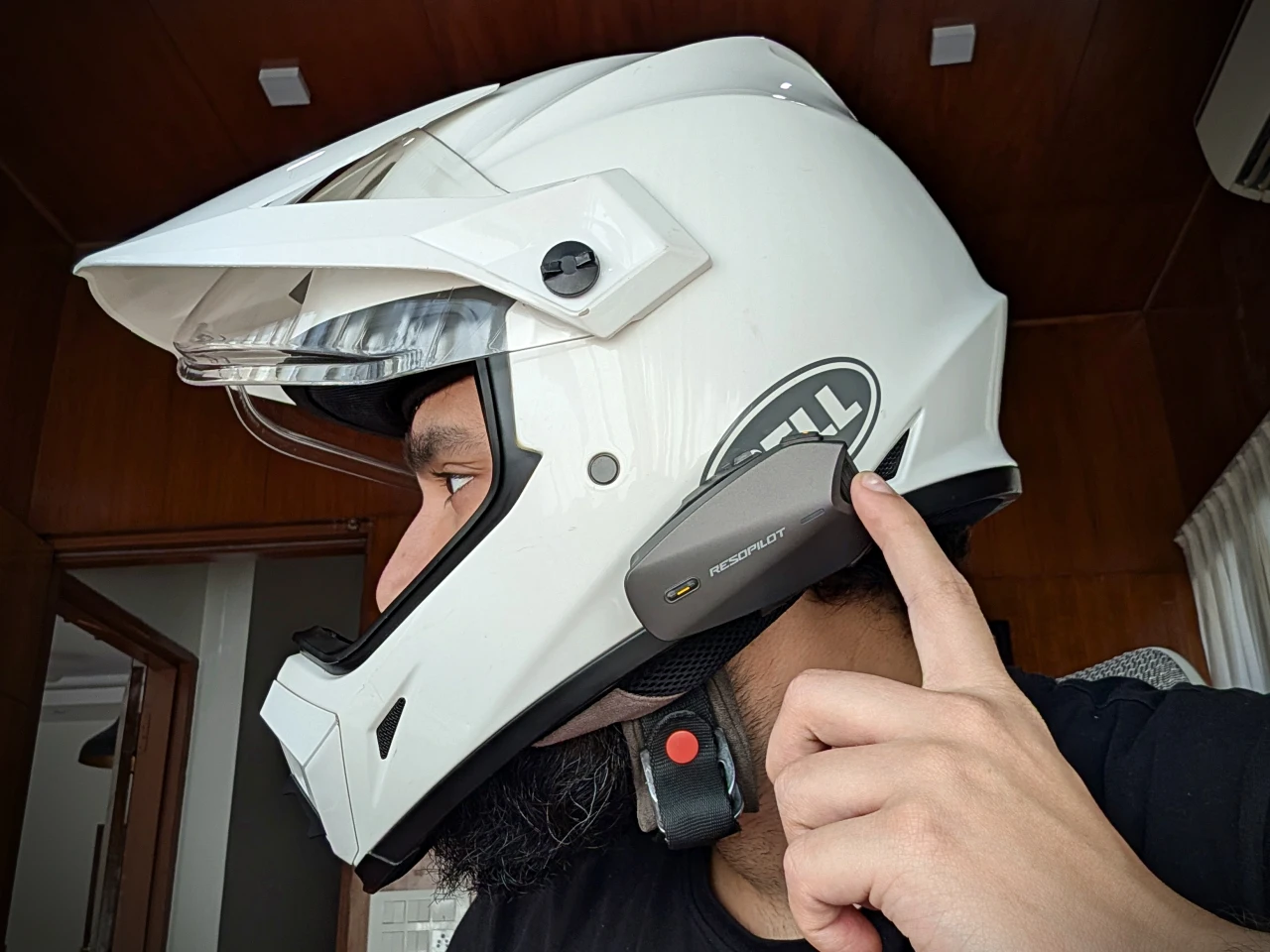
Thankfully, RESO hasn't gone overboard here. The Pilot Pro uses three physical buttons and a rotary control, with the latter handling volume adjustments. The buttons are reasonably well spaced, making them easier to locate without having to take your eyes off the road.
It took me barely a few minutes to get acquainted with the layout. The buttons feel reasonably clicky, and the rotary volume control is one of the best I’ve used on my helmets.
Audio and Mic
A motorcycle intercom can have all the features in the world, but if the person on the other end can't understand what you're saying, you might as well throw the thing away and resort to hand signals.
Thankfully, that’s not the case here. The Pilot Pro comes with 40-mm speakers and AI-assisted wind-noise reduction, with RESO claiming clear communication at speeds of up to 110 mph (180 km/h). I can only vouch for that claim up to 70 mph 110 km/h, though.
The mic’s noise suppression is one of the stronger points of this intercom. I like its ability to filter out background wind noise, even with the visor open on my adventure-style helmet.
Music playback is also more or less very good. Of course, it’s a subjective affair – some may want bigger drivers, some may want more bass, some more volume. But for a set of speakers on a helmet intercom, I had zero issues here.
What’s particularly neat is that the Pilot Pro also supports direct action-camera connectivity, allowing you to record intercom conversations alongside your footage. For those who like to record their rides, that's a big win. Sadly, my DJI Osmo Action 5 is almost always connected to the brilliant Mic Mini, so I didn’t end up using this feature. Nevertheless, it’s still brilliant to have it for any days I might lose my mic or forget it back home.
Battery
The Pilot Pro packs a 1,950-mAh battery, and RESO has clearly put some thought into making sure it doesn't run out of juice halfway through a long ride. The company quotes up to 13 hours of operation with dual mesh, music playback, and GNSS running simultaneously. That figure increases to approximately 18 hours with audio playback and GNSS, while Bluetooth-only operation in power-saving mode can stretch to a claimed 33 hours.
There's also 15-W fast charging through USB-C. RESO says five minutes plugged in will provide up to two hours of additional use, while a 30-minute charge can replenish approximately 80% of the battery.
Those are impressive numbers, although it's worth remembering that battery life varies considerably depending on which features you're using. Personally, I was very impressed with the battery. I completed two full riding days without needing to recharge.
Additional Features
Now, usually, this is where the review would end for a regular intercom. But, the Pilot Pro features a few extras, starting with the built-in GNSS functionality that allows you to record ride routes without relying on your phone's GPS.
You can access ride histories, monitor the real-time location of connected group members, and keep track of where everyone is during a ride through the RESO Link app. It also includes SOS support, allowing emergency contacts to be alerted when assistance is needed. Of course, availability of some safety functions depends on regional support, connectivity, and configuration.
Then there's the aforementioned action-camera integration. The system supports selected DJI, GoPro, and Insta360 cameras through USB-C or direct Bluetooth connections, depending on the camera model.
You also get music sharing, FM radio, cross-brand connectivity, and the ability to receive firmware updates wirelessly. The cross-brand feature deserves particular attention because it addresses one of the biggest frustrations with motorcycle intercoms: not everyone in your riding group necessarily owns the same brand of intercom.
However, there's a distinction worth making. Connecting to another manufacturer's intercom over Bluetooth doesn't automatically mean you get to use its proprietary mesh networking features. The connection method and functionality available depend on the particular Cardo or Sena model you're pairing with.
Pricing
The pricing is actually one of the more interesting aspects of the RESO Pilot Pro. Currently at US$359, it sits right in the territory occupied by some fairly serious competition like the Cardo Packtalk Neo ($359.95) and the Sena 50S ($379).
Step up a little further, and you're looking at the Cardo Packtalk Edge ($439.95) and the newer Sena 60S ($439). That's some pretty stiff competition for a relatively young player trying to muscle in the market.
Final Thoughts
I’ll finish how I started. For years, the motorcycle intercom business has felt like a private party hosted by Cardo and Sena. You could pick a side, argue about sound quality and mesh connectivity, and spend a small fortune making sure everyone in your riding group was on the same system.
It’s clear RESO wants to crash that party – and, to its credit, it hasn't turned up empty-handed. The Pilot Pro brings a compelling mix of features, capable hardware, clever software, and a refreshingly straightforward approach to staying connected on the road.
But there's a catch: all that clever connectivity is only as useful as the people you're riding with, and some of its biggest promises depend on having a data connection.
But perhaps the biggest speed bump is convincing your buddies to switch ecosystems. While the likes of Cardo and Sena have spent years building their respective empires, getting an entire riding group to jump ship is no small feat. RESO definitely has the hardware to make a serious case, but building a community around it could be the bigger challenge.
Still, the Pilot Pro is exactly the kind of disruption this market could use. It might not knock the established players off their thrones overnight. But I think it would have done its job if it made them look over their shoulders.
Product page: RESO


