
Flexible Electronics
-
 LG Display has built on the technology powering its flexible screen prototype that stretched by 20% in 2022, announcing what's claimed to be the world's first stretchable display capable of expanding up to 50%.
 -
 A team of researchers has developed a new material that’s not only elastic, but is impervious to gases and liquids – something this kind of material is usually bad at. The material could be useful for making flexible batteries or wearable electronics.
 -
 Presently, OLED screens are manufactured by trained technicians in large high-tech factories. Now, however, scientists have managed to 3D print a flexible OLED display, paving the way for small businesses to one day be able to do the same thing.
 -
 Soft robots and flexible electronics aren't as protected as their rigid-shelled counterparts, so they're more likely to get ripped or punctured. A new stretchable, self-healing conductive material was designed with this limitation in mind.
 -
 Colorless polyimide (CPI) is a flexible alternative to glass, increasingly being used in bendable smartphone screens. It still can crack, however, which is why scientists have developed a self-healing version that incorporates linseed oil.
 -
 Scientists at Penn State University have developed a flexible sensor they say can be safely printed directly onto the skin, where it can track things like body temperature and blood oxygen levels, before being washed off once the job is done.
 -
 Through a combination of 3D printing techniques and sprayable electronic technology, researchers have come up with a new kind of touchscreen display that can be adapted to almost any shape. They're calling it ProtoSpray.
 -
 Imagine touching the armrest of your sofa to change the channel on your television, or pressing against a lightbulb stencil on the wall to turn on your smart light – these functions and many more like them are now possible thanks to new research.
 -
 We've seen flexible supercapacitor designs before, but how about one that's stretchable? A new discovery by researchers at Duke University and Michigan State University could lead to an excellent stretchable power source for wearable electronics.
 -
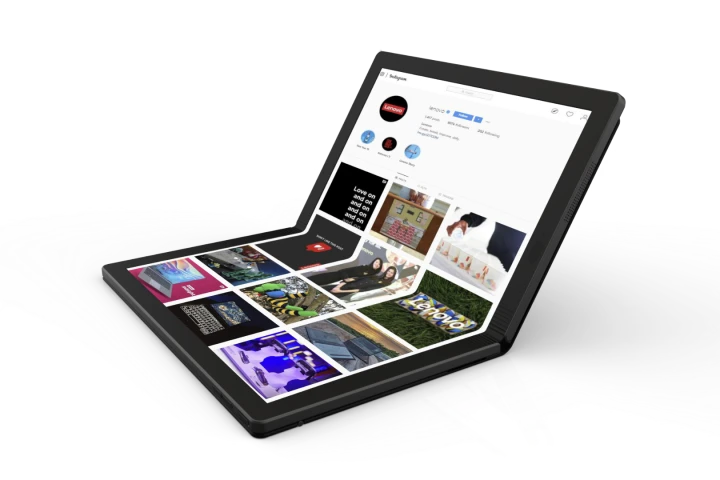 At Lenovo's own Accelerate event in Orlando, the company unveiled a prototype machine that makes Samsung's folding phone look like a kids' toys. This foldable PC can act like a small-screen laptop, big-screen desktop, book-format tablet or stylus-operated sketchbook.
 -
 Researchers at Cambridge University have managed to create the smallest pixels in the world, about a million times tinier than those in a phone. These new pixels could be used in huge, flexible displays that are relatively easy to manufacture and cheaper to run.
 -
 In a new step towards truly wireless charging, engineers have developed an ultra-thin device that captures Wi-Fi signals and converts them into electricity.
Load More