
Urban Transport

Rideshare without sharing in this autonomous taxi

Rideshare without sharing in this autonomous taxi
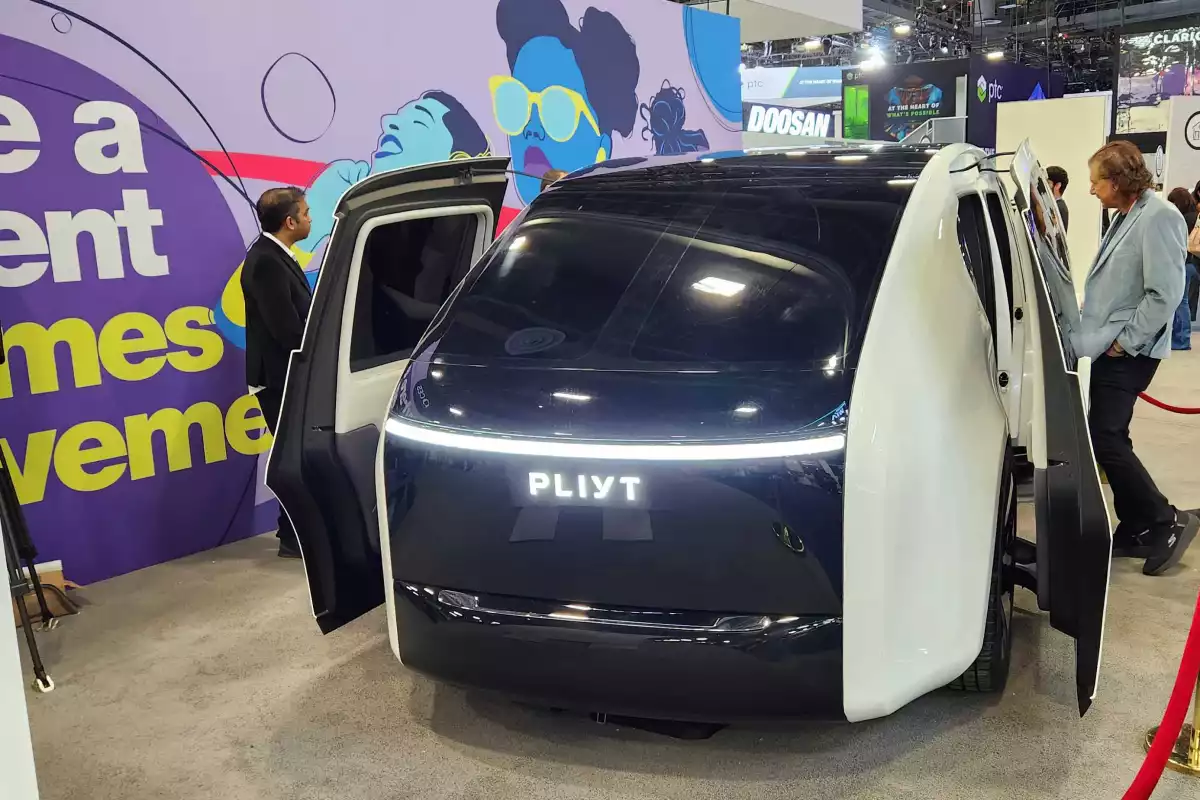
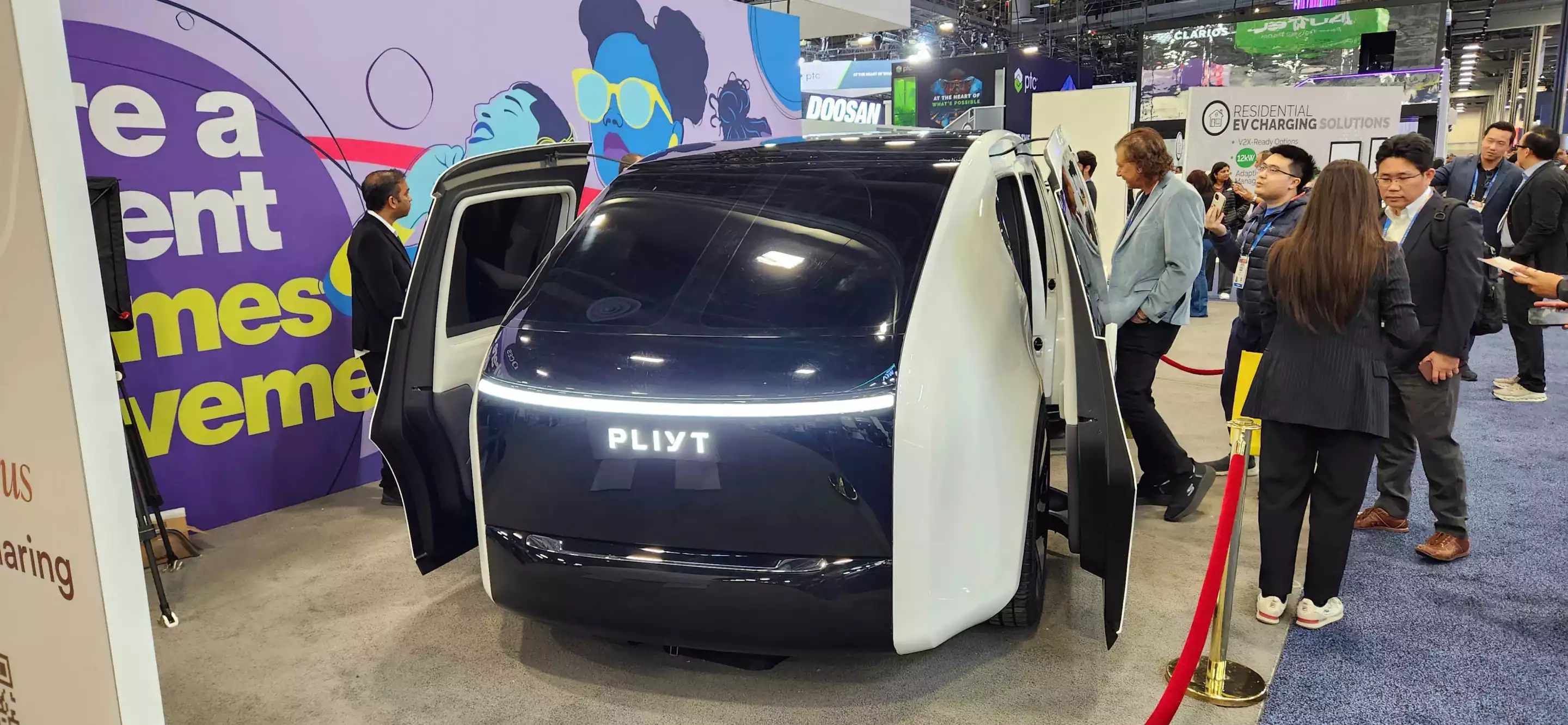
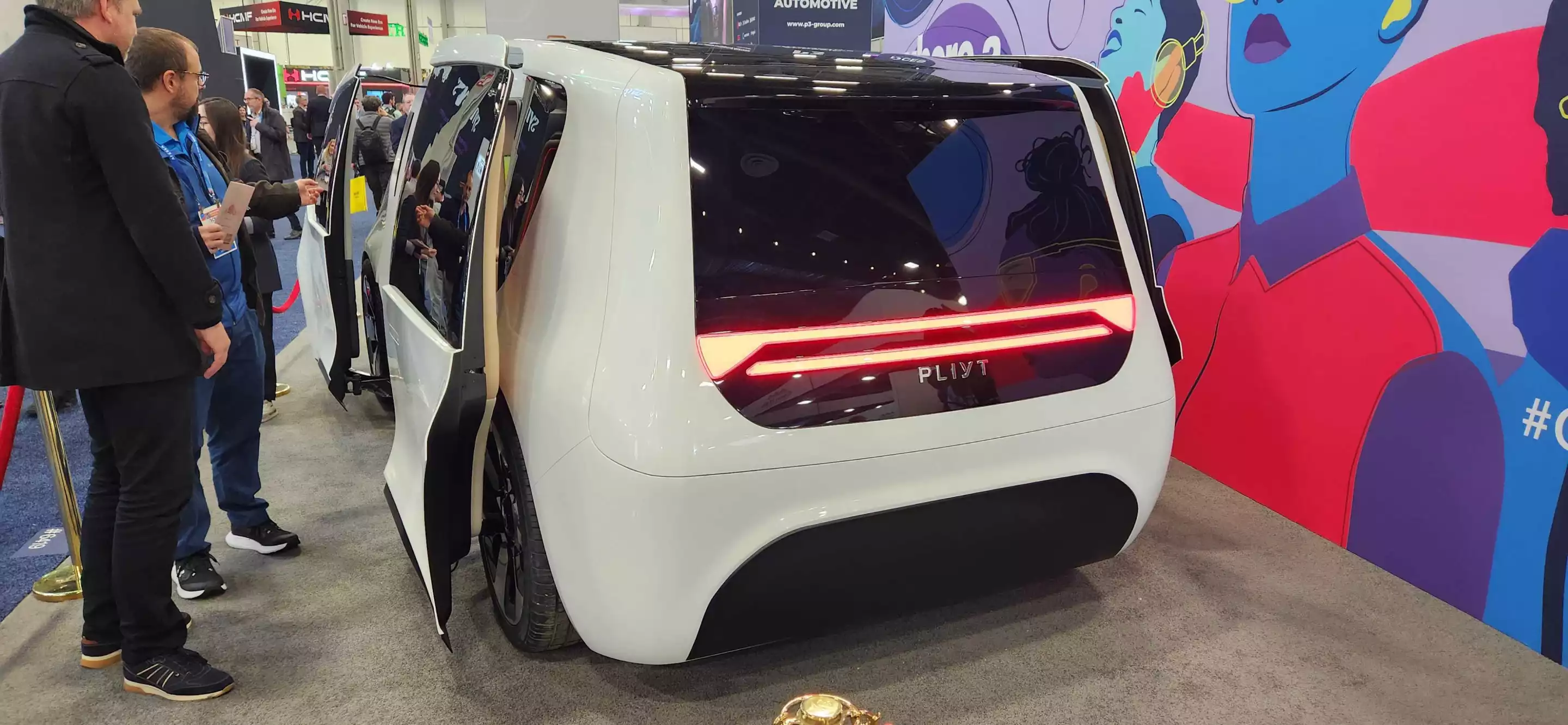
The Pliyt autonomous rideshare vehicle on display at CES 2026 in Las Vegas recently
View 8 Images
The Pliyt autonomous rideshare vehicle on display at CES 2026 in Las Vegas recently
1/8
The Pliyt autonomous rideshare vehicle on display at CES 2026 in Las Vegas recently
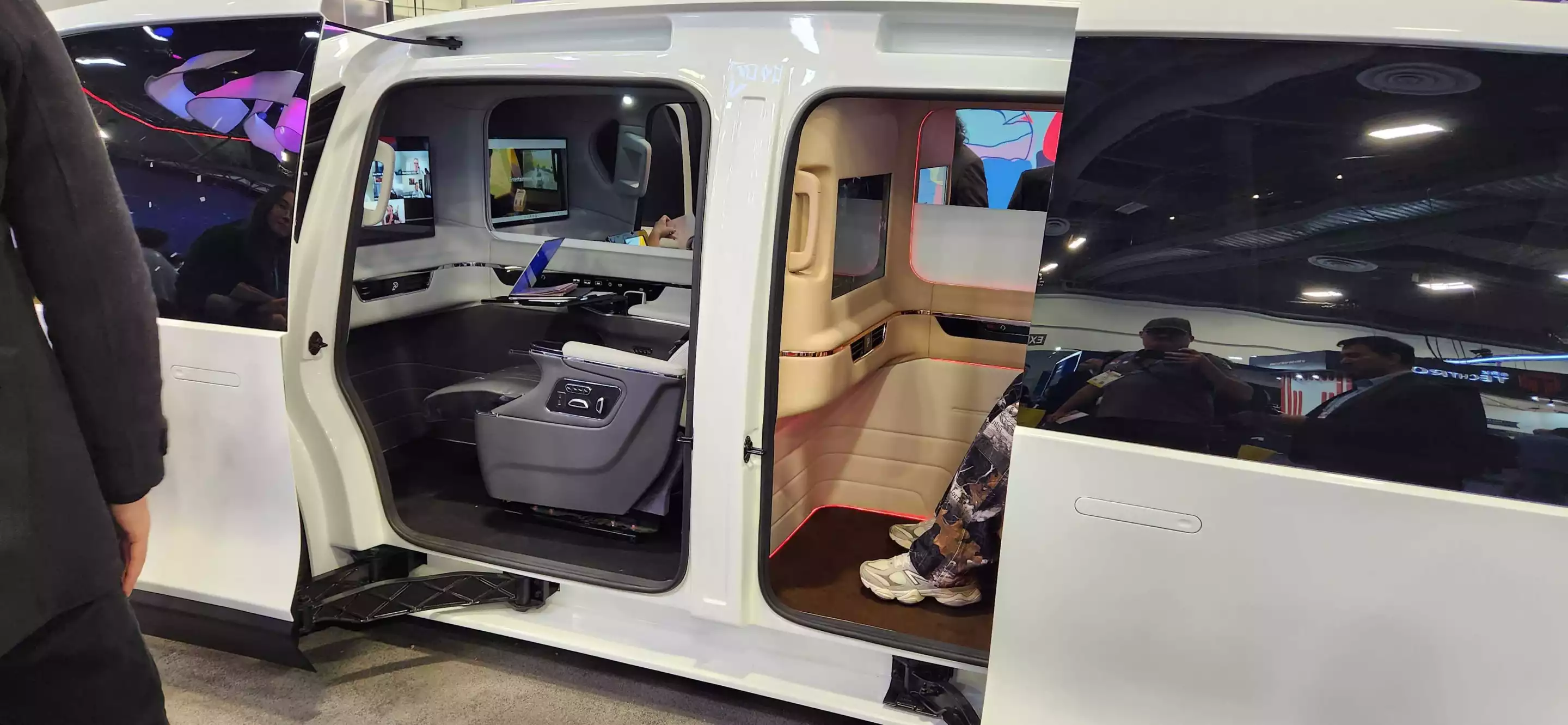
Each Pilyt vehicle is home to four independent pods for passengers, though dividing windows can be lowered for more social journeys
2/8
Each Pilyt vehicle is home to four independent pods for passengers, though dividing windows can be lowered for more social journeys
Development is at the early stages, but Pliyt already has an expo demonstrator
3/8
Development is at the early stages, but Pliyt already has an expo demonstrator
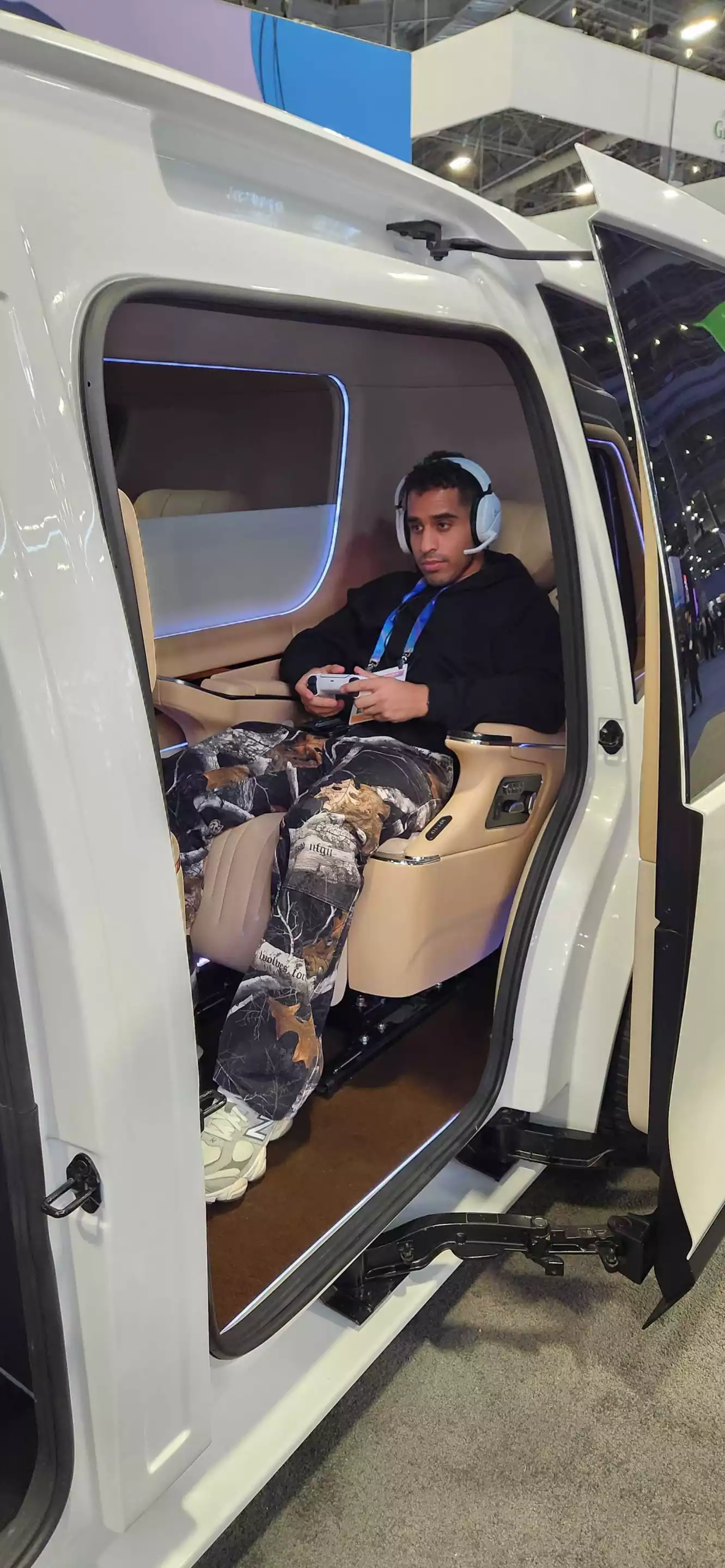
Each pod includes plush 'Zero Gravity' seating for one, along with personalized entertainment for gaming, streaming content or projecting media on the integrated screen
4/8
Each pod includes plush 'Zero Gravity' seating for one, along with personalized entertainment for gaming, streaming content or projecting media on the integrated screen
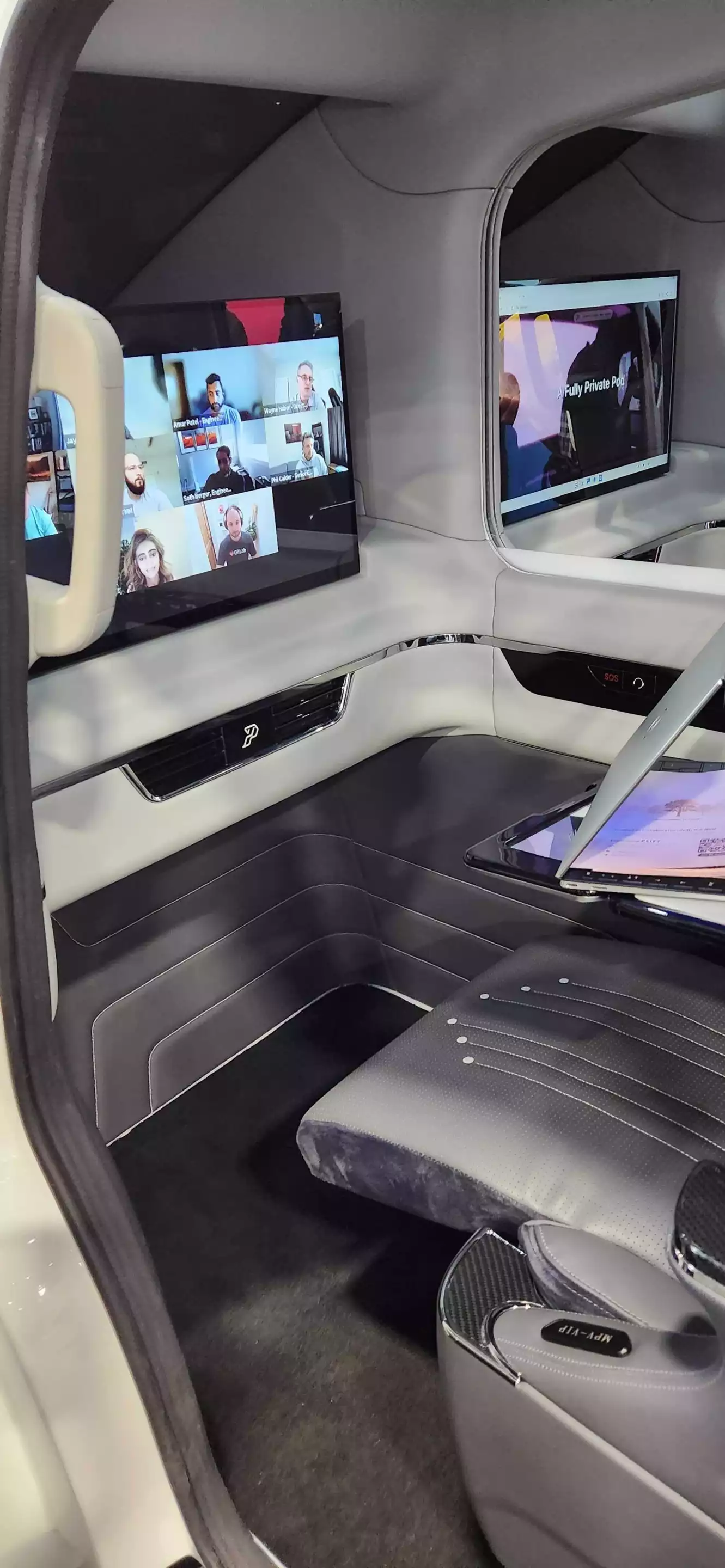
Each pod features a retractable workstation
5/8
Each pod features a retractable workstation for productivity on the go
The autonomous rideshare project is still in the planning stages, but Pliyt is aiming to have its electric pilot vehicle in public trials by 2028
6/8
The autonomous rideshare project is still in the planning stages, but Pliyt is aiming to have its electric pilot vehicle in public trials by 2028
Private solo journeys or social engagement - the choice is up to passengers
7/8
Private solo journeys or social engagement - the choice is up to passengers
Pliyt's four-pod autonomous taxi eliminates shared cabin spaces in favor of private capsules
8/8
Pliyt's four-pod autonomous taxi eliminates shared cabin spaces in favor of private capsules
View gallery - 8 images

California-based startup Pliyt believes the future of ridesharing means sharing the ride as little as possible.

Unlike similar services, where passengers squeeze into a single cabin and awkwardly rub elbows with strangers, Pliyt's design divides the vehicle's interior into four completely independent pods. Each capsule creates a private sanctuary on wheels where passengers can go from point A to B in a comfortable, personal space that respects boundaries.
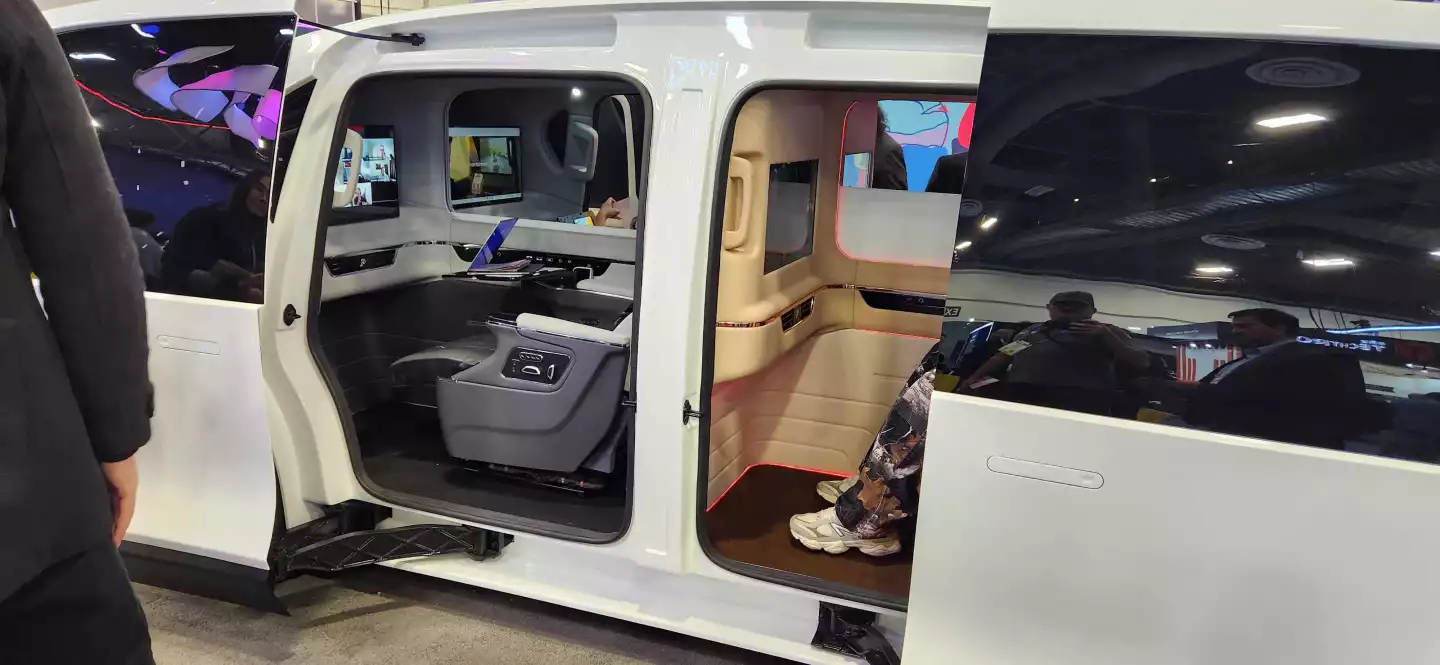
Each Pilyt vehicle is home to four independent pods for passengers, though dividing windows can be lowered for more social journeys

Autonomous pods aren't an entirely new idea of course. Models like Amazon's Zoox and Waymo's Zeekr RT are already out there. But Pliyt's prototype, revealed at CES just days ago, aims to differentiate itself by turning introverts' dreams into reality.

"The vehicle is designed from the inside out, prioritizing personal space, modular privacy, and social choice – rather than retrofitting autonomy onto a conventional cabin," Pliyt's team told me via email. "The experience allows passengers to control how private or social their journey is, which resonated strongly with CES attendees."
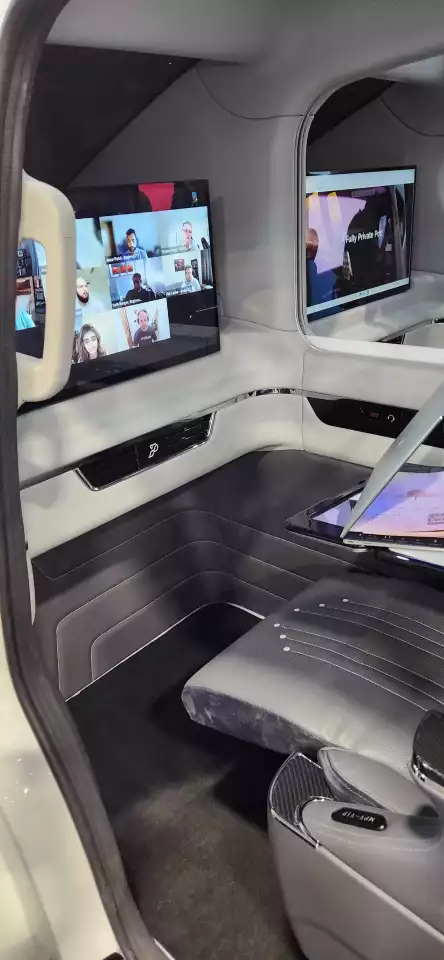
Each pod features a retractable workstation
Each pod features a retractable workstation for productivity on the go

To guarantee complete anonymity, Pliyt equips each pod with one-way glass that prevents both you and your fellow travelers from being observed. You can see out, but nobody can see in. If you're not interested in what's happening outside, the setup includes personalized entertainment for gaming, streaming content or projecting media on the integrated screen.

For those who'd rather work than relax, each capsule includes a retractable workstation with a large screen and side table, allowing you to remain productive while moving around the city.

However, the system isn't completely antisocial. Each pod has independent controls allowing passengers to adjust their level of privacy. Traveling with a companion? The interior dividing window can be lowered so you can share the space with whoever is next to you.

Private solo journeys or social engagement - the choice is up to passengers

Pliyt is committed to comfort beyond just isolation. The seats feature what the company calls zero-gravity seating technology – which won't see passengers float like astronauts aboard the International Space Station, but rather aims to make you feel more comfortable and rested during your journey.

The startup doesn't have its own autonomous driving system but plans to seek partners to provide that service once the project solidifies. The company is currently looking for investors to help develop a pilot vehicle by 2028.

The autonomous rideshare project is still in the planning stages, but Pliyt is aiming to have its electric pilot vehicle in public trials by 2028

"Our focus over the next 12-18 months is on engineering validation, regulatory alignment, and strategic partnerships," Pliyt's team revealed. "The 2028 pilot mentioned reflects a realistic timeline for scaled, public-facing deployment, following phased testing, partner integration, and city-level pilots."

The video below has more.

Introducing Pliyt

Source: Pliyt

View gallery - 8 images
7 comments
7 comments
Trylon
Why still have a shared vehicle at all? Why not single-person taxis? Seems wasteful to always move a large vehicle with four seats when you may not always have four passengers going to roughly the same area.
Global
Too bad you may still smell the other occupants, and if your that last stop, being dragged a long with the other three stops.
Techutante
This setup assumes that the passengers are kinda small, don't stink, and won't be constantly slapping at the window annoyingly to get you to roll it down so they can talk at you. I don't think 4 seats are any less efficient than 1 though, in fact probably more so because the empty space weighs almost nothing without a passenger in it. 4 vehicles instead of 1 vehicle is 4x the cost of movement, whatever that is in fuel emissions or power.
SteveMc
Some naysayers seem to be missing the point of this. Not sure how you're going to "smell" someone in a separate pod for starters... It's kinda like a mini bus really, but instead of following a set route, it's able to calculate efficient pick-up and drop-offs along non-specific routes and updating as it travels. More efficient than single trip runs as we see today. If the USA (I'm guessing by the comments) does have odourous traveller issues, then maybe air filtration in the pods will be a thing as it already has been in decent cars for decades? The one thing I am nervous of though, is the encouragement to be 'safely cocooned in your personal space' which will only amplify the already increasing anxiety issues the world is suffering from, purely because of technology...
veryken
Basically a cross between taxi/Uber/Lyft and bus. They could then extend to 6 compartments, then 8, 10, etc with longer vehicle.
Marcotico
I heard an interesting take on Instagram. Many of these tech leaders are on the spectrum and male. So they are creating a world in which technology mediates the human experiences many of us value, because these things: proximity, conversation, dating, public space, all make them uncomfortable.
U.S.A.F. Vietnam-era Woman Veteran
Uhhh... No way! The first and last time I got into a shuttle, it took nearly four hours for me to get home from the airport -- usually a 40-minute drive. I had no idea of what was coming, and by the time my feet hit the ground again, I was very (motion) sick and totally stressed. I'll never again share a ride with anyone who's not going to the exact same destination. Never!