Honda redesigned the Passport for the 2026 model year, but kept the fundamentals that made this two-row crossover a great choice. Some of the changes, including the TrailSport model addition, improve on the Passport’s capabilities without going overboard.
At a glance
- More rugged appearance and design
- Still V6-powered, but with a new transmission
- Surprisingly capable on and off the pavement
- Quietly competent without gimmicks
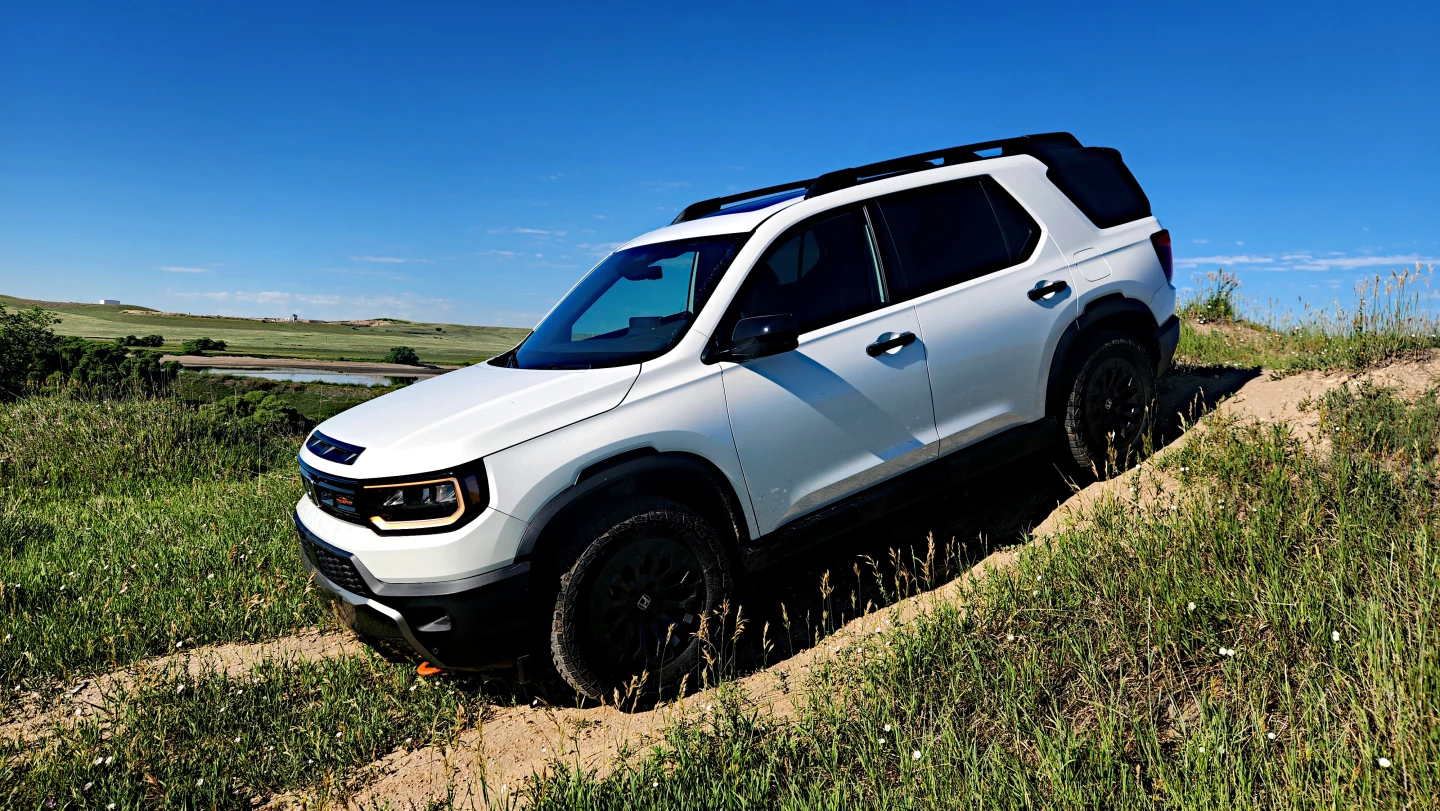
The 2026 Passport’s new design is boxier and more rugged. A flatter grille, less tumblehome on the upper greenhouse, and a taller appearance as a result. The TrailSport model gets knobby tires, some added off-road accoutrements, and a slight lift in clearance.
Underneath, Honda kept the 3.5-liter V6, which outputs 285 horsepower (210 kW) and about the same number in torque. A new 10-speed automatic transmission provides better fuel economy and response from the smooth-running six. Honda’s all-wheel drive system has also been improved to go along with that new transmission. It’s hard to argue with the smooth power delivery of a naturally-breathing V6, and Honda knows that. I was certainly glad for it during my week with this utility.
The 2026 Honda Passport TrailSport is not, however, a trail-lugging beast. For light and a little medium off-road, it’ll do just fine, but if you venture away from Subaru-ready trails into Jeep territory, you might find things a little bit hairy in the TrailSport model. That said, most people don’t need more than unpaved road capability in their off-road adventures anyway. Even so, the skid plates on the oil pan, trans, and fuel tank are standard and welcome.
The upside here is that for most of its life, the Passport is going to be on pavement, and the new transmission delivers there. Confidence is the best word to use to describe the V6 and 10-speed combination. It gets the job done without much fuss and without any jerky “turbo’s kicked in” feeling.
If you’re looking for them, you’ll notice the changes in chassis that improved the Passport in this new fourth generation. It’s more rigid and the suspension has been retuned to accommodate so that the added tension doesn’t add vibration. Some might also note the improved steering feel, which adds a little more feedback than the outgoing model had.
There are tradeoffs to the off-road option, though. The TrailSport is EPA rated at 18 mpg in the city and 23 mpg on the highway (13.1 and 10.2 l/100km). That’s a couple of points below the standard miles per gallon returns on the standard Passport models. It’s a good improvement over the previous generation, however, and achievable in the real world. My week with the rig returned a 19.5 mpg (12.0 l/100km) average despite high altitude, winds, and a fair amount of off-road time.
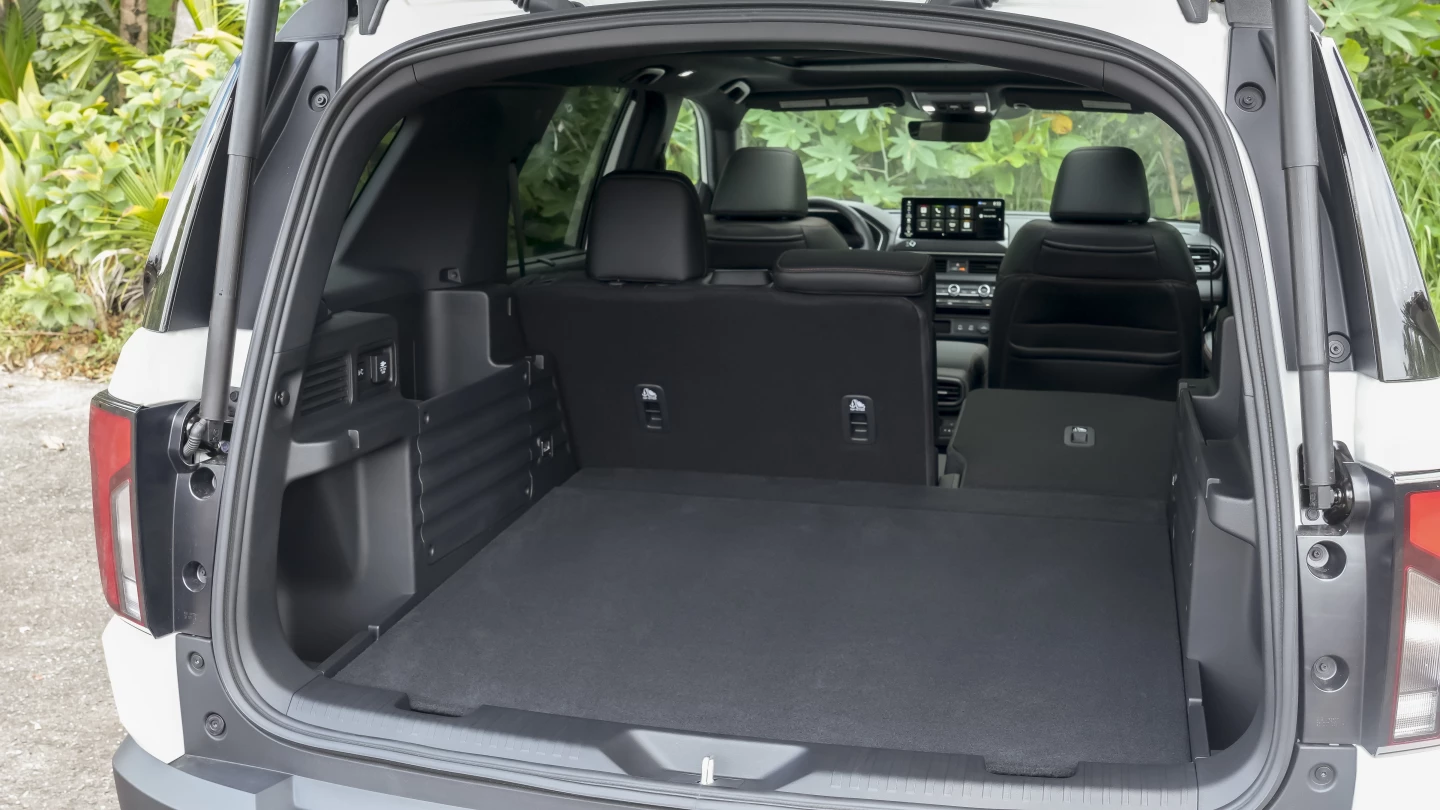
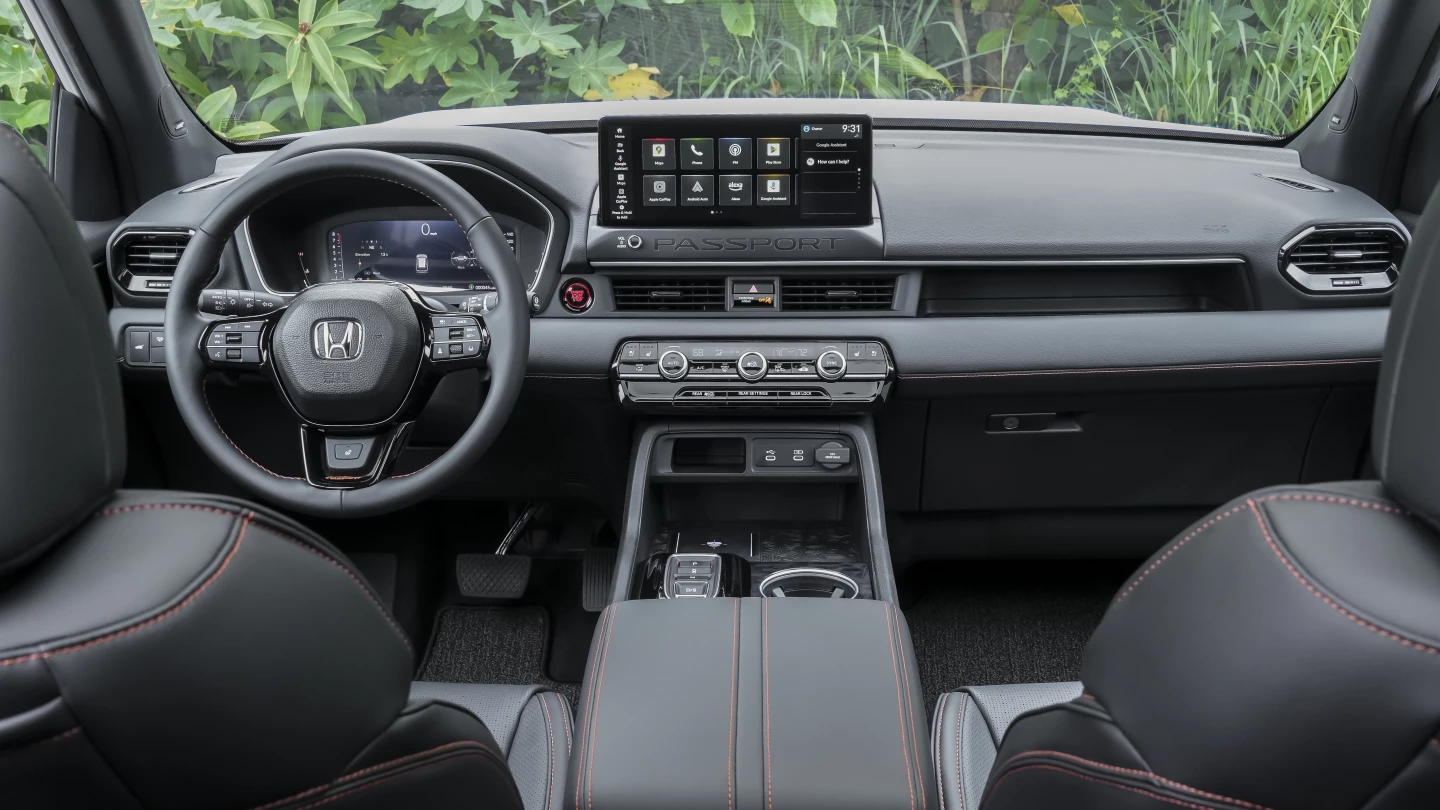
The greatest reason to consider the Passport, of course, is its two-row payoff in bigger cargo. There’s a lot of space back there. The interior is made up mostly of well-considered switchgear placement and lack of gimmicks. Basic technology expectations are met without fanfare in the Passport, and everything just works. Frills some might expect, like semi-self-driving tech and massive screens, aren’t found. But collision prevention and camera views are all there.
If you’re shopping for a SUV that can commute quietly, hold its own on maintained forest roads, and still feel composed at 75 mph (121 km/h), the 2026 Passport TrailSport hits those targets. Its price tag is higher than the segment average, but you’re getting more vehicle for the money. Base price is US$46,245, but most buyers will want the middle ground TrailSport option at about $50,000.
Product page: 2026 Honda Passport