I can’t remember the last time I bought a piece of gadget with my hard-earned money and liked it so much that I decided to review it one year after it initially came out. It just goes to show that not all things affordable have a short life span.
That's the DJI Mic Mini for you. A small wireless mic kit that ticks most boxes you’d expect from a wireless mic in today’s times … with a tiny form factor.
I have to admit – I’m more of a motor nerd than an electronics geek. So I’d only tinker with electronics if it’s absolutely necessary for my survival. That includes my phone, my laptop, and my action cameras for recording my motorcycling experiences on the go. While actioncams do a swell job at capturing pristine video, they’re not all that great when it comes to recording audio on their own.
After years of tinkering around with wired lav mics, I finally ended up switching to a wireless setup with the DJI Mic Mini. I’ve been a loyal GoPro user for around 10 years, mind you. So it’s not like I didn’t explore other options in the market. So what drove me to it?

The price
When the Mic Mini launched last year, it was priced at US$169 for the full kit that consists of two transmitters, a receiver, and a charging case. At that time, it was less than half the price of the DJI Mic 2 kit – a stellar price indeed.
I purchased the kit a few months ago on sale for roughly $100. But wait for it ... now, the same kit is available for $78.21! That’s less than what you’d typically pay for an evening out.
To compare, that’s less than half the cost of the Rode Wireless GO III and a third the price of DJI’s own Mic 3. Now that’s terrific value.
The form factor
I want to talk about the size of this thing before I get to other bits. For starters, it’s perfectly named: at less than an inch (25 mm) in size and 0.32 oz (10 g) in weight, you might even forget that you have a mic on you. It's perfect for those who want to have a mic that’s easy to hide.
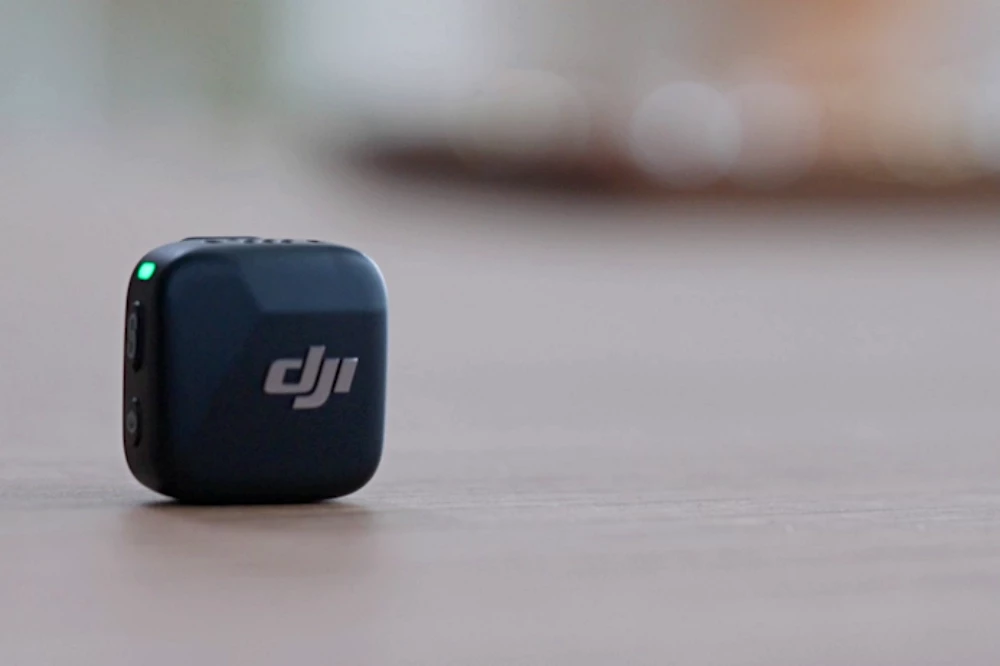
And then, there’s the lovely magnetic attachment that DJI has built a reputation for. You get two small magnets to fix the transmitters with, and I have to say, I love the convenience of this system, without having to manually clip the mic on/off each time.
Audio quality
So it’s tiny and light – is that all it’s got going for itself? On the contrary, even for its small form factor, the Mic Mini still manages to reproduce fantastic audio.
Sure, it’s a step down in quality when compared to the DJI Mic 2 in terms of audio quality. It does sound a little shallow and lacks the finer details in the low, middle, and high range, compared to the Mic 2 – but even then, the audio is pretty great compared to what you’d otherwise capture from a smartphone.
You simply have to get the gain right, and voila! Most of the details can be easily recovered in post-production. Even for me, who’s used the Mic Mini far longer on a noisy motorcycle at cruising speeds than in an empty room, the audio quality is pretty decent for daily vlogs, albeit with a few tweaks. All thanks to the two-step noise cancellation settings.
I've used it in the following video, if you want to hear it in action.
Connectivity
Now it’s been a little over a year since I added the DJI Osmo Action 5 to my kit. I currently rock the Osmo as my main camera on my motorcycle helmet and use the GoPro Hero 11 Black as my B-Roll camera, which sits atop the instrument cluster of my motorcycle, facing me.
That makes it ever-so-easy to link the mic to the Osmo Action 5. That’s all down to the DJI Ecosystem Direct Connection, which lets you connect any DJI mic to any DJI camera without the need for a receiver. Even when I decide to swap my Royal Enfield Himalayan for my Suzuki Jimny, it’s a hassle-free process to simply go with the Osmo Action 5 and the Mic Mini.
But I do acknowledge that not everyone will use a DJI camera with the mic. For those who want to use the Mic Mini with their smartphone, this is where the included receiver comes in handy.

But if you were to use the DJI Mic Mini without the receiver (say over a Bluetooth connection), the audio quality will drop substantially. That’s because, compared to the 48kHz sampling rate it would otherwise produce with a receiver connection, a Bluetooth connection only offers a 16kHz sampling rate, which does bring down the overall voice quality.
Build quality
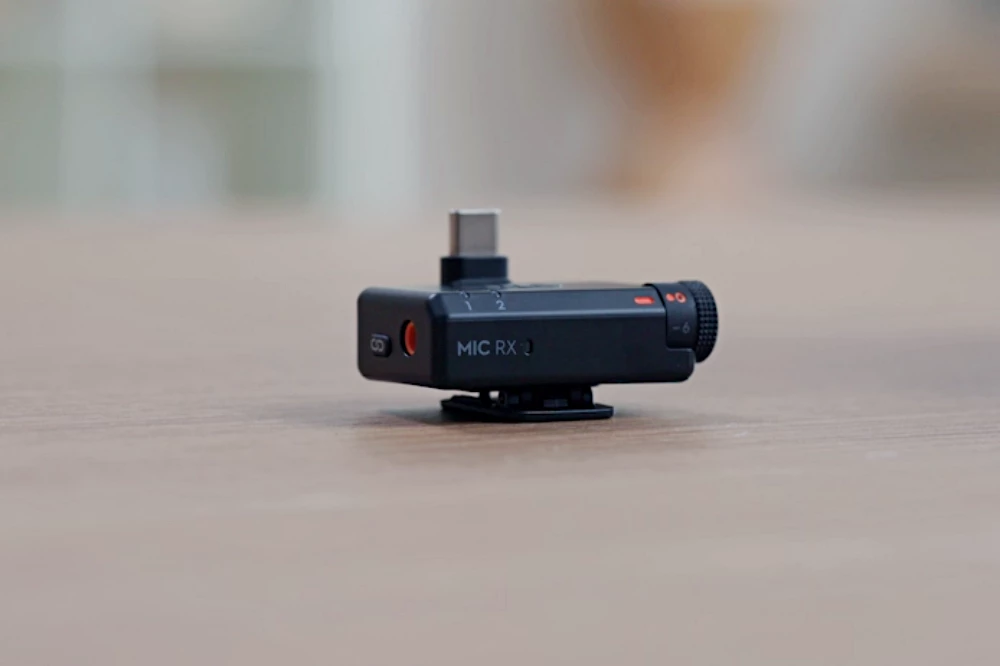
Both the transmitters and the receiver are constructed with a strong, solid plastic frame, although the latter does lack a display like other DJI mics. Even the charging case sports a rather sturdy construction, but the lightning adaptor isn’t included here.
Each transmitter has tiny notches on either side of the microphone that make it simple to snap on one of the windmuffs. You’ll find two buttons on there: a power button and a connection button that allows you to wirelessly connect to your receiver or other devices. Pretty simple in this department. No complaints.
Battery life and other features
The Mic Mini comes with 10.5 hours of battery life while recording – 48 hours with the battery case. In my use case, I found the battery life to be absolutely phenomenal, lasting long enough for 8-hour motorcycle rides, and even when I did end up juicing it in between, a quick five-minute charge was enough for an hour of use.
Another big feature of the Mic Mini is the transmission range, which is up to 400 meters (1,300 feet). I admit I never tested that distance, but everything has been perfect within 200 meters of distance in the time I’ve used it.
Elsewhere, the mic comes with omnidirectional recording, which means that the receiver can work with two microphones simultaneously, either as separate channels or with the two of them mixed together. To prevent clipping, you can record backup audio at 6 dB lower than the main recording while using the DJI Mimo app.
Final thoughts
Aside from the form factor, there’s nothing “mini” about the DJI Mic Mini. If all you’ve ever wanted was a similar quality to DJI’s Mic 2 in a smaller size, this is it.

Even after a year since it was first introduced, the Mic Mini still brings terrific value to the table – even cheaper if you don’t need a full kit! It’s by far the smallest and lightest mic I’ve used to date, and it's as easy to use on an everyday basis. No useless buttons or screens, no heft to it, no extra cables. Simply connect the mic, and you’re good to go.
Source: DJI
New Atlas may receive commission on purchases through our links. This does not affect our reviews. Our reviews are impartial and our opinions are our own.