

Less than two years since it was founded, San Francisco-based startup Weave Robotics is accepting pre-orders for its first home robot, which promises to do one thing well: fold your laundry.
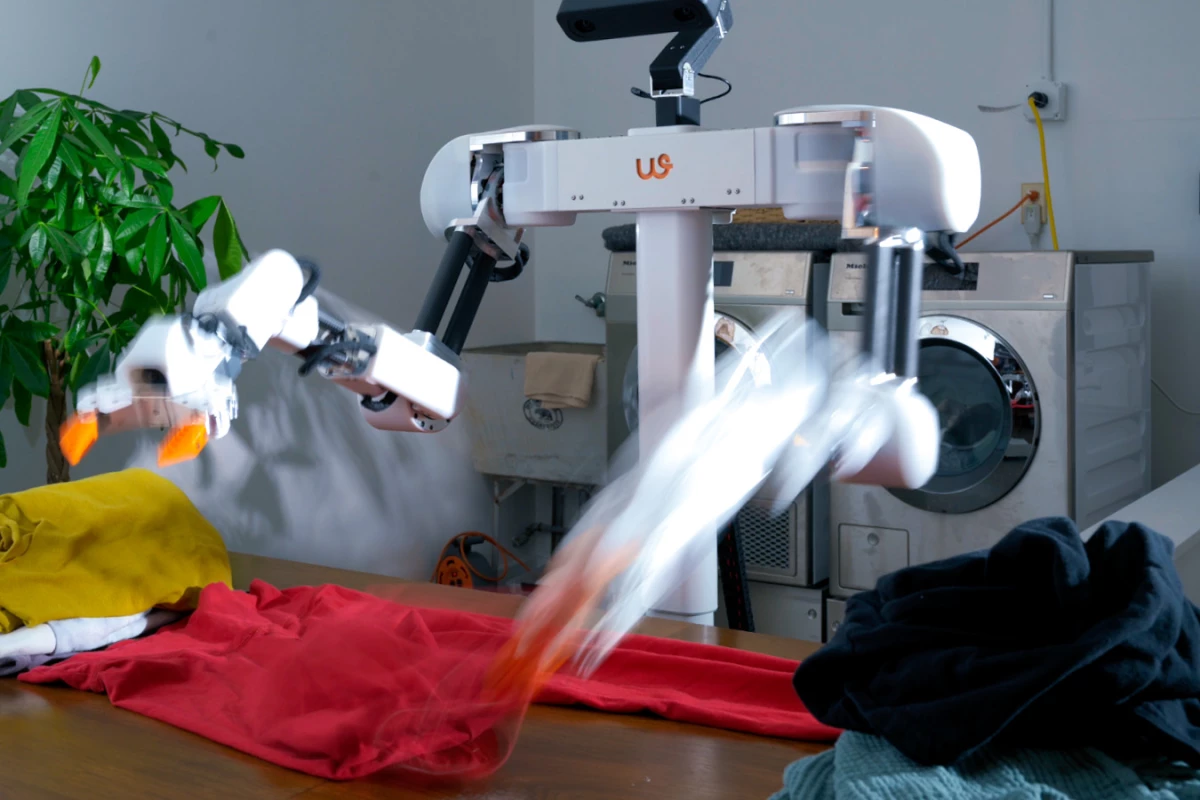
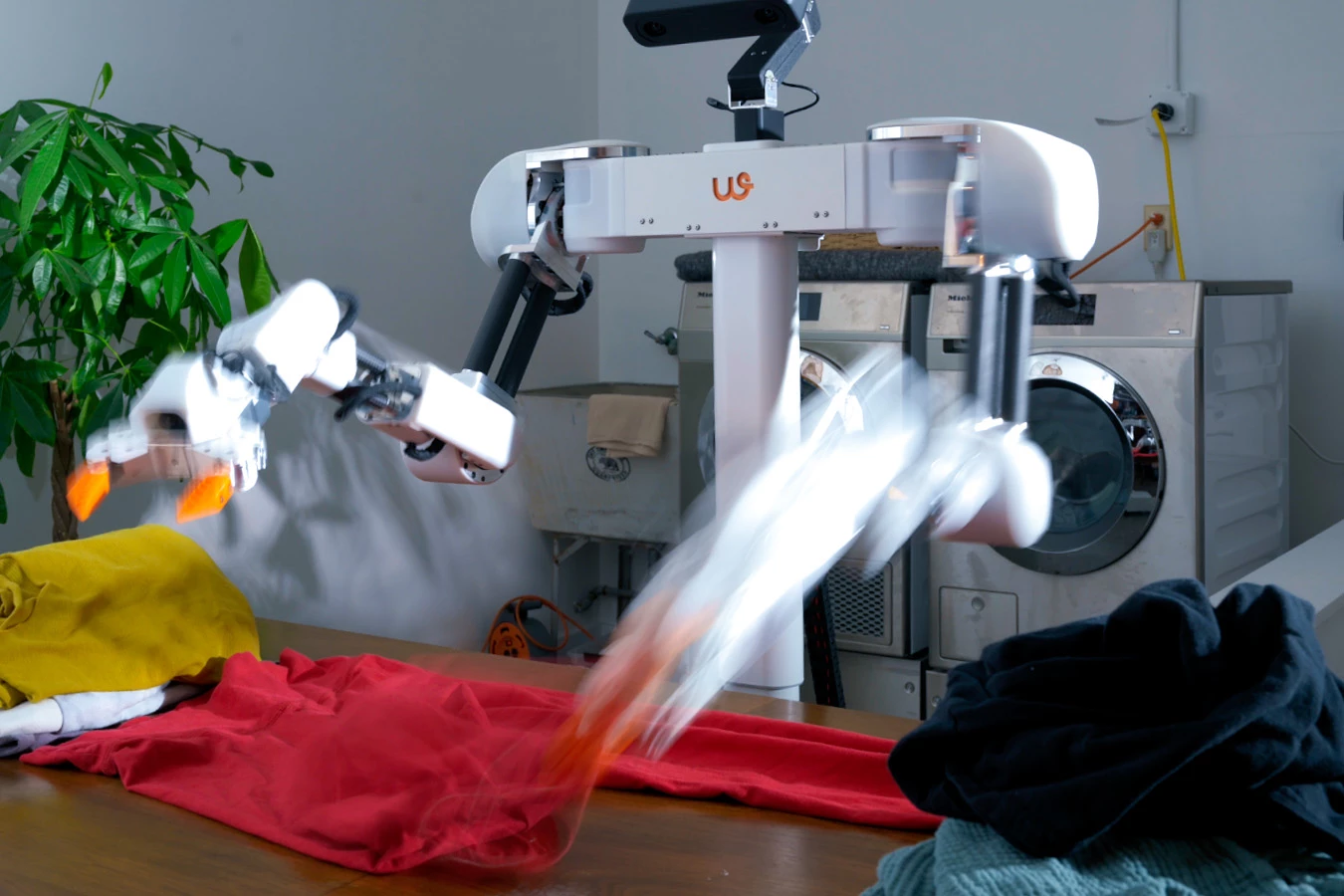
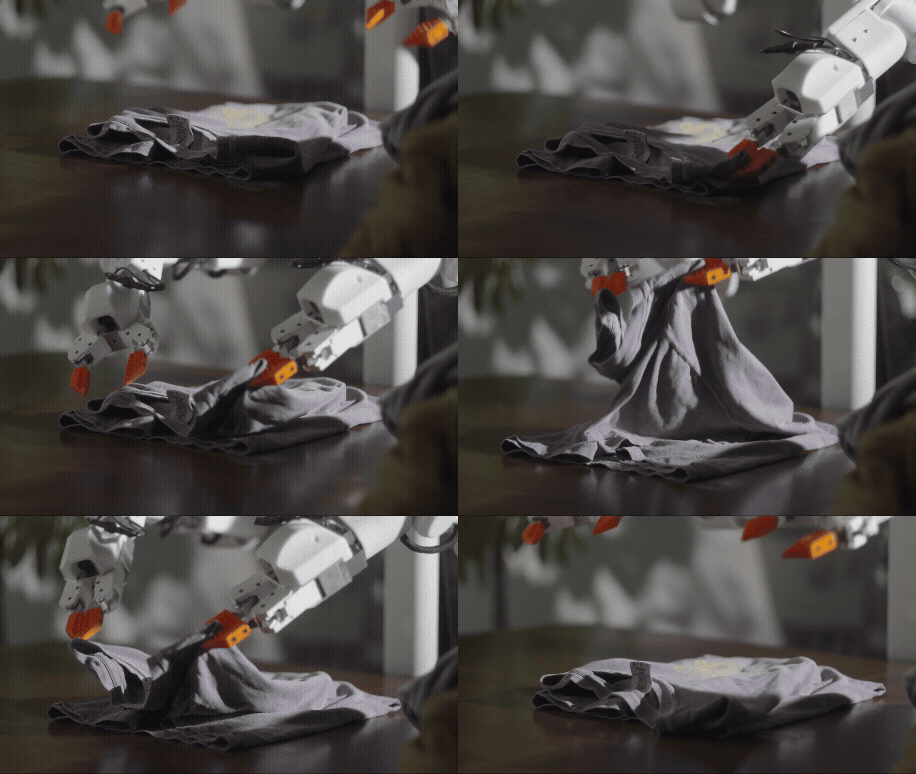
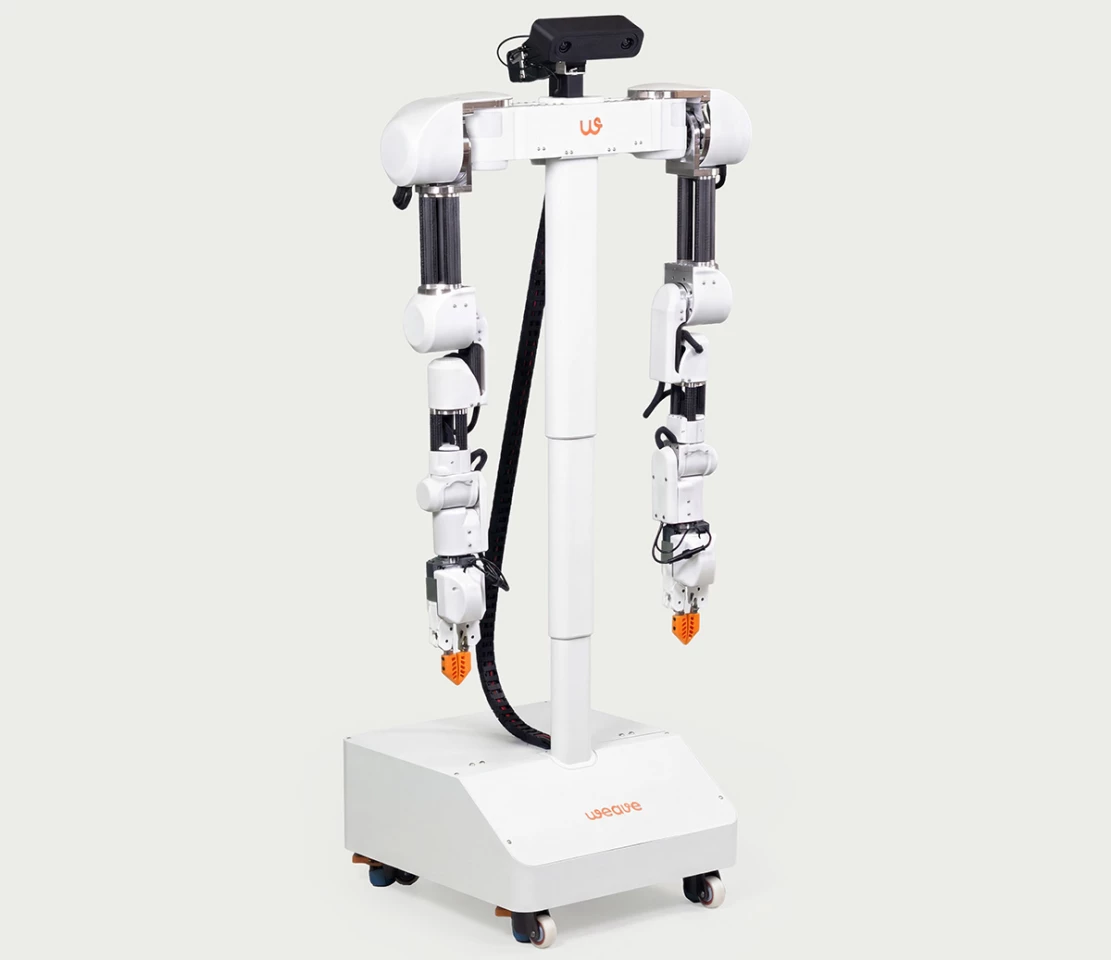
The Isaac 0 features a fairly rudimentary design with a stationary base, exposed joints and componentry, and a pair of swiveling cameras on its 'head.' Simply leave a pile of freshly washed, unsorted laundry on a tabletop near it in a 6 x 5 ft space, and Isaac 0 will neatly fold it all in 30-90 minutes.
The thing is, it's not working alone.
Weave says the robot uses "a blend of autonomy and teleoperation," which means a human is remotely looking through the robot's cameras and controlling its arms to get the job done. Isaac 0 is said to be able to tackle t-shirts, shorts, and long-sleeves autonomously, but needs help with other items like pants, undergarments, and pillow cases.
"Our specialists are only able to see what is needed to complete the sub-in: feeds from the head and wrist along with diagnostic information. No audio data is collected," reads Weave's site. The company is referring to having a human control Isaac 0 remotely "for a 5-10 second correction" to ensure folds are neat and complete.

While the idea of a robot that can regularly save you time doing chores sounds terrific, these caveats mean the tech and product aren't yet fully baked. Indeed, Isaac 0 is labeled an 'early-release prototype.' So you're not exactly getting a home robot at this point, but machinery for Weave to train its systems and collect feedback – and provide you with a service as a byproduct.
A teleoperated system comes with the usual raft of privacy and security concerns. You'll have a stranger peering inside your home through the bot's cameras; the company's systems could be compromised by hackers and allow them unauthorized access to a direct visual feed of your private space. And since it's still early days, we don't have a sense of what kind of guardrails should be in place to prevent this from happening, or how victims of privacy breaches should be protected and compensated.
The broader concern critics have raised is that tech companies may be overstating the autonomy of their robots for marketing, investment, or competitive reasons. In Tesla's case, Optimus demos in 2024 drew scrutiny from tech journalists and AI researchers who questioned how much of what was shown represented genuine on-robot intelligence versus carefully controlled or assisted conditions.
Weave, for its part, has a more ambitious plan that goes beyond the laundry room. It's also building Isaac (sans the '0'), a more capable robot that can move around your house, make and serve coffee, and tidy up. It's being billed as "a second caretaker" for your home. Isaac 0's FAQs note that if get one of these laundry robots, you'll have the option to upgrade to Isaac when it becomes available later in 2026, with preferred pricing.
It's understandable that Weave might be in a rush to perfect its product. It's in a race against well-funded teams at Tesla, LG, Figure, and 1X to get robots through your front door. And the company has been clear about using teleoperation, as well as focusing on a specific task for its first product rather than promising a whole lot more capabilities right out the gate.
Isaac 0 is currently available to pre-order for folks in the Bay Area for US$7,999 up-front or a $450 monthly subscription with a $250 refundable deposit.
If you detect a note of skepticism in my voice throughout this piece, it's mostly because much of the messaging – including the use of the term 'home robot,' the fact that you can buy Isaac 0 outright or pay a monthly fee, and upgrade later on – is indistinguishable from what you'd see with a fully autonomous robot. The path to bringing a wholly independent robot into one's home is different from that of opting in to help a company test and fine-tune its human-assisted machinery.
None of that is to say that Weave won't be able to crack laundry folding and other chores – or that early adopter-types shouldn't give this a shot. It's only that despite how 'real' this product might appear as Weave opens up pre-orders, we can't yet know how close or far we are from having proper autonomous robots in our midst.
Source: Weave Robotics