From water-skipping robots to elephant-skin inspired cooling materials, engineers have continued to find inspiration in nature in order to move technology forward for humans.
While biomimicry has been guiding inventors for centuries – after all, Leonardo Da Vinci studied bird physiology in the late-1400s for his flying machines – the more we understand about animal movement, behavior and evolution, the better our machines and materials get.
Biomimicry is going to become increasingly important as we move into the new age of robotics and flight, as well as the demand for energy efficiency in synthetic tech. Here are just a handful of the developments that came this year from innovative engineers keeping a close eye on the natural world.
-

Better-landing bee robot draws on the legs of the crane fly
April 17, 2025 | Ben CoxworthEven if you've built one of the world's best insect-inspired micro air vehicles, it won't be that useful if it can't stick a landing. That's why Harvard scientists have now given their RoboBee a set of long, jointed legs like those of the crane fly. -

Robotic sea turtle could soon be swimming in an ocean near you
January 13, 2025 | Ben CoxworthIf you're setting out to build an underwater robot that's speedy, maneuverable and versatile, why not just copy what already works in the natural world? That's exactly what Beatbot has done, with its bio-inspired Amphibious RoboTurtle. -

China builds lifelike robotic jellyfish for silent underwater observation
November 02, 2025 | Bronwyn ThompsonBlurring the line between biology and robotics, Chinese scientists are taking biomimicry to new depths with a small, low-energy bionic jellyfish that's so lifelike in form and movement it’s almost indistinguishable from the real thing. -

Self-shading windows draw solely on the power of the pine cone
January 17, 2025 | Ben CoxworthPine cones are pretty smart for things with no brains, enough so that scientists have copied them to create a unique window shading system. The setup blocks sunlight in the summer and lets it through in the winter, without using any electricity. -

Flying-squirrel-inspired drone uses extendable wings ... to STOP flying
April 25, 2025 | Ben CoxworthEven the nimblest of quadcopters still struggle to halt their lateral momentum when moving fast, limiting their maneuverability. An experimental drone addresses that problem in a bio-inspired fashion, by extending flying-squirrel-like membranous wings as needed. -

Biomimetic underwater triple-jet pack makes you an e-boosted man-shark
September 08, 2025 | C.C. WeissIn contrast to other underwater jet packs, the Kikfin Shark has a full set of fins to bio-mimic fast, nimble sea creatures for superior movement and agility. It's as close to morphing into an actual man-shark as the current state of science allows. -
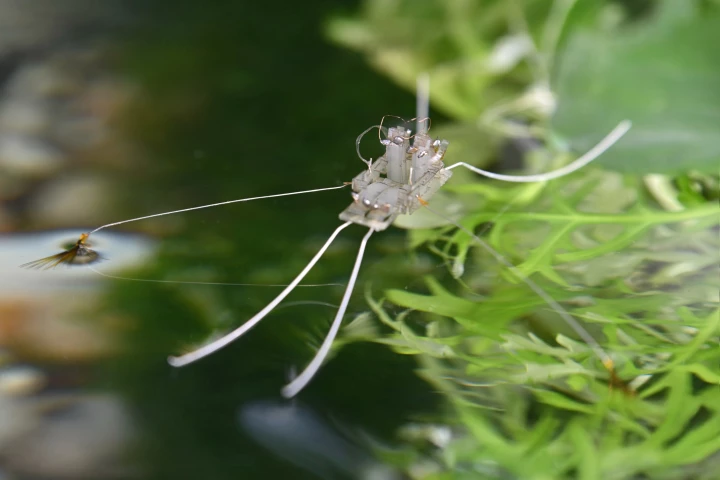
Robotic water strider rows itself forward by fanning feathery feet
August 25, 2025 | Ben CoxworthAlthough we've seen many robotic water striders over the years, scientists are still finding new aspects of the insects to replicate. Recently, for instance, researchers created a strider-bot that zips across the water's surface via fans on its feet. -
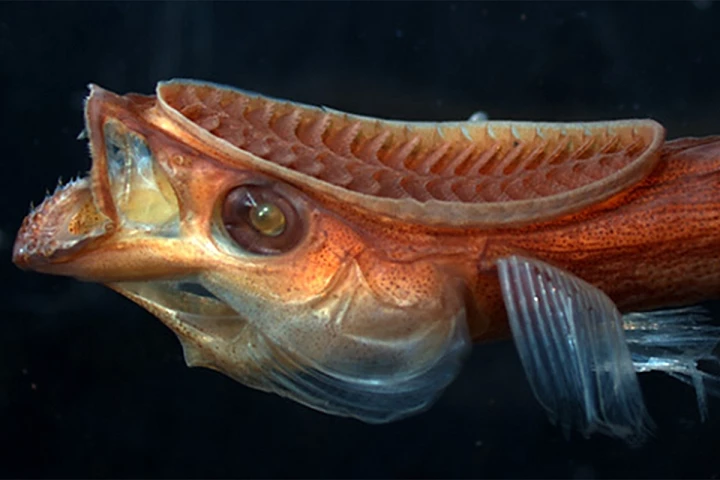
Drug delivery device inspired by sharksucker fish sticks to your gut
July 25, 2025 | Abhimanyu GhoshalThe Remora fish has an oval slatted disc on its head which it uses like a suction cup to stick to sharks. It's inspired a capsule-sized platform that can stick to surfaces when submerged in liquids, including your digestive tract. -

Sea sponges inspire super strong material for more durable buildings
March 08, 2025 | Abhimanyu GhoshalDeep-sea sponges have a secret: their light lattice-like forms are astonishingly stiff and strong. Inspired by these creatures, RMIT researchers have developed a new structure to make significantly stronger materials for more durable buildings. -
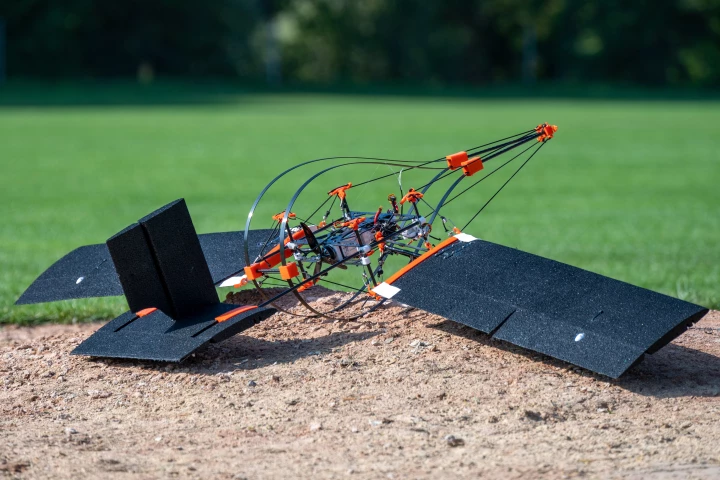
Crash-proof drone inspired by the head of the woodpecker
September 22, 2025 | Ben CoxworthDespite the fact that they bang their heads against trees on a daily basis, woodpeckers don't suffer brain injuries. Inspired by the tough-headed birds, scientists have developed a fixed-wing drone that can survive frontal collisions. -

New analysis of pterosaur bones may bring us lighter, stronger aircraft
February 11, 2025 | Ben CoxworthYou may think that if a species died out millions of years ago, its design would be too old to have any applications in our technology. A new analysis of pterosaur bones, however, suggests that they could inspire lighter, stronger aircraft materials. -

"Elephant skin" mycelium tiles keep buildings chilled – and look cool, too
April 04, 2025 | Bronwyn ThompsonOyster mushrooms and bits of bamboo sound more at home on a Chinese menu than stuck to the wall, but scientists have used this mix to make aesthetically pleasing tiles with bumps and textures that help regulate temperature much like elephant skin does. -

Mussels and mucus team up for surgical glue that repels infections
February 26, 2025 | Michael IrvingIt’s hard to get glue to work underwater – unless you’re a mussel. Scientists have now created a new adhesive that combines the stickiness of mussel’s natural glue with the slimy, germ-repelling nature of mucus. -
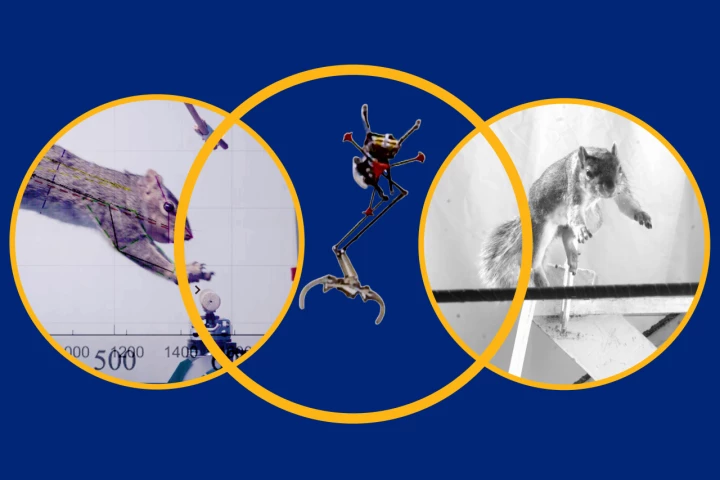
Squirrel-inspired one-legged robot nimbly leaps between branches
March 21, 2025 | Abhimanyu GhoshalI love me a bioinspired robot that pulls off challenging feats with cues from nature. Researchers have shown off the one-legged Salto bot mimic the way squirrels leap effortlessly between precarious branches and stick the landing on the first attempt.