
Osaka University
-
 I bet that headline wasn't on your bingo card this week. Researchers at the University of Osaka have equipped cyborg insects with teeny tiny helmets to steer them around various environments, without the need for invasive surgery or internal wiring.
 -
 Japanese researchers have created and open-sourced a flying firefighting hose that levitates and steers itself to fight fires using its own water pressure as a two-part propulsion system, spraying water down onto fires and keeping operators safe.
 -
 Once again, technology has been inspired by nature. After examining how centipedes traverse rough terrain, researchers created a multi-legged robot that mimics their curved, side-to-side movement, providing greater stability and maneuverability.
 -
 Scientists have developed a new method of providing information on 3D-printed foods, by printing a QR code within the food itself. Doing so doesn't affect the taste or outward appearance of the food, nor does it require the use of any labels.
 -
 Australian nuclear fusion company HB11 says its disruptive laser-powered reactor design has demonstrated results "many orders of magnitude higher than those reported by any other fusion company," without requiring multi-million degree temperatures.
 -
 Ordinarily, when using an off-the-shelf 3D printer, it's quite difficult to print a single object that incorporates multiple materials. An experimental new system could make it easier, though, by utilizing a "programmable filament."
 -
 When silicon wafers are cut from sheets of silicon, a lot of sawdust is produced. Ordinarily, that material is discarded. Thanks to research currently being conducted by Japan's Tohoku University and Osaka University, however, it may soon find its way into high-performing lithium-ion batteries.
 -
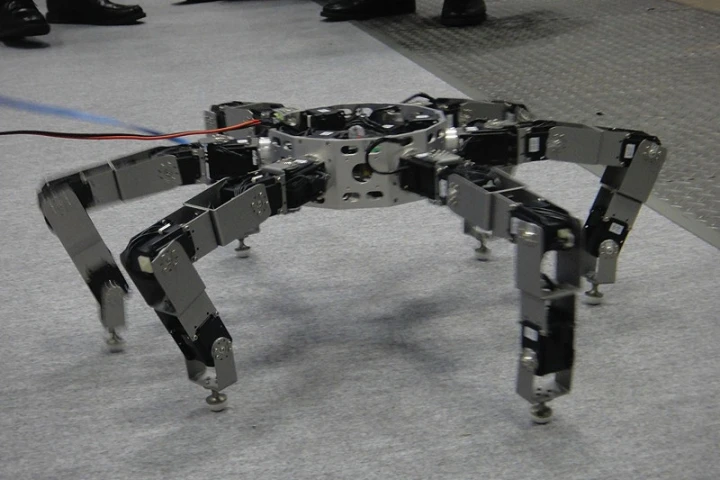 Japanese researchers have developed a multi-functional six-legged robot
 -
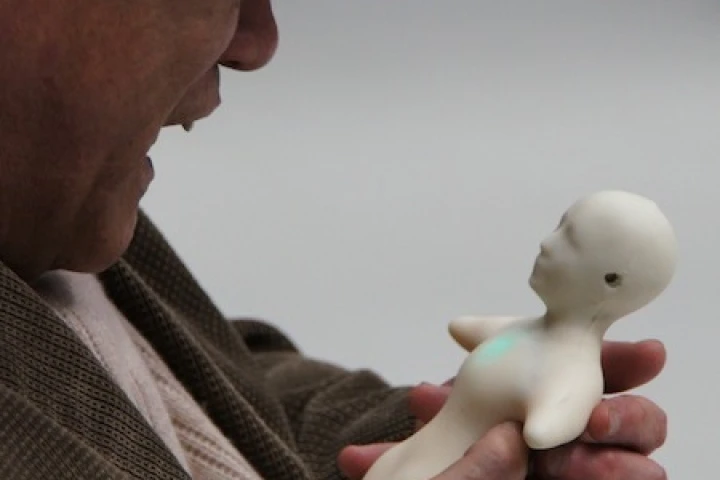 The Elfoid P1 is a combination mobile phone and mini telepresence robot, designed to give a physical presence to callers.
 -
 Telenoid R1 is a portable robot that is designed to relay a remote user’s presence during long distance communications.