
Skin
-
 Engineers from the University of California San Diego have developed a proof-of-concept armband that can keep the wearer's skin at a constant temperature, even when the ambient temperature is raised or lowered. And the technology is being scaled up to vest size.
 -
 In 2015, scientists from Germany's Saarland University presented us with their iSkin stickers, which could be placed on the body to touch-control mobile devices. Now, led by Prof. Jürgen Steimle, they've built upon that technology to develop what's known as Multi-Touch Skin.
 -
 Managing our exposure to the sun can be a delicate balancing act. QSun is a clever tracker that removes the guesswork by using artificial intelligence to keep tabs on sun exposure, even giving you a buzz when it's time to head for the shade.
 -
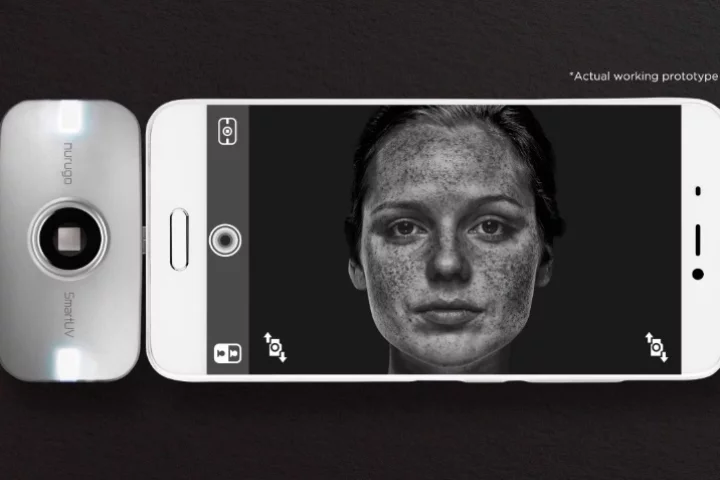 The SmartUV is a ultraviolet-imaging camera that can be plugged into a smartphone, allowing users to see beneath the surface of their skin.
 -
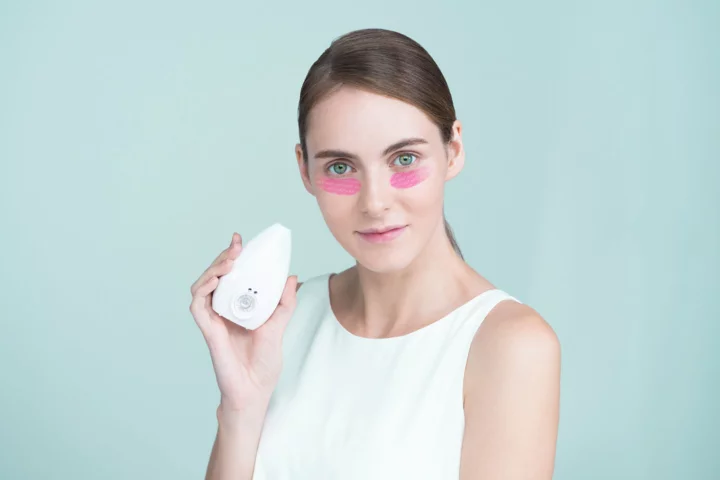 At the upcoming CES convention, Samsung will unveil products from its Creative Lab (C-Lab) division, which include a smart tag for children's toys and two consumer skincare devices.
 -
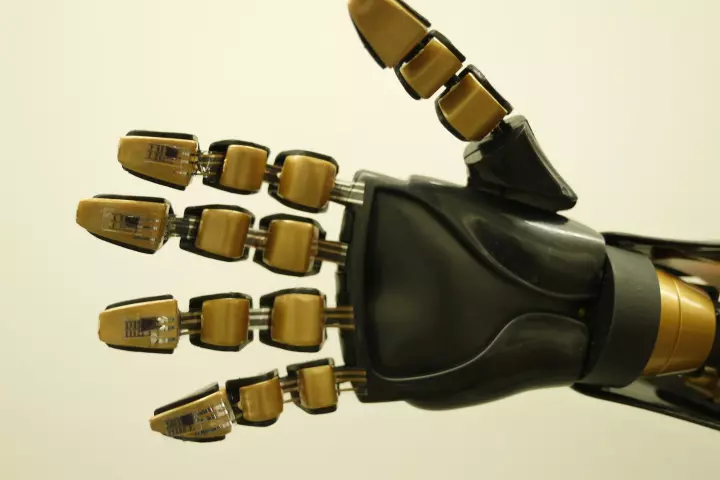 Our sense of touch is made possible thanks to thousands of "mechanoreceptors," which are distributed throughout our skin. Scientists have now created synthetic skin that contains electronic mechanoreceptors, which could give prosthetic limbs or robots a sense of touch.
 -
 While a wrist-worn smartwatch may be easier to access than a smartphone that has to be retrieved from a pocket, the things certainly have tiny screens. That's where iSkin comes in. It allows users to control mobile devices using flexible, stretchable stickers that adhere to their skin.
 -
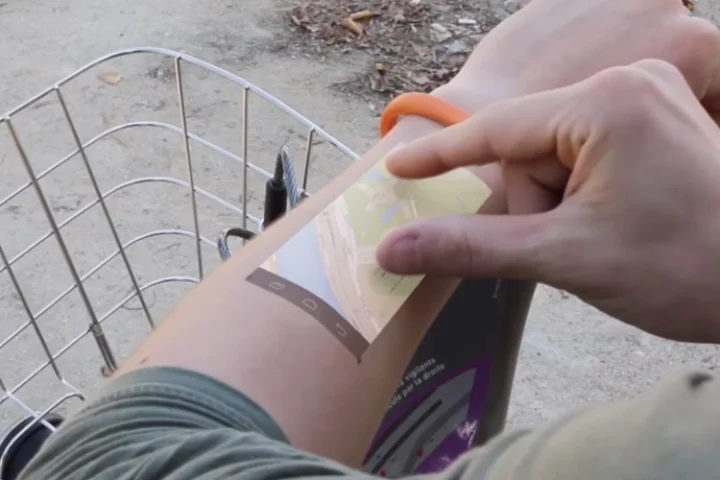 With wearables gaining some traction, smartphones and tablets are by no means the only mobile devices around nowadays. Now, though, Cicret is looking to take things a step farther and turn your arm into a smartphone.
 -
 Most bracelets aren't likely to alter your temperature too much either way, but the Wristify isn't most bracelets. Developed by four MIT engineering students, the Wristify works on the principle that heating or cooling the skin on one part of the body can make the entire body feel warmer or colder.
 -
 Disney Research's new REVEL system uses reverse electrovibration to provide physical objects with virtual textures.
 -
 With his "separable subsurface scattering", graphics researcher Jorge Jimenez may just have cracked the problem of rendering realistic human skin in real-time on consumer-level hardware.
 -
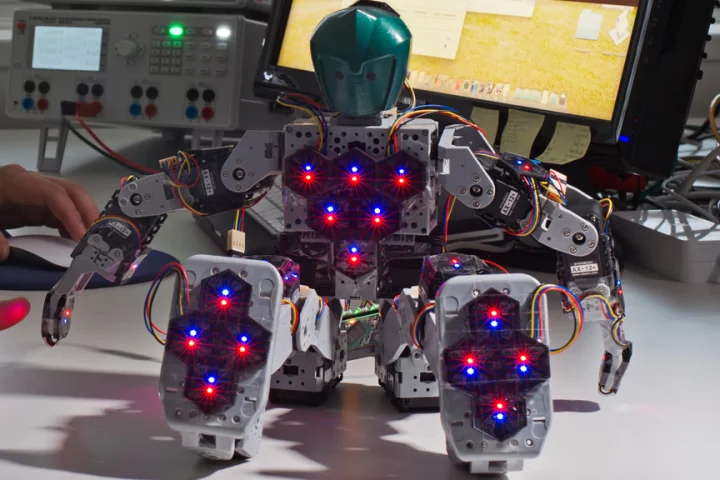 The latest attempt to create a touchy feely robot comes from the Technical University Munich (TUM) where researchers have produced small hexagonal plates, which when joined together, form a sensitive skin.
Load More