
Stanford University
-
 Anyone who's been to karaoke night at a bar knows just how dramatically altered our voices get after throwing back a few drinks. Scientists have now shown that analyzing these vocal changes is a surprisingly good way to see just how drunk we are.
 -
 Using paired smartphones, motion-capture app OpenCap films video and then uses AI to analyse human movement, providing detailed data for use in rehabilitation, presurgery plans and disease diagnostics – and is 1% of the cost of traditional technology.
 -
 Heating and cooling account for huge portions of our energy consumption. Now scientists at Stanford have created a new type of paint that passively blocks heat from entering or escaping, and can be made in a range of colors.
 -
 Stanford's Alpaca AI performs similarly to the astonishing ChatGPT on many tasks – but it's built on an open-source language model and cost less than US$600 to train up. It seems these godlike AIs are already frighteningly cheap and easy to replicate.
 -
 3D printing technology is used not only to build things as large as houses, but also as small as snowflakes. A new material allows the latter to be much stronger than ever before, and to be printed considerably faster.
 -
 Scientists at Stanford University have cooked up a new electrolyte recipe that tackles battery flammability in a highly promising way, leaning on extra salt content to circumvent problematic chemical reactions.
 -
 The many cells that make up a lithium battery pack are not all equal; some will degrade and die faster than others. New research out of Stanford has found that the whole battery can live much longer if each cell gets an individual charging treatment.
 -
 Stanford University scientists have just introduced their first untethered exoskeleton for use beyond the lab, which adjusts its level of assistance on the fly and offers a boost akin to taking off a 30-lb (13-kg) backpack.
 -
 There’s still room for improvement for solar cells. Stanford engineers have now developed pyramid-shaped lenses that focus sunlight from any angle onto a solar cell, keeping it collecting power from sunrise to sunset.
 -
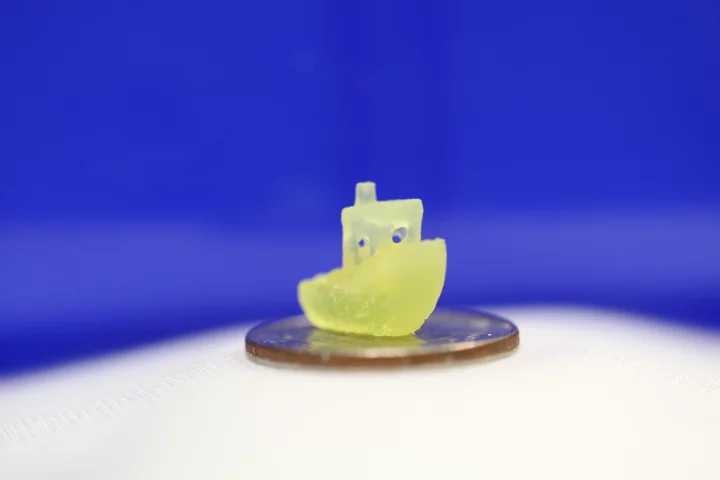 When most people think of 3D printing, they likely picture a relatively chunky object being built one layer at a time. A new technique, however, allows much more intricate items to be produced – and it does so by changing the color of laser light.
 -
 Scientists have taken aim at inactive clumps of lithium that build up over a battery's lifetime and shown how they can be brought back to life to boost the performance of the device and potentially unlock next-gen designs with far greater densities.
 -
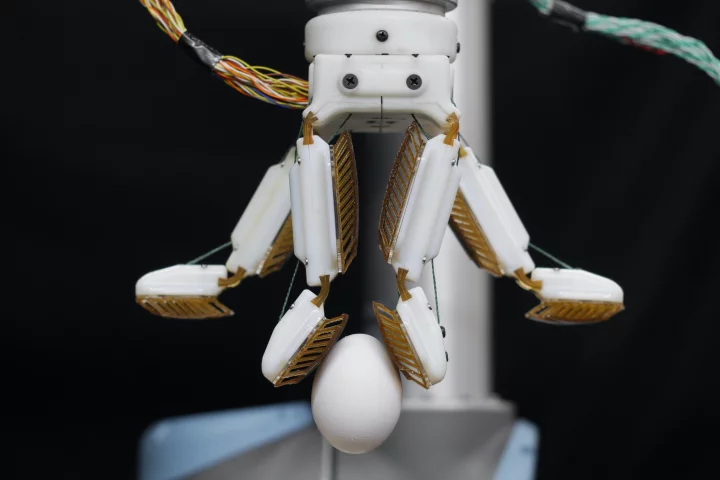 When it comes to robotic hands, there are ones that can grasp tough items firmly, and ones that can grasp delicate items lightly. The experimental new gecko-inspired farmHand, however, is capable of doing both.
Load More