
Terahertz
-
 Today's autonomous vehicles rely on cameras, and radar and LiDAR sensors to understand their surroundings and avoid obstacles. Teradar believes it can beat those technologies at their own game by looking elsewhere on the electromagnetic spectrum.
 -
 ID verification tags aren’t much use if someone can just peel them off and stick them to a fake product. MIT scientists have now designed ID tags that use the glue itself as a kind of fingerprint, and will scramble the barcode if someone peels it off.
 -
 Water is usually something you’d want to keep away from electronic circuits, but engineers in Germany have now developed a new concept for water-based switches that are much faster than current semiconductor materials.
 -
 A team of engineers has developed a new type of camera that can detect radiation in terahertz wavelengths. This new imaging system can see through certain materials in high detail, which could make it useful for security scanners and other sensors.
 -
 A couple of years ago, Canadian scientists celebrated the Christmas season by creating a microscopic gingerbread house. In that same spirit, Danish researchers have now produced the world's thinnest Christmas tree – and it's made of graphene.
 -
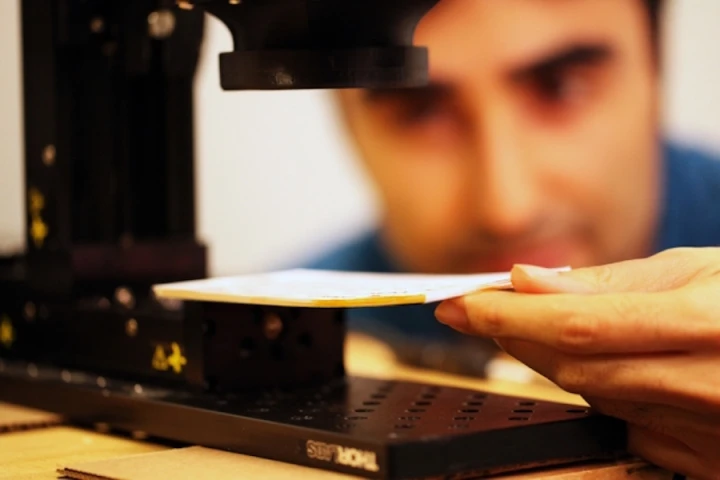 Using terahertz radiation, a new prototype device from MIT researchers can accurately identify letters written in a stack of paper up to nine pages in depth.
 -
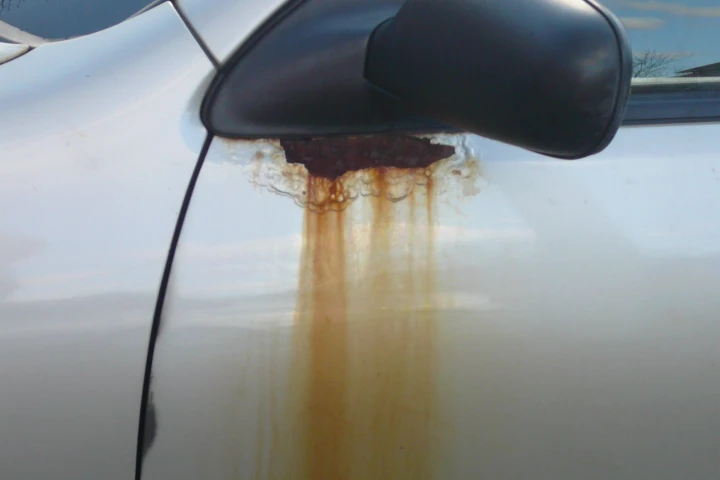 Although all steel-bodied cars rust eventually, premature rusting may soon be less of a problem. A new system non-destructively analyzes automobiles' paint jobs, making sure that the layers of paint have been applied properly.
 -
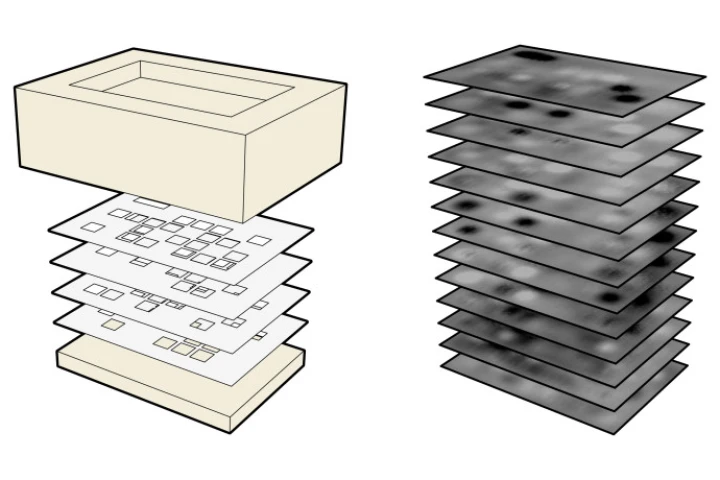 Scientists have come up with a way to 3D print a unique tag, called an InfraStruct, inside an object as it's being 3D printed, and it's made possible by the slowly emerging field of terahertz imaging.
 -
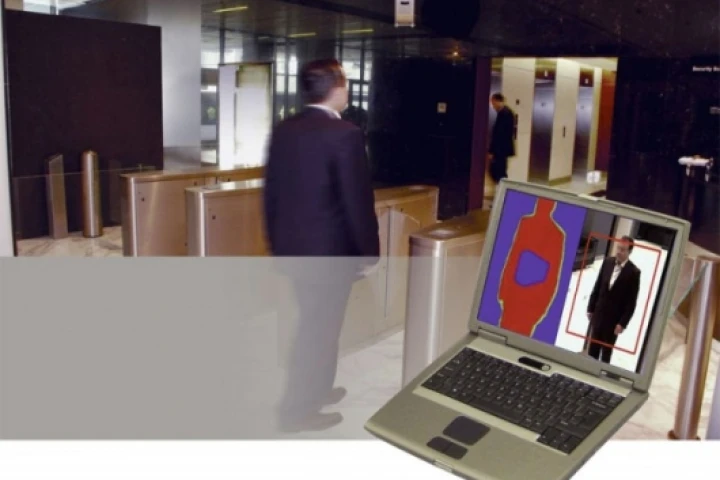 ThruVision’s T5000 Security Imaging System uses passive terahertz imaging technology to reveal concealed weapons in both stationary and mobile subjects - even outdoors - at a range of up to 25 meters.