


It has been a long, twisting journey for Aptera’s solar-powered EV (sEV), but we can at last report that the extraordinary futuristic car has taken a huge step toward mass production.
Regular readers will have noted our repeated coverage of the ups and downs of this futuristic three-wheel, two-seater, solar-powered car for an incredible 19 years now, which holds real promise for changing the way road transport might look in the future. When it finally gets on the road.
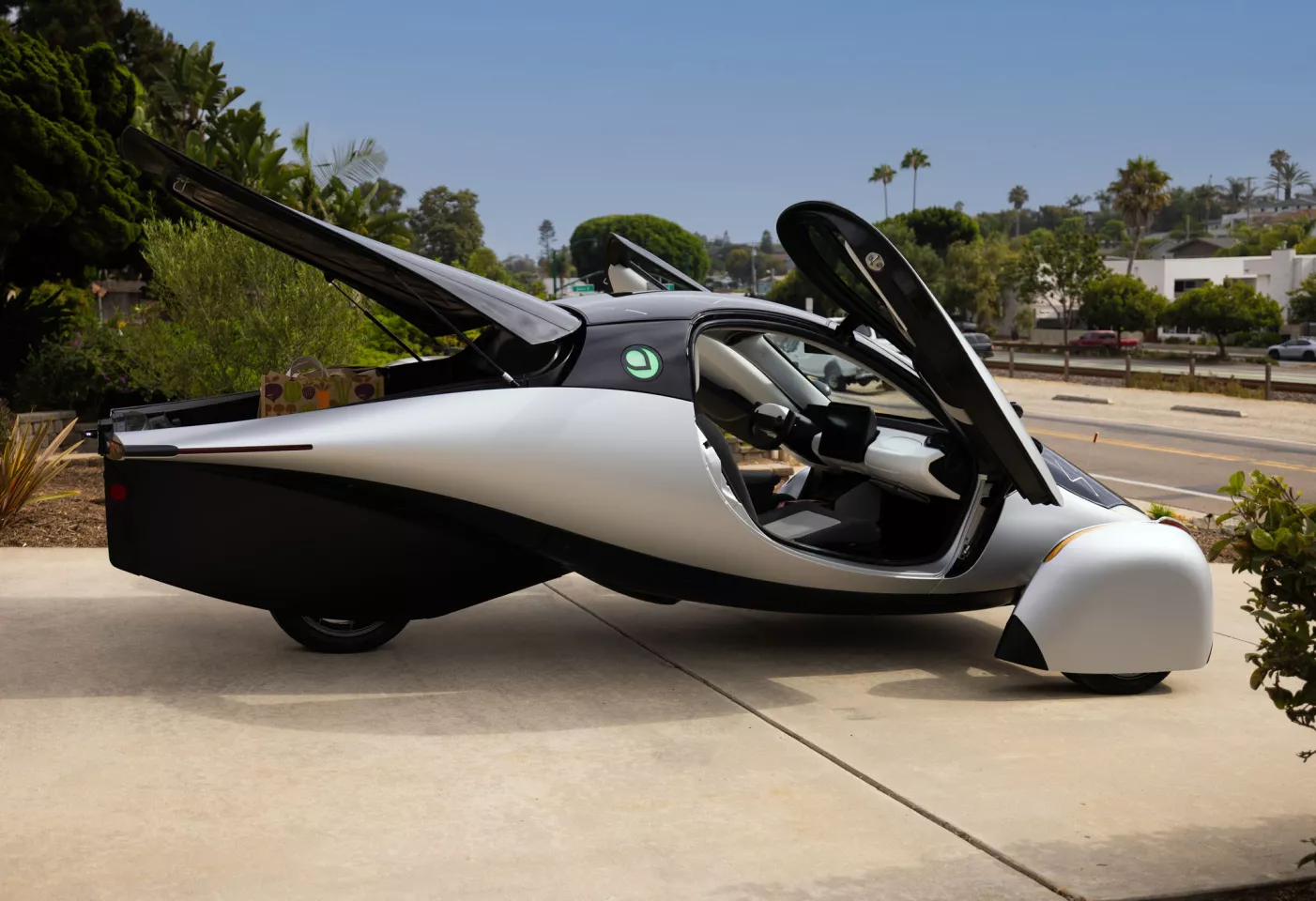
We first mentioned the early startup ambitions in 2007, followed by a key design update just over a year later and then a pre-production model appeared with the promise of an October 2009 launch. More prototypes followed, but then operations ground to an abrupt halt. New hope arrived mid-2013 when a new company took up the challenge, but this wasn't to be either and it took another few years before the phoenix rose yet again.
Another teardrop-shaped prototype was unveiled in 2022, and the first couple of thousand production slots were snapped up in 2024 following a year-long crowdfunding effort. Last year, 20 years after the original company was founded, Aptera took its solar-powered car on a proper 300-mile (480-km) road trip – on Route 66. We reported how Co-CEO Steve Fambro set off in the company’s production-intent vehicle from Flagstaff, Arizona, on Route 66 all the way to Imperial Valley in California. For Aptera, this journey was a major step in validating its systems in real-world conditions.
Since then, interest has rocketed. Aptera has already amassed nearly 50,000 reservations representing over US$1.7 billion in potential revenue. Supported by $135 million raised through crowdfunding, the company seems to be at last on the path to series production.
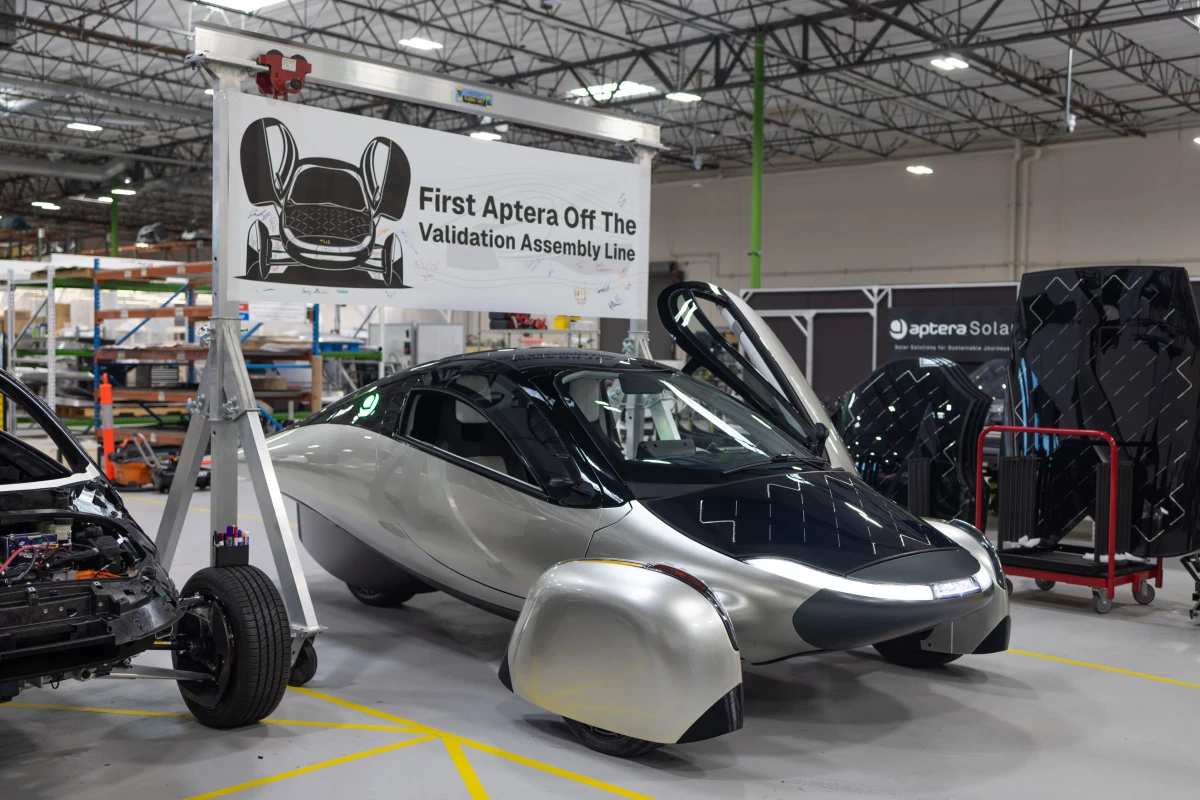
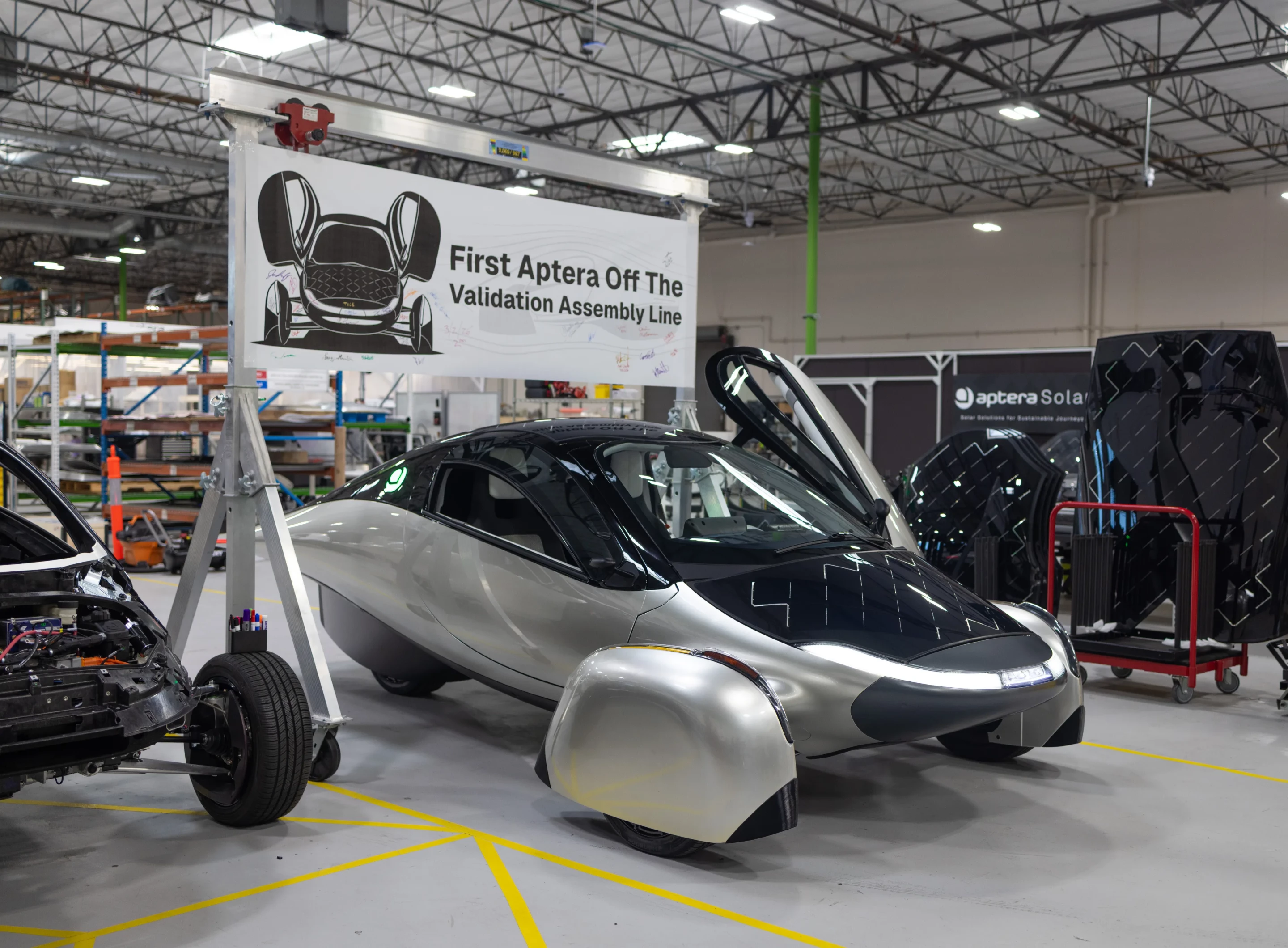
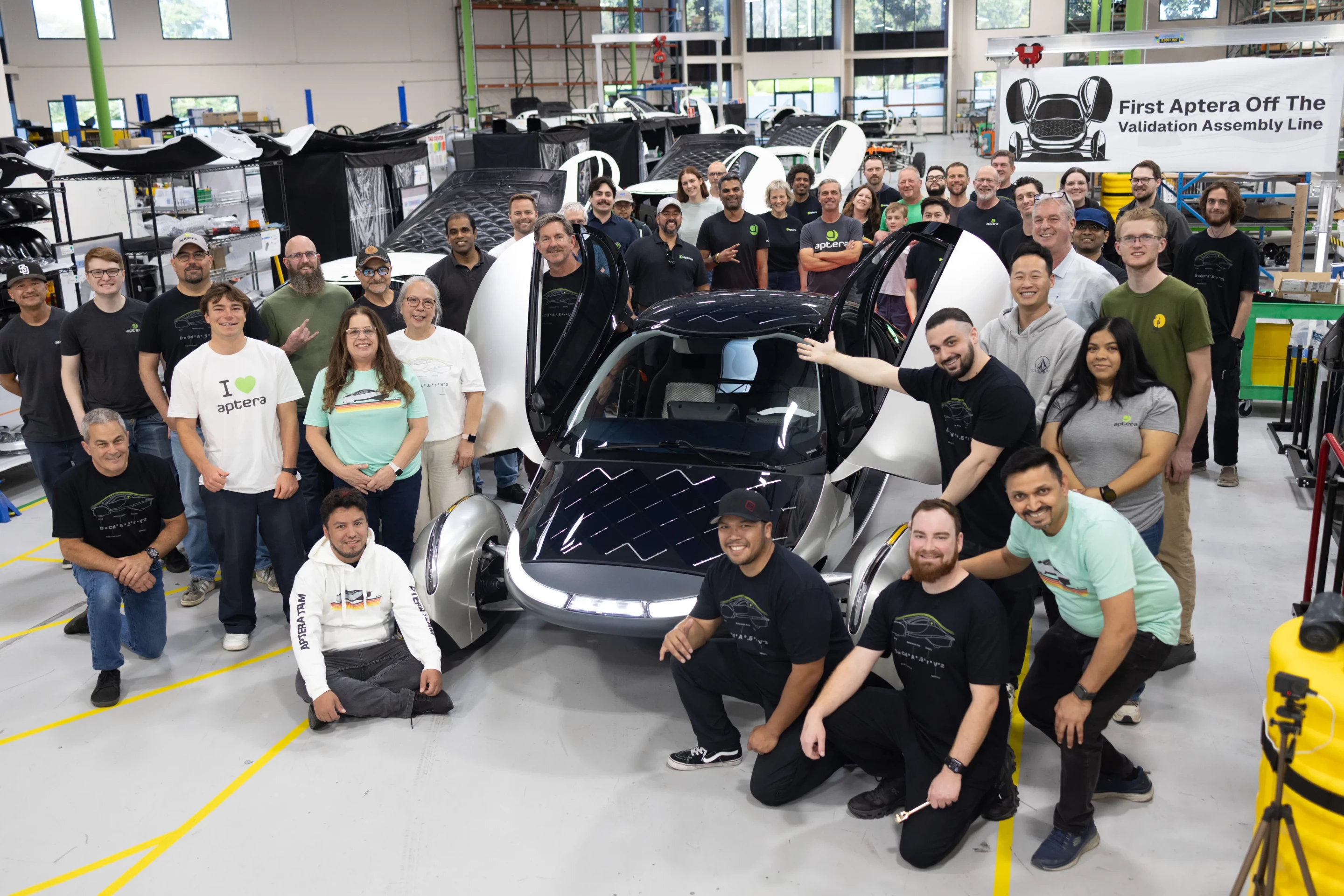
Now San Diego's Aptera Motors has announced that the first vehicle has rolled off its validation assembly line. This is not quite the start of the flow of road-ready cars heading for showrooms but it marks a major operational milestone toward regulatory certification and initial customer deliveries.
The company’s low-volume validation assembly line represents a transition from hand-built validation vehicles to a structured assembly line process. The line consists of 14 dedicated stations, where vehicles are assembled by a team of vehicle line technicians, enabling repeatable builds.
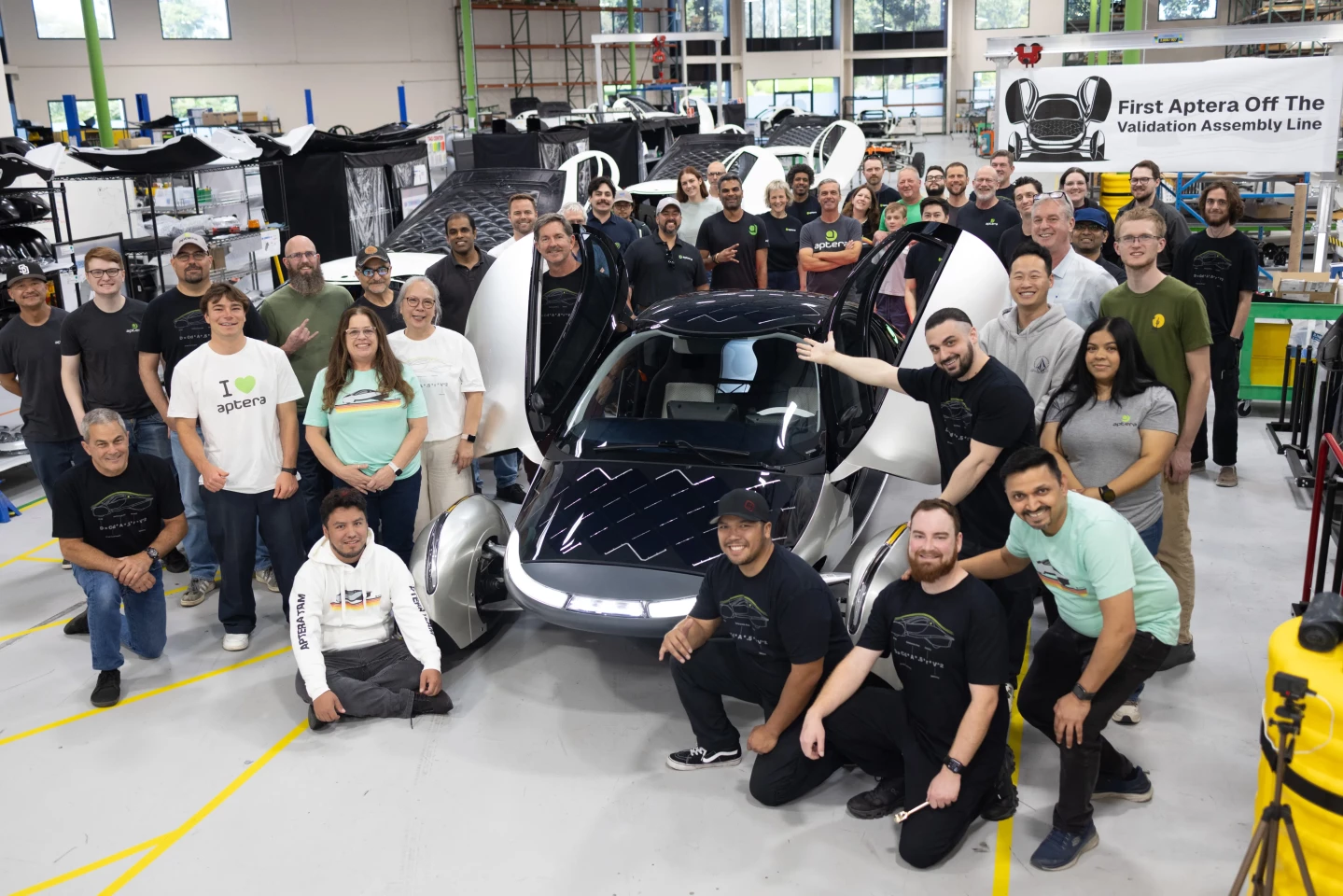
Vehicles produced on this line are not for sale just yet, but allocated to specific testing programs – including thermal validation, brake performance and some necessary destructive testing. These efforts support the company’s advancement toward regulatory self-certification, EPA certification, and progress toward delivering sellable vehicles.
"The completion of the first vehicle off our low-volume assembly line is a significant achievement for the entire company," said Steve Fambro, Co-CEO of Aptera. "These first vehicles will be used to complete the key tests and optimization required to sell our first vehicles to customers."
The production advance follows the public debut of the world’s first production-ready solar-powered EV at the world’s biggest tech show, CES in Las Vegas, last year.
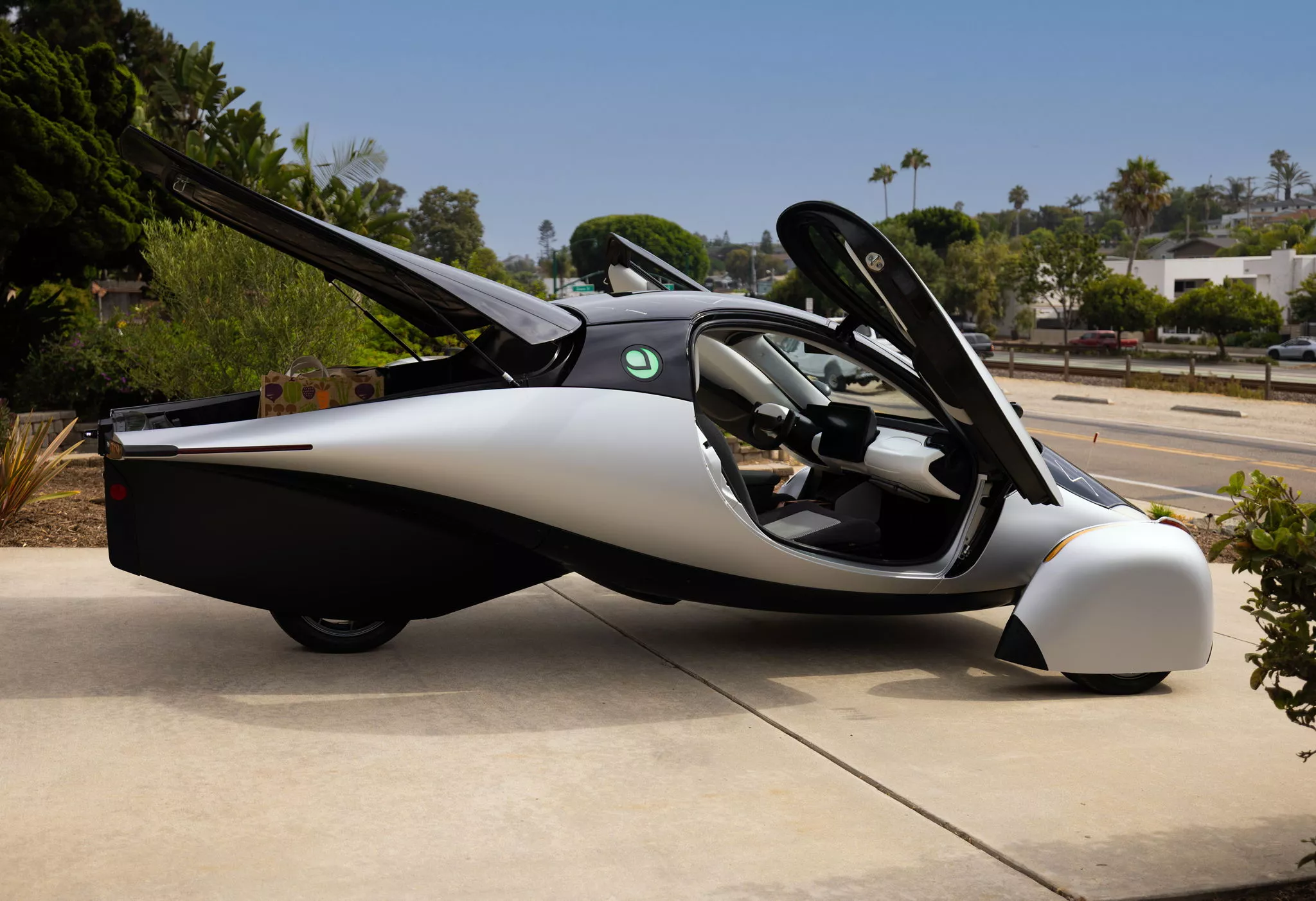
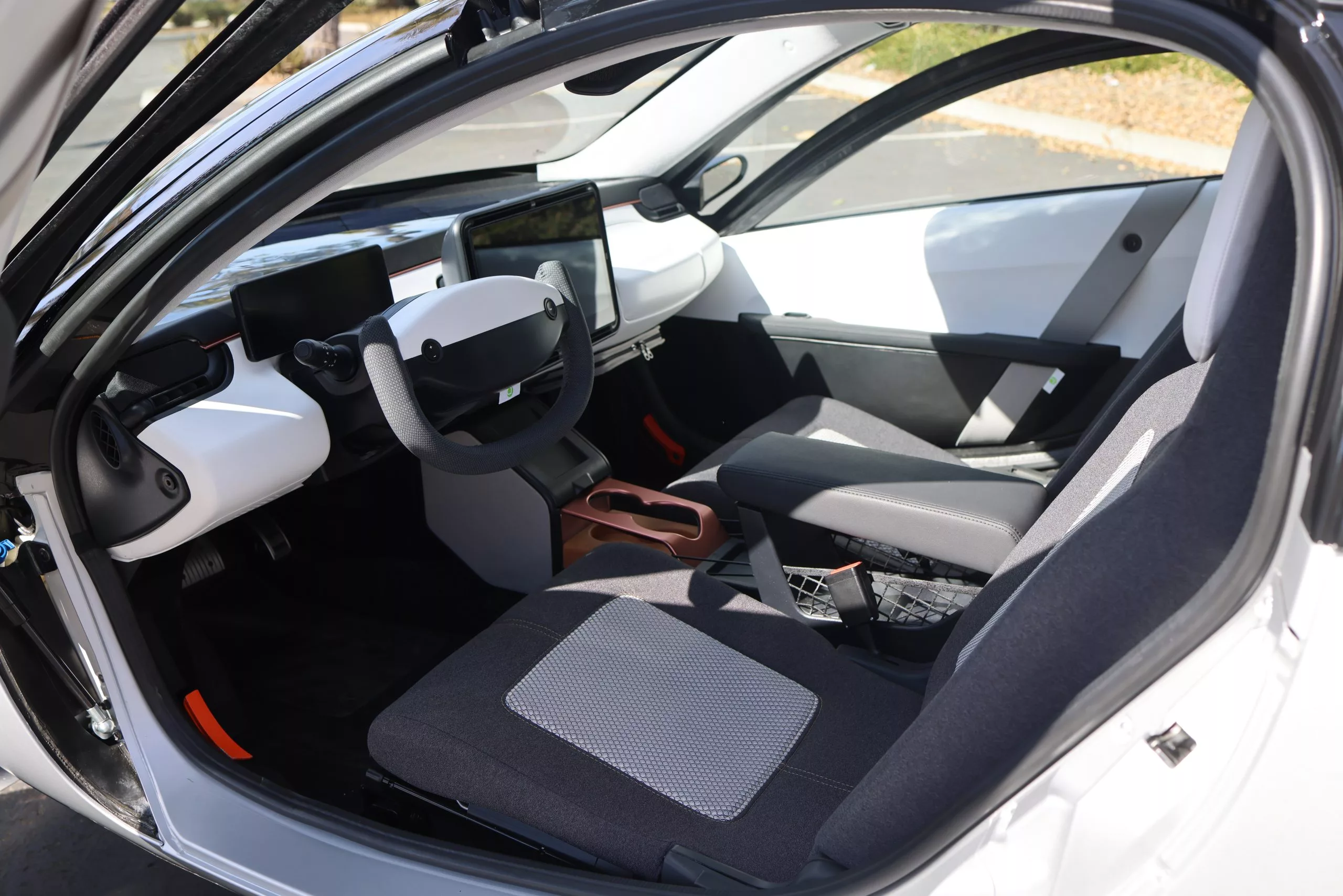
Take a moment to think that through: it means a car that can run on sunlight. The sEV is designed to potentially eliminate the need for plugging in for drivers in sunny climates. This sci-fi-looking electric vehicle combines cutting-edge engineering with extraordinary capabilities that are now being turned into clear-cut marketing.

We’ve always thought the Aptera could be amazing, and now we are realizing just how revolutionary it could be. The headline abilities are fantastic: the sEV offers up to 400 miles (640+ km) of range from a single charge of its onboard batteries in under an hour, and up to 40 miles of 'free' driving per day powered entirely by sunlight. Live in a sunny climate? You could get over 10,000 miles per year of solar-powered driving.
"Unlike larger, heavier vehicles dependent on fossil fuels or grid power, Aptera generates its own energy," says Aptera. "It’s a lightweight, self-sufficient solution tailored to today’s world and tomorrow’s challenges."
The three-wheeler sports solar panels strategically placed on the hood, dash, roof, and hatch. It's sunlight-drinking capabilities are combined with a supremely aerodynamic body made of ultra-light but super-robust carbon fiber sheet molding compound designed for ultra-efficient travel. This is a serious bit of structural tech: "Aptera’s body features a specialized composite structure known as Body in Carbon (BinC), primarily constructed from Carbon Fiber Sheet Molding Compound (CF-SMC) and Glass Sheet Molding Compound (SMC)." It’s this structural compound that enables the sEV to make the leap from one of those quirky, sun-powered racers built by enthusiastic students to a usable everyday vehicle.

But before it can live up to the promise of offering unmatched energy efficiency and possible freedom from conventional charging, the vaguely aeronautical-looking vehicle will need to prove itself in a series of regulatory tests.
"We are continuing to build out this series of validation vehicles as we move through testing and regulatory validation as efficiently as possible," Aptera's Sonia Visser told us this week. "You can expect additional updates as we reach future validation milestones."
Source: Aptera Motors