






Just days after the JCB Hydromax hit 368.347 mph (592.797 km/h), the hydrogen-powered vehicle has just set a new Federation Internationale de l'Automobile (FIA) world land speed record of 406.320 mph (653.91 km/h) at the Bonneville Salt Flats. That means it’s now the fastest hydrogen-powered car and the fastest zero-emission car ever.
In doing so, it also broke the previous record for diesel too, which was coincidentally achieved by the same driver – Wing Commander Andy Green. That record was made twenty years ago at the same place, where a JCB Dieselmax hit 317 mph (510 km/h).
Now, Green returned to Bonneville Salt Flats in Utah, driving the JCB Hydromax across the arid desert at 400.623 mph (644.74 km/h) one way. He then turned around for a run in the opposite direction and returned with an even more absurd top speed of 412.135 mph (663.27 km/h) – achieving an average speed of 406.320 mph.
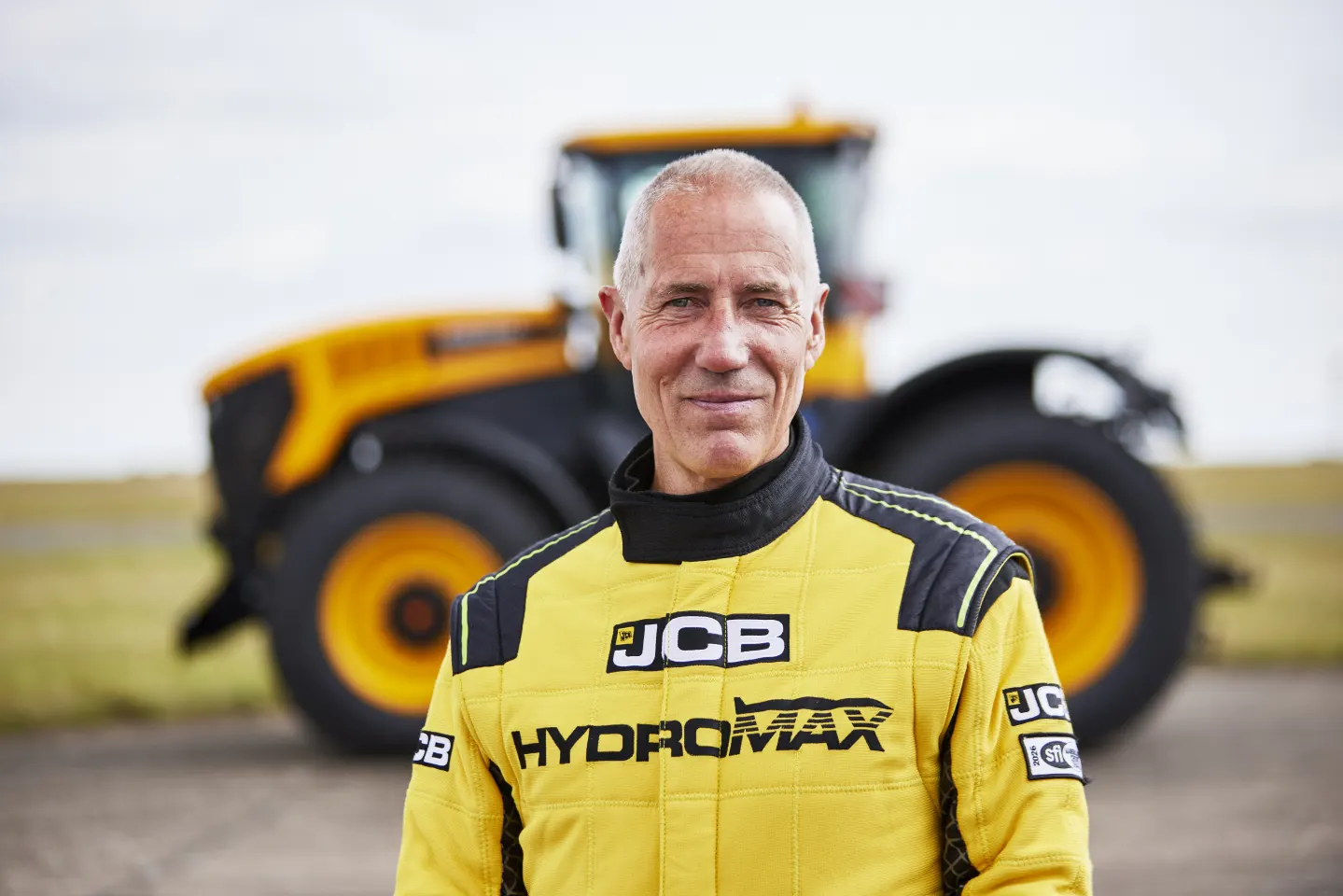
And if you didn’t already know, Green is a retired RAF pilot who happens to also hold the outright Land Speed Record at 763.035 mph (1,227.99 km/h), set aboard the jet-powered ThrustSSC. He’s the only person to break the sound barrier on land.
"The car was terrific – stable, strong and fast," he noted after the record runs. "Setting a world land speed record with hydrogen power, twenty years after Dieselmax, is a huge privilege. This record is a huge achievement by a world-class team and superb technology."
The 32-ft (9.75-m)-long Hydromax drives on all four wheels through a twin-transmission and clutch system. It makes use of JCB's own hydrogen internal combustion "digger" engines. Manufactured at the company's engine factory in Foston, Derbyshire, England, these engines were substantially upgraded to produce 800 horsepower each – a total of 1,600 hp – and supply power to both axles.
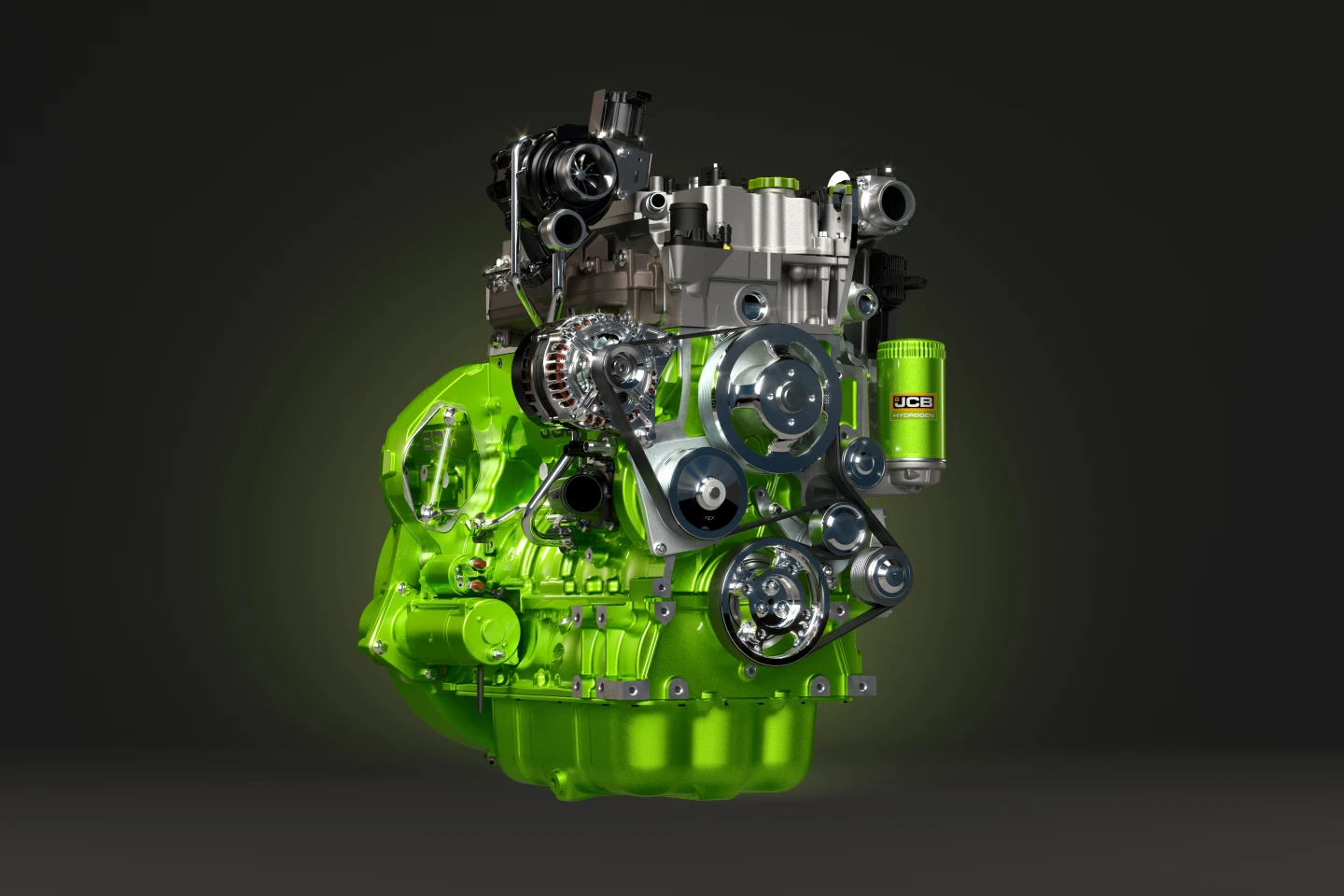
JCB claims that they are essentially the same hydrogen combustion units already used on its construction equipment – a crucial part of a £100-million hydrogen development initiative by the company. Since hydrogen only releases water vapor and a small amount of nitrogen oxide during combustion, it's an excellent low-emission substitute to petrol/diesel engines.
The record comes ahead of JCB’s new US$500-million factory opening in San Antonio, Texas. "Twenty years ago we came to Bonneville with JCB Dieselmax and showed what British engineering could do with diesel power," explained JCB Chairman Anthony Bamford. "Today we have done it again – this time with engines powered by hydrogen."
The Hydromax also happens to be way quicker than the Buckeye Bullet 3, the fastest electric vehicle ever, which achieved a two-way average of 341.264 mph (549.21 km/h) at Bonneville in 2016. "Bonneville is the spiritual home of the world land speed record, and JCB Hydromax has just written itself into that history," Green added.

Hydromax's run demonstrates that hydrogen combustion is ready to be pushed for extreme performance, meaning what was once merely a research project is now a viable path for production-based engines. And the Hydromax proves hydrogen engines can not only be viable, but also be crazy fast as well.
Source: JCB


