For the second year running, the Lucid Air sports the title of the most efficient electric vehicle (EV) in the US according to new EPA ratings. In doing so, it ranks above the likes of Tesla’s Model S and Mercedes-Benz’s EQS.
When you consider just how far the company has come in the last few years, it becomes an even bigger feat. Back in 2016, Lucid Motors unveiled its first-ever EV prototype, a 900-horsepower luxury sedan that offered over 300 miles of range.
Meanwhile, Tesla unveiled the Model 3 that same year, while also releasing a facelift for the Model S. Not just this, Tesla was already boasting impressive sales numbers, delivering more than 76,000 units globally in 2016, which, albeit minuscule by today’s standards, was still among the best figures that year. When you consider all that Tesla was up to in 2016, you’ll realize just how much of a head start the Elon Musk-led company had over the newly launched Lucid.

Commenting on the new data, Nick Twork, Lucid’s VP of Global Comms, noted that "other automakers often tout EV range using lenient WLTP or CLTC test cycles, masking efficiency gaps and inflating expectations." Now, with the official EPA numbers, "the story changes."
But here’s the thing: the Air sedan isn’t even that old of a platform. It was released in 2021, so it’s not like Lucid has been perfecting the electric sedan and its efficiency over the course of a decade.
It was only last year when Lucid announced the 2025 version of the Air, which effectively became its cheapest trim. Lucid claimed around 420 miles (675 km) of EPA-estimated range from an 84-kWh battery pack.
Per EPA’s 2025 tested ratings, the Lucid Air Pure RWD with 19-inch wheels achieves a MPGe (miles per gallon equivalent) of 146, equivalent to 4.33 miles per kWh. That's not just the most for 2025 – it’s the highest the EPA has ever reported for an electric vehicle. MPGe is the EPA’s way of quantifying how efficient EVs are, similar to MPG (miles per gallon) in standard gasoline cars.
Meanwhile, trailing behind the Air are:
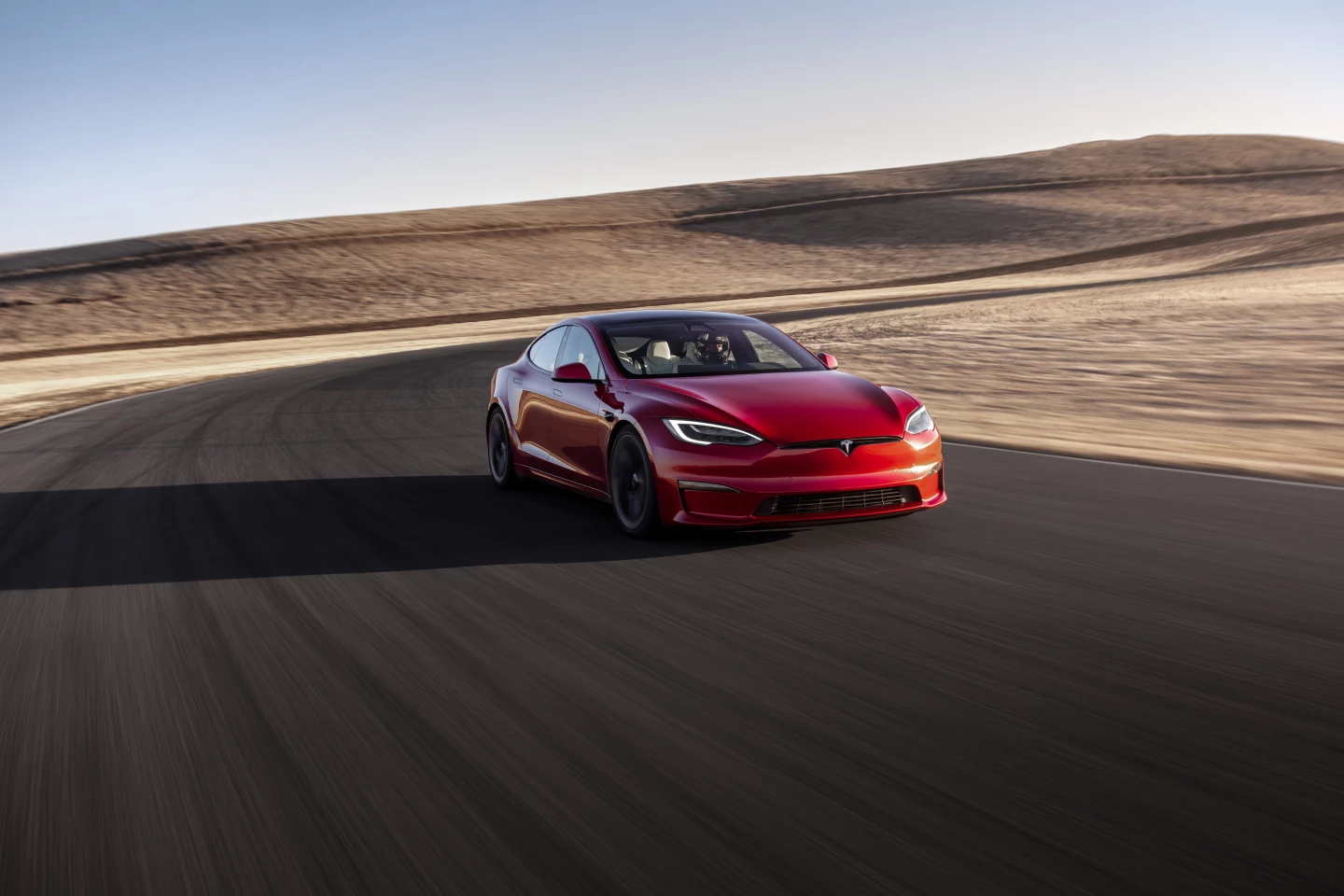
- Tesla’s Model Y Standard RWD with a MPGe of 138 (4.09 miles per kWh)
- Tesla's Model 3 Premium RWD at 137 MPGe (4.06 miles per kWh)
- Tesla's Model Y Long Range at 134 MPGe (3.98 miles per kWH), and
- Toyota’s bZ Limited at 131 MGe (3.89 miles per kWh)
Further down the list are cars like:
- Mercedes-Benz’s CLA250 Plus with EQ Tech (R22) at 126 MPGe (3.74 miles per kWh)
- Nissan's Leaf 75 kWh at 121 MPGe (3.59 miles per kWh)
- Subaru's Solterra AWD at 120 MPGe (3.56 miles per kWh)
- Volvo's EX30 Single Motor Extended Range at 116 MPGe (3.44 miles per kWh)
- Hyundai's Ioniq 5 Standard Range at 115 MPGe (3.41 miles per kWh)
- BMW's i5 eDrive40 Sedan at 110 MPGe (3.26 miles per kWh)
- Polestar's 4 Long Range Single Motor at 95 MPGe (2.82 miles per kWh)
- Dodge's Charger Daytona R/T AWD at 95 MPGe (2.82 miles per kWh)
- The Volkswagen ID. Buzz 4Motion at 80 MPGe (2.37 miles per kWh)
And there are far worse than that - some of the worst tested include:
- The Rivian R1S Quad Max at 67 MPGe (1.99 miles per kWh)
- The GMC Sierra EV at 64 MPGe (1.90 miles per kWh)
- The Chevy Silverado EV at 64 MPGe (1.90 miles per kWh)
- The Mercedes-Benz G 580 with EQ technology at 62 MPGe (1.84 miles per kWh)
Right at the bottom of the list sits the Bugatti Rimac Nevera hypercar, making just 51 MPGe (1.51 miles per kWh), but we'll give that one a pass!
It's fascinating just how much of a difference separates the #1 spot Lucid Air from the pack – it squeezes nearly 6% more range from a kilowatt-hour than the second-place Tesla.
Lucid’s former CEO, Peter Rawlinson – who was a top-ranked engineer at Tesla before moving to Lucid – took to LinkedIn last year to highlight the Lucid Air’s efficiency benchmark superiority when compared to the likes of Porsche Taycan, the Mercedes EQS, and the Tesla Model S. He even went as far as saying that should Tesla continue its current rate of progress, it will take the Model S approximately seven years to match the (numbers) achieved by the 2025 Air Pure sedan.
To add more salt to competitors' wounds, Lucid also leads the way on charging times, too. The Air takes around 10 hours to gain around 380 miles of range, which is 95% of its 420-mile range. By comparison, in the same charging time, Tesla Model S gains around 306 miles of range (72 % of its full 402 miles range), while the Mercedes EQS charges only 70% which is about 247 miles of its 352-mile range.

Lucid aimed its pricing guns squarely at Tesla toward the end of 2020, with a sub-$80,000 base price that converted to under $70k when tax credits were chopped off – though the top-tier Dream Edition did come in more than twice that at $169,000. Thanks to developing most of its components in-house, Lucid has managed to keep prices down – with the 2025 Air starting at $70,900.
Come next year, Lucid is beginning production of its mid-size platform, which should start around the $50,000-mark. And from a financial point of view, the company seems to be in a good place at the moment, too. Lucid’s Q3 earnings confirmed that it has sufficient cash on hand to support operations through the first half of 2027.
Your move then, Tesla!
Source: FuelEconomy.gov