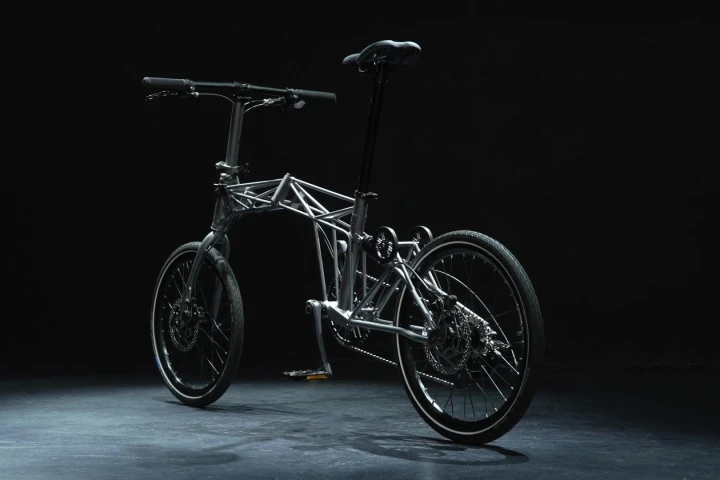
A lot of people would commute by bicycle, but don't do so because they're afraid of traffic. Well, those folks might like Canyon's prototype Predict bike, which is laden with tech to keep its rider safe from cars and other road hazards.
Set to debut next week in Frankfurt at the Eurobike show, the Predict is not an ebike (yey!).
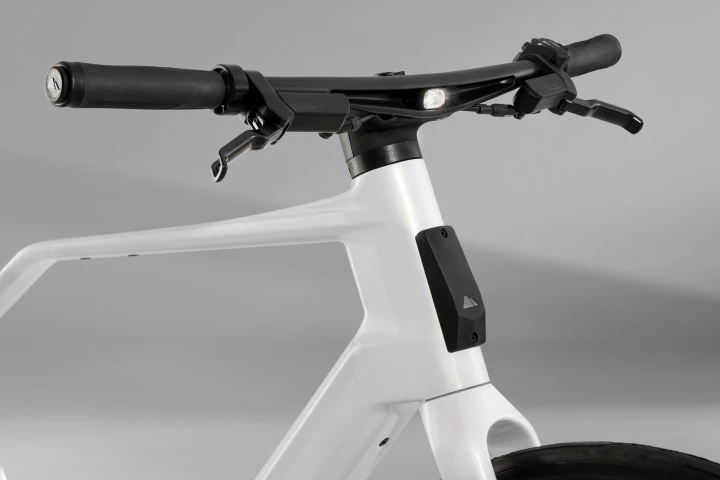
It's actually a 3D-printed carbon fiber analog road bike which is outfitted with cameras, front and rear radar modules, a handlebar-integrated display, and numerous distributed sensors including a motion sensor in one of the DT Swiss wheel hubs.

Other bits of tech include haptic feedback units and LED indicators in the bars, along with a microprocessor running AI algorithms. Importantly, all of the processing takes place onboard the bike – no data is transmitted to and from the cloud, so there's no latency or privacy concerns.
As the rider pedals, the system tracks their speed, steering and stability, while also assessing the 360-degree immediate environment. More specifically, it assesses the trajectory of moving objects within that environment, the cyclist's distance to other vehicles that might or might not be braking, the type of terrain on which the cyclist is riding, and the cyclist's position relative to other riders in a group.

If it's determined that a threat is imminent, the cyclist is warned via the display, LEDs and haptic feedback – and optionally via a wirelessly linked Canyon Stingr Smart helmet – which indicate the direction and severity of the threat, along with the recommended course of action. Of course, hitting the brakes or steering out of the way will always be popular choices, although in some cases the rider can also remotely drop the seatpost to improve their stability.
The electronics are powered by a battery in the down tube, which should be good for eight hours of runtime. A hub dynamo helps extend battery life.
Canyon says that it is now "considering factors such as market acceptance and how technology pricing will come down." The company estimates that the Predict – or a descendant of it – might enter production within about three years' time.
Source: Canyon