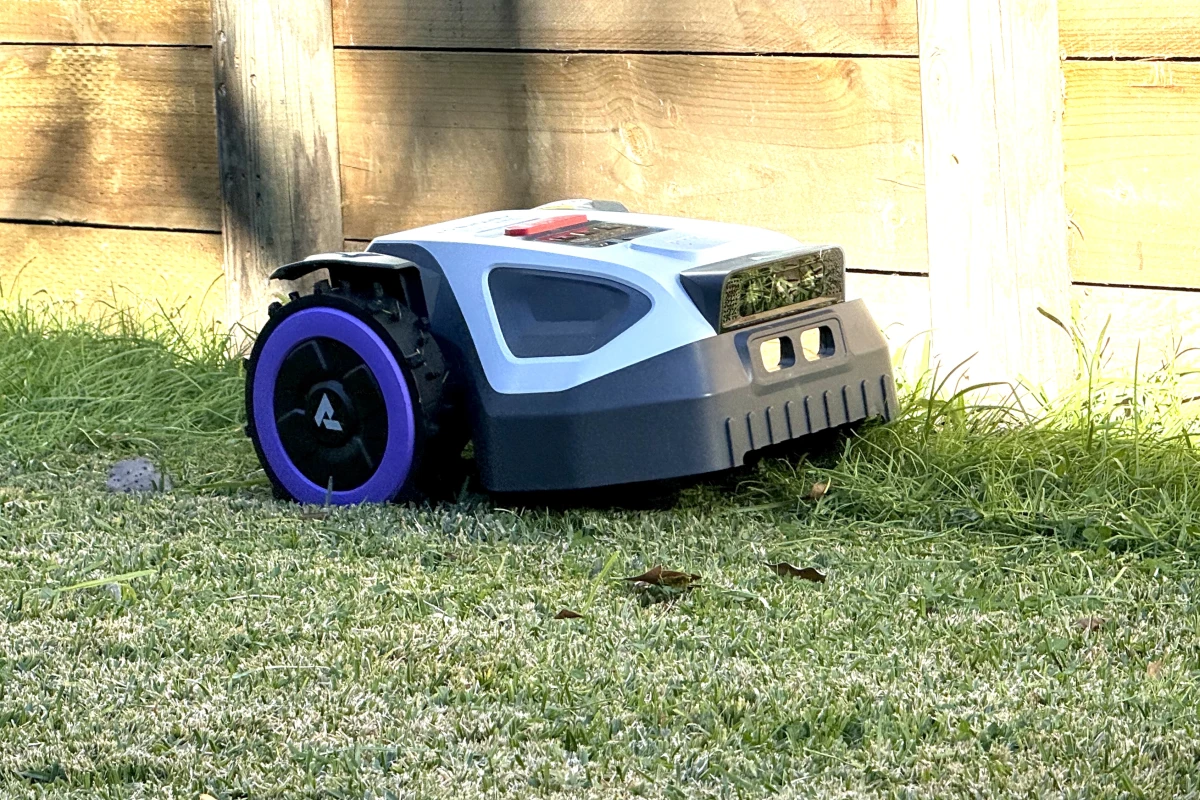



The Anthbot M9 is a surprisingly adept wire-free mower, which can master lawns of up to 1,000 sq m (around a quarter of an acre) for a fraction of the price of its famous competitors. And, importantly, it's incredibly easy to use, making it a great option for those new to home-robot life.
We first covered Anthbot back in 2024, and the company has gone from strength to strength since. Part of the newly released M series, the M9 foregoes LiDAR to rely on full-band RTK GPS satellite positioning, combined with dual HDR cameras as its "eyes" on the ground. But unlike RTK mowers from premium brands such as Husqvarna and Segway, Anthbot's model is just US$899 when it's at full price – however, it's regularly on sale and is currently $769.
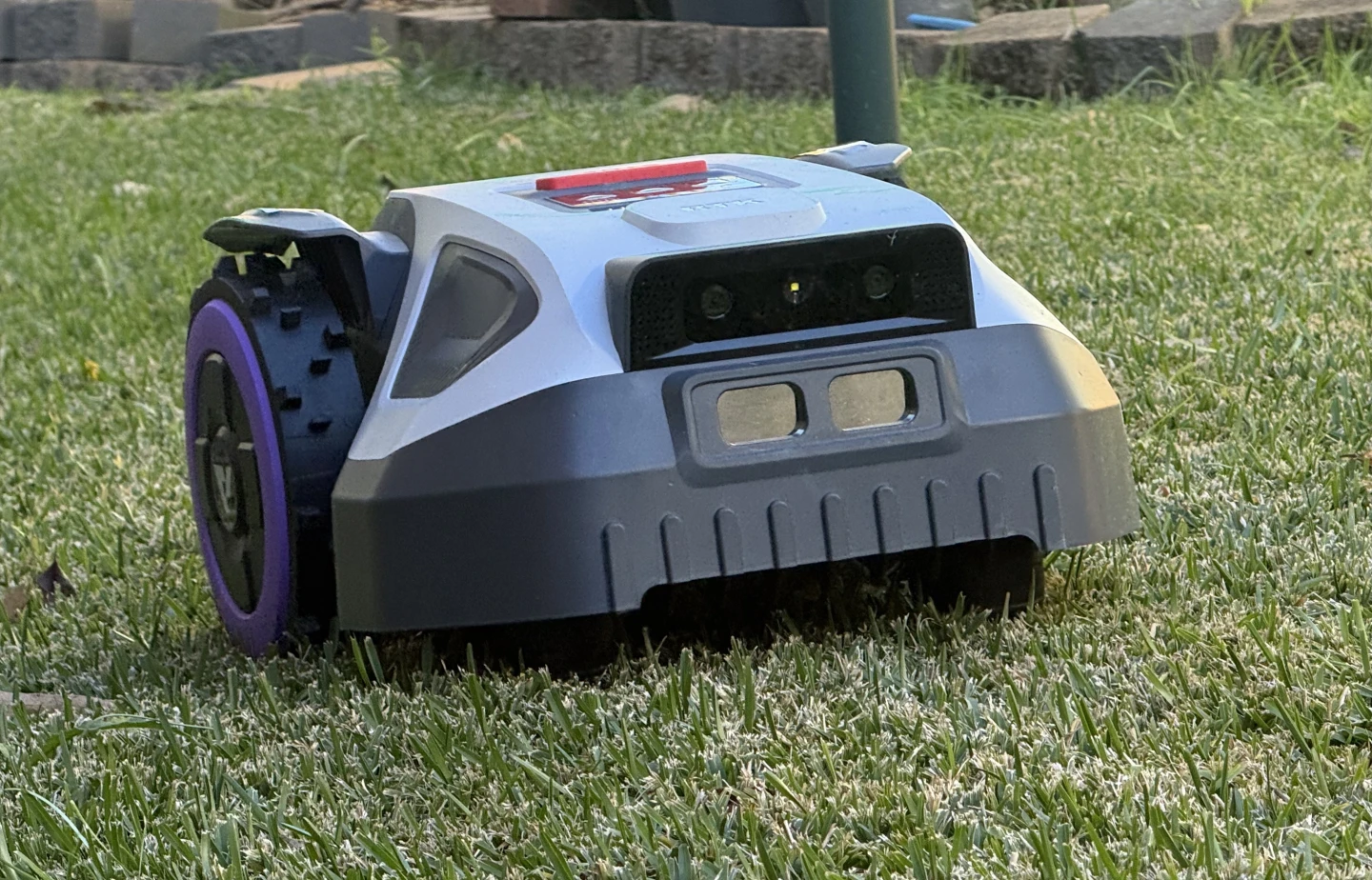
One of the first things you'll notice when you get it out of the box is how compact it is, compared to the packaging. It's a sleek unit, weighing just 10.2 kg (22.3 lb) and measuring 49.8 x 39.2 x 25.1 cm (19.6 x 15.4 x 9.9 in), something it uses to its advantage in tight spaces.
Like the earlier M5, it too has a 20-cm (7.9-in) five-blade cutting disc, can navigate slopes of up to 24 degrees (45%), is impressively quiet (this one runs at below 58 dB) and can be adjusted to cut at 3-7 cm (1.2-2.8 in).
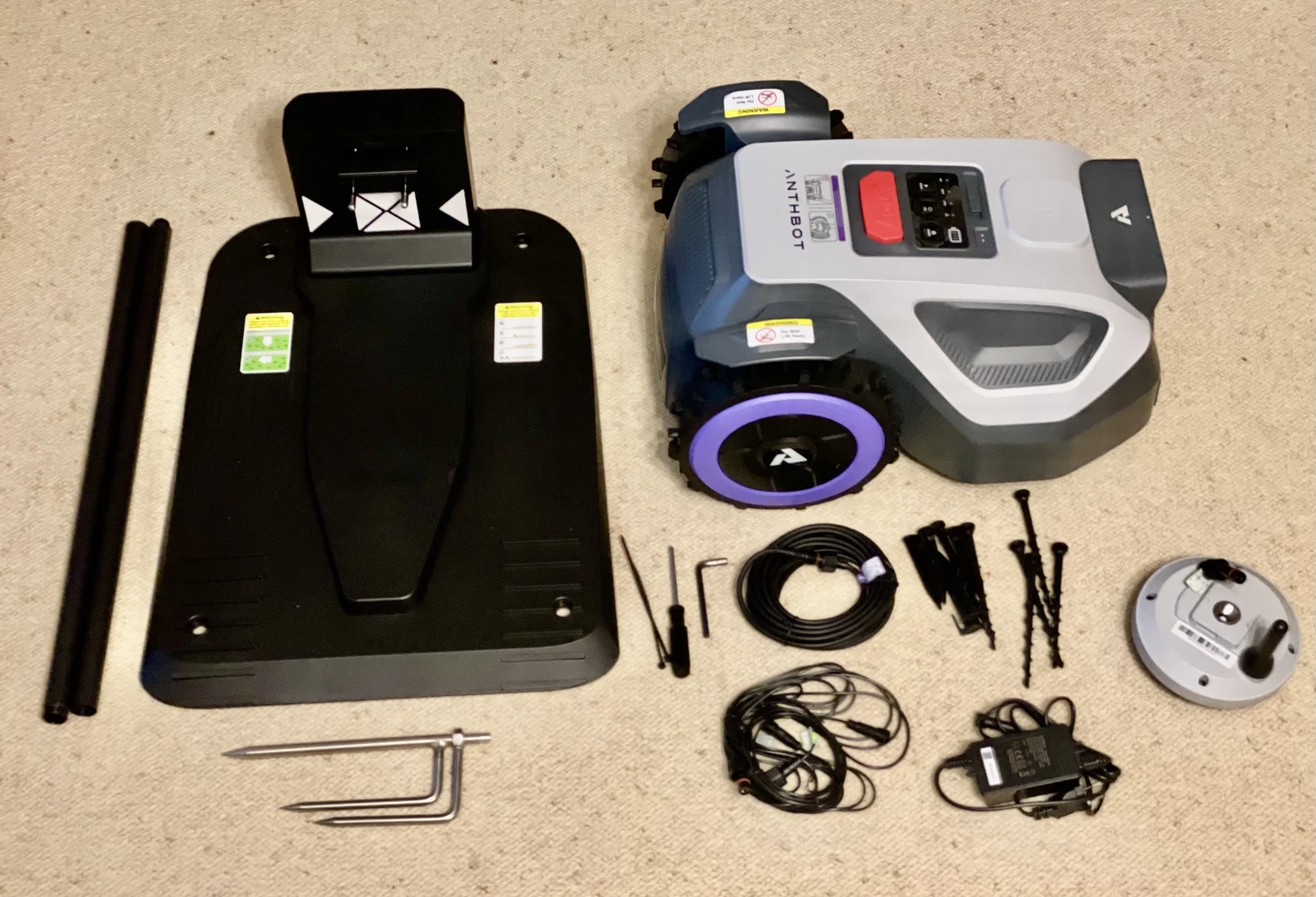
The company claims you can set this thing up – from unpacking to mapping – in 10 minutes. And this is on the money, even for a robot-mower newcomer like myself. Unlike many apps that accompany smart tech, Anthbot's is made for people who might be setting up their first self-mowing gadget. It's worth stopping to appreciate this, because it's not an exaggeration to say I've lost hours trying to work out how to use some smart tech that is entirely app-controlled. Some people are naturals when it comes to adopting smart technology around the home, but many – like my mother – are not. So if a tricky app isn't functional, it can be both intimidating and also leave you feeling pretty dumb. (And let's just say, I have two reviews I am working on right now that include apps that have made me feel pretty dumb.)
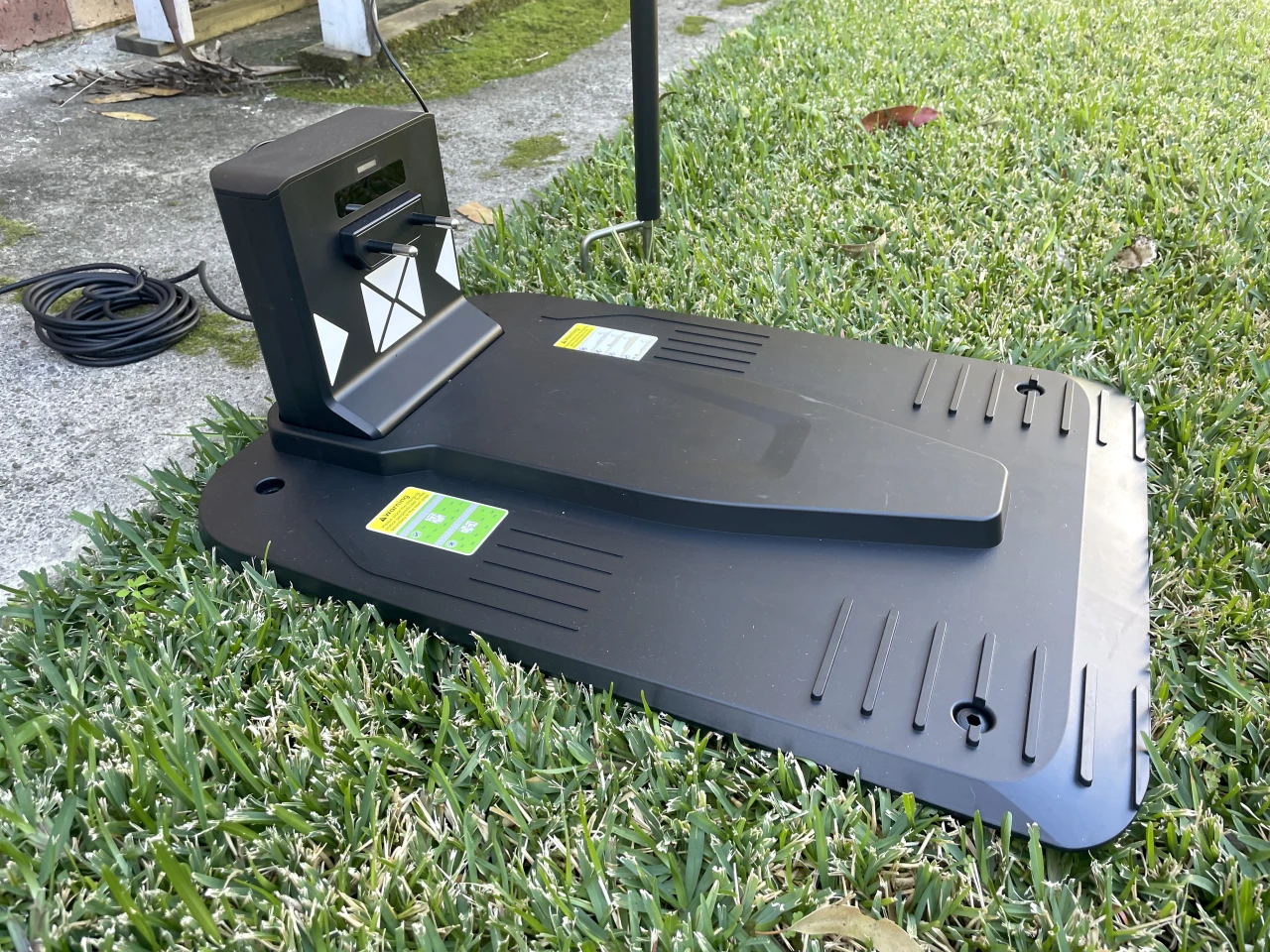
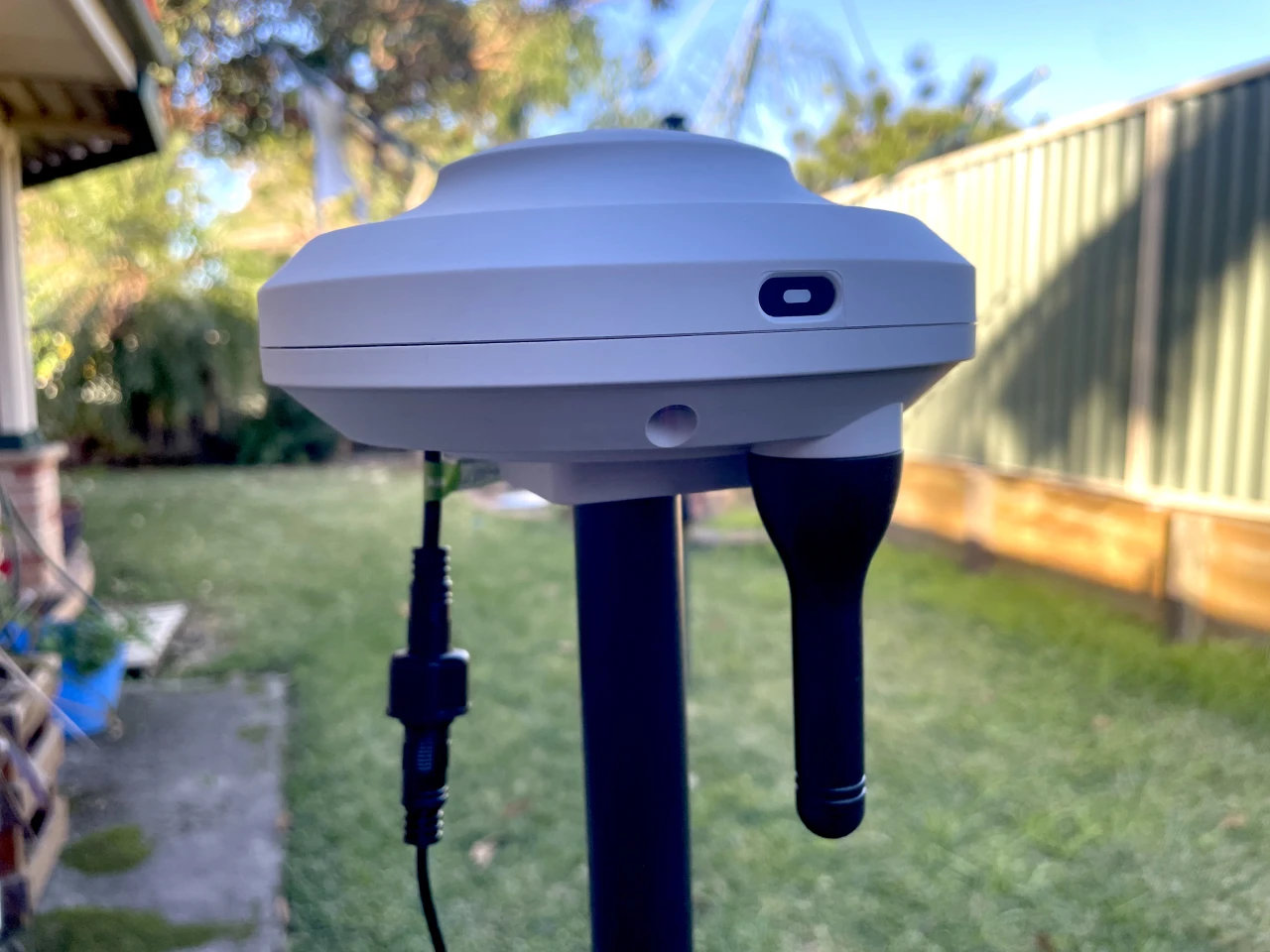
The trickiest part of the M9 setup was sorting the cables to the right ports – so not too challenging at all. Essentially, you find a suitable spot for the charging base, assemble the RTK antenna – which looks like a spaceship on top of a pole – close by, and connect these two pieces of hardware to a power supply. While there are specifications for this positioning, it's hugely adaptable. At my mom's house, I was lucky enough to run the existing cable through to the laundry power outlet, but I was also concerned that her small odd L-shaped lawn with a few obstacles like a clothesline pole would be a potential problem with operation. Turns out I should have had more faith in the M9; it's far smarter than my robot vacuum.
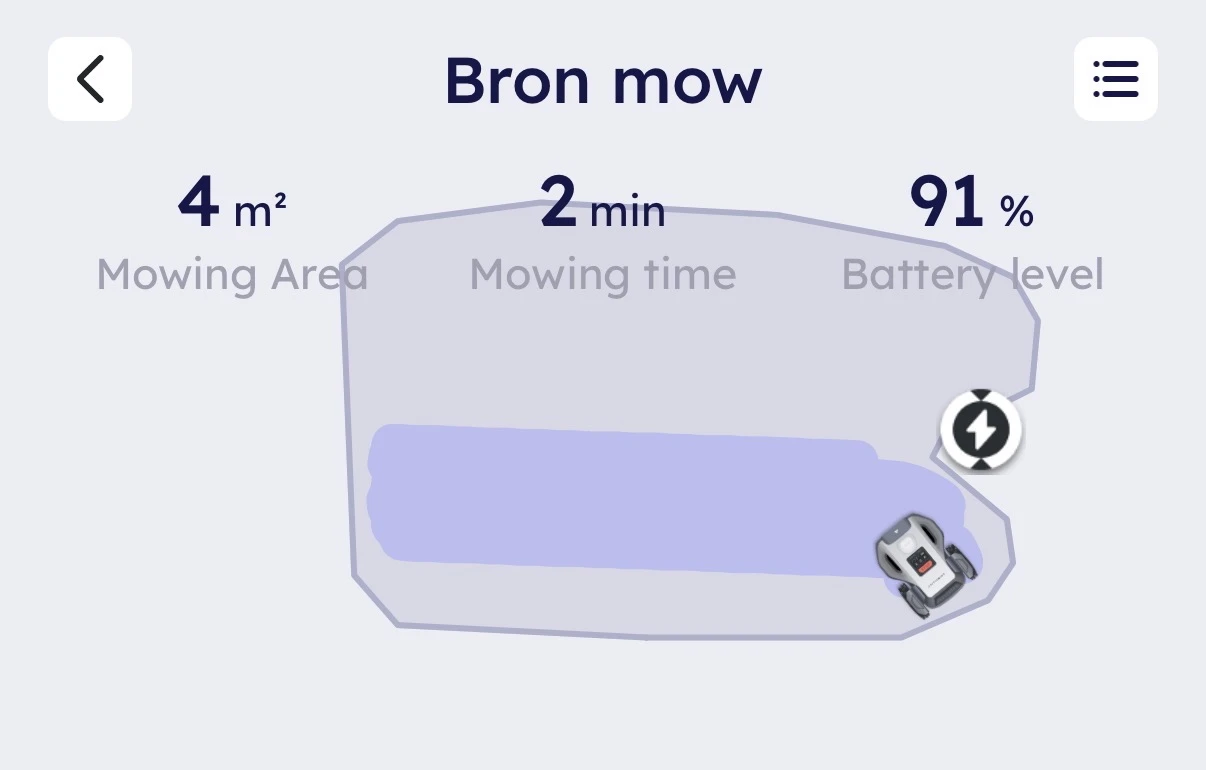
Once you've downloaded the Anthbot app, set up connection and charged the mower, you'll need to add a map of the lawn. You can do the entire space or sections, so I started off with a fairly large rectangle that would force the M9 to skirt fence posts and turn tight corners where cement paths connected. Rather than the mower doing the mapping itself, like many robot vacuums do, you guide it with directional controls through the app, allowing more precision. However, if you find you haven't been as exact after its gone out on its own to cut grass, you'll need to re-do the map. To be honest, this was sort of fun, like driving an oversized remote-control car.
When you're ready to hit start, the mower will follow precise U-shaped patterns that leave neat line marks – unless you have a lawn as stubborn and thick as what mom has growing. That said, it navigated the tough grass well, then took out the thinner weeds along the fence line, and by the end of the job had made a very noticeable cut in this test rectangle compared with beyond it.
I was impressed with the tight turns and impeccably straight lines mowed, even on slightly uneven ground. It was also able to go over some curls of bark and leaf litter (I could have cleared it, but I was curious as to whether it would be considered an obstacle to avoid, and thankfully it was not). You can adjust the cut height during the mow, and interrupt the program anytime, without confusing the unit and having it return to base to regroup (which my robot vacuum is known to do).
As I mentioned earlier, its compact size gives it an edge – no pun intended – when it comes to getting into narrow pathways that a bigger unit or a traditional mower can't access. Because the body is noticeably smaller than many RTK mowers, the M9 will have no issue cutting grass alongside paths and confined areas. Its chunky wheels are deceptive, too – it's deft at turning in very little space.
Obstacle avoidance remains one of the issues with these kinds of smart devices. Anthbot says the M9 can recognize more than 1,000 common garden obstacles – kids, pets, toys, garden tools – but some reviewers have noted that things like shadows can confuse the unit and activate its avoidance moves. I had no such experience, with shadows on the grass in the late-afternoon sun proving no issue, and it worked around the clothesline pole smoothly. Actually, the only time it crashed into anything was when I was handling it badly during mapping along the fence. (On the upside, it's a sturdy little machine that can handle ramming a few timber fence posts at speed.)
Also, the M9 is not going to work miracles if you have a yard in need of serious landscaping repair; it's best for lawn maintenance, not clearing an overgrown space or one full of tree roots, for example. Some unevenness like seen in my mom's yard, was not a problem.
With the 5-Ah/90-Wh battery, you can expect to cover a maximum of 150 square meters (180 square yards), or around 90 minutes of mowing time. It'll take about 90 minutes to go from zero to 100% once the M9 has run out of steam. Mom's yard section – which I tested out on the once-over and twice-over mode, in different zones – only sapped about 10% of the battery, so the mower will cover quite a lot of ground before it has to head back to its charging station.
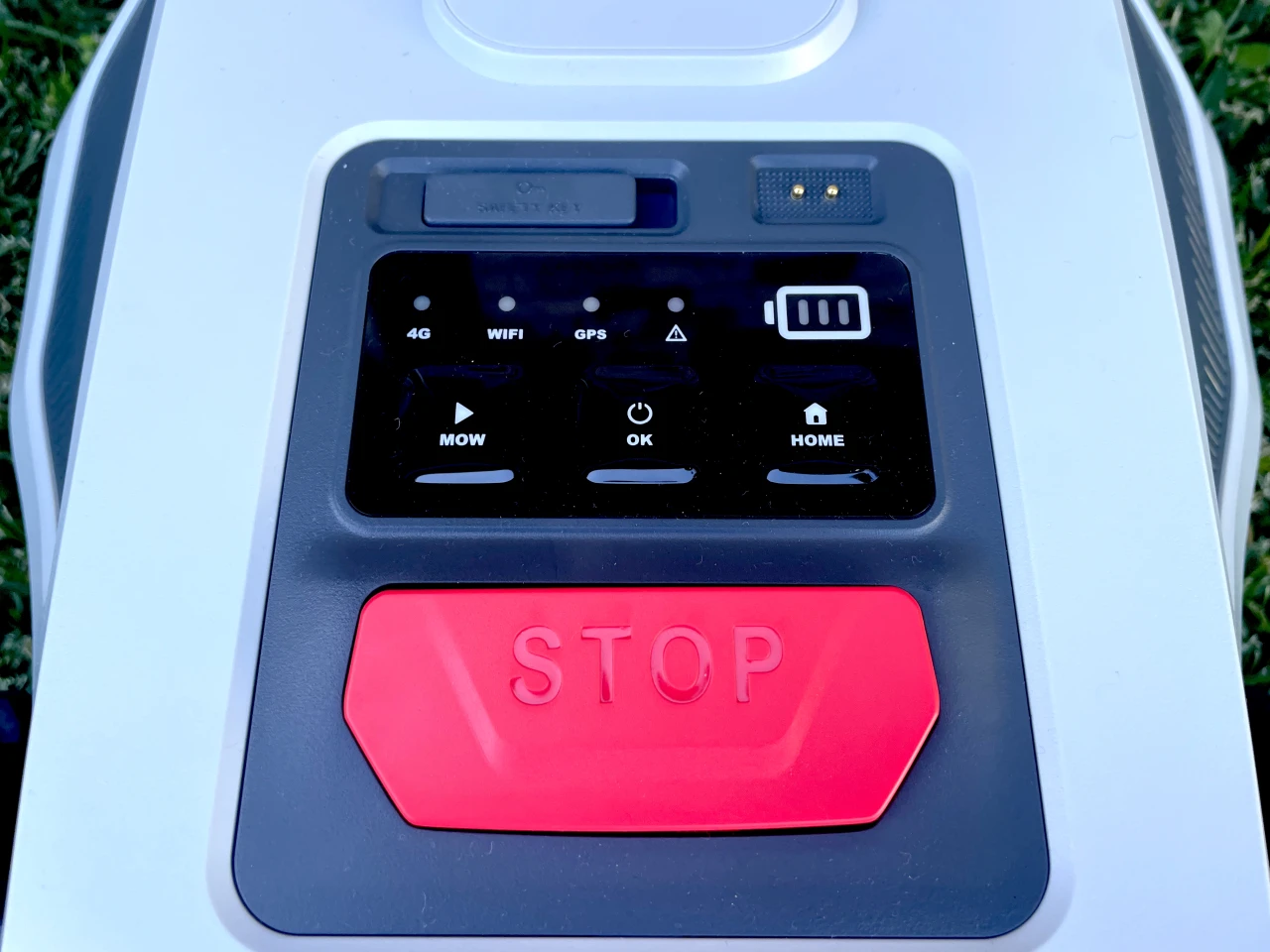
Being new to this technology, I didn't really know how RTK GPS worked or what to expect. RTK, or real-time kinematic positioning, enhances the accuracy of GPS by combining satellite positioning data along with a type of base station to boost accuracy. Here, that station is the space-ship-like RTK antenna. I experienced no issues with the navigation, and the general consensus among other reviewers is this works as designed. There are some environmental conditions that might make this technology more challenging, like the antenna needing a clear view of the sky, but even positioned under a large tree, I had no connection problems.
It's worth noting that Anthbot also offers offers optional dual RTK stations for front and back yards, plus a subscription that can supplement satellite positioning in difficult locations. The unit is also designed to switch from RTK GPS to on-board navigation when there are dropouts or interruptions.
Overall, the M9 delivers unusually good value and is a pleasingly successful development in the Anthbot range. Perhaps the biggest advantages here are how easy the unit is to set up and get working, which makes it an ideal choice for people with small- to average-sized lawns with little smart-tech experience.
And given the fact that, for little over $700, you can get a solid lawn maintenance machine that functions much like competing models that cost several thousand dollars, Anthbot's M9 makes a serious case for it's space in the robot-mower market.
Source: Anthbot