



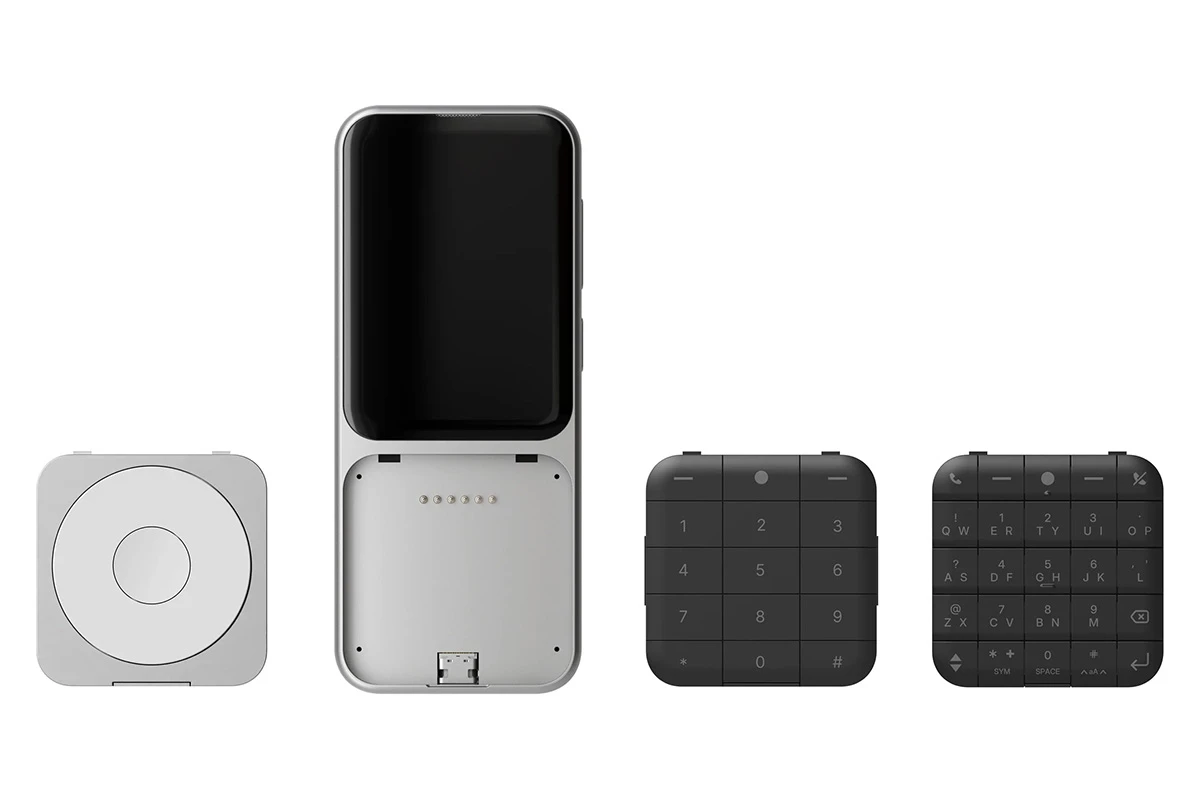


We've covered a bunch of anti-distraction phones on here, and they largely focus on stripping down your device's functionality to the basics. The Sidephone, meanwhile, takes a modular approach to customizing the hardware to fit into your life.
A screen takes up the top half of the front fascia, while the bottom has room for swappable modules. You can drop in a QWERTY keypad, a T9 dialpad like you've seen on dumbphones, a game controller, and even an iPod wheel-inspired shortcut button pad.
That might make this desirable to gadget nerds who aren't even necessarily in the market for a less engaging phone.
The two-person team behind the Sidephone SP-01 says it's closer to a dumbphone than a smartphone; it's designed for people looking for a healthier relationship with their personal device.
The Sidephone is built on the open source foundational platform behind Android, but doesn't come with Google services or Google's Play Store for apps. Instead, it features a set of just nine essential apps; you can install more via preset app packs that you can access by scanning QR codes on Sidephone's site.

The core set lets you make calls, send texts, shoot photos on the 13-megapixel rear camera, and view files and photos. The included T9 keypad and 2.8-inch touchscreen should be enough to get around those.
I do a lot of texting and typing, so I'd likely reach for the QWERTY keypad – swapping these magnetic tiles takes only a second. This one features two characters per button, so I imagine it'll need a bit of getting used to at first.

You can get maps, WhatsApp, a voice recorder, calendar, notes, and even Proton's email service on here. There's also a button mapping tool to get the various hardware buttons on each tile to do what you need them to in different apps.
While the headline is all about modularity, these constraints might actually be the Sidephone's trump card. As much as you might possibly be able to use a fair number of apps, there's a lot you won't want to do on that small screen – like scrolling through TikTok (which itself will require a laborious sideloading process) or losing hours to YouTube.
Similarly, the controller keypad is most suited to basic and retro games. And even then, you'll likely need to go through several hurdles to emulate titles from old consoles. So there are indeed limitations to what the Sidephone has to offer, but they may help you touch grass more often.
The other benefit of a basic-ish device like this is you'll get multiple days of use out of a full charge of its 2,000-mAh battery.

If I could improve on the Sidephone, I'd add a better camera (photos I've seen from it in reviews don't look great), a headphone jack in this already thick device, and a microSD slot to hold a library of audiobooks, podcasts, and locally stored music.
Other than that, this is an interesting product for folks looking to spend less time glued to a screen all day. US$299 nets you the phone along with the standard T9 keypad, and you can additional tiles for $29 each. There's a selection of cases available too.
Source: Sidephone


