


The hitch-mounted tent is a concept we've seen show up a number of times over the past decade, most notably and recently in a version developed by global car accessories giant Thule. Australian startup MyGlamper aims to grow the concept to all-out group camping size. In fact, it considers its hitchable shelter more of a wheel-less tent trailer than a basic tent. It's hard to disagree after learning its hitched-up hard trunk unfolds and inflates into a full-blown 6- to 12-person wilderness lodge complete with raised master bed, bathroom, hot recirculating shower, lighting and electrical hardware, indoor kitchen and more.
The hitch-mounted tents we've looked at previously have been marketed as a means of bringing the level-floored comfort of a rooftop tent down closer to the ground, eliminating the need to climb up and down a ladder while also pulling the big anti-aerodynamic box off the vehicle roof during travel.
By contrast, MyGlamper inventor Gene Corbett sees his design as more of a middle-of-the-road alternative to the rooftop tent and caravan. Corbett's design is meant to be lighter, cheaper and more capacious than camping trailers while offering a roomier camping experience and more complete equipment set than you get with any roof tent.

Each MyGlamper unit packs away into a hard-sided box that looks similar to a packed rooftop tent. Instead of hoisting it up atop the vehicle, though, you attach it to the hitch receiver, where it rides standing up. The box size varies based on model, starting with the six-person 55 x 47-in (140 x 120-cm) MyGlamper Lite box that runs 8 in (20 cm) thick. The 12-person MyGlamper Pro flagship version has the same 140 x 120-cm rectangular dimension estimates but juts out off the back of the vehicle a little farther because of a 14-in (35-cm) thickness.
With dry weights ranging between 154 and 243 lb (70 and 110 kg), the MyGlampers weigh less than any camping trailer built for an actual motor vehicle, not a bicycle. While the 243-lb figure is more than most rooftop tents, it's still less than a few of them. And by putting that weight lower down and behind the vehicle bumper, MyGlamper eliminates the kind of top-heavy handling and aerodynamic drag you might experience with a roof tent. The company suggests its products will not have a discernible effect on fuel economy under normal driving conditions, though we're sure your (literal) mileage may vary.
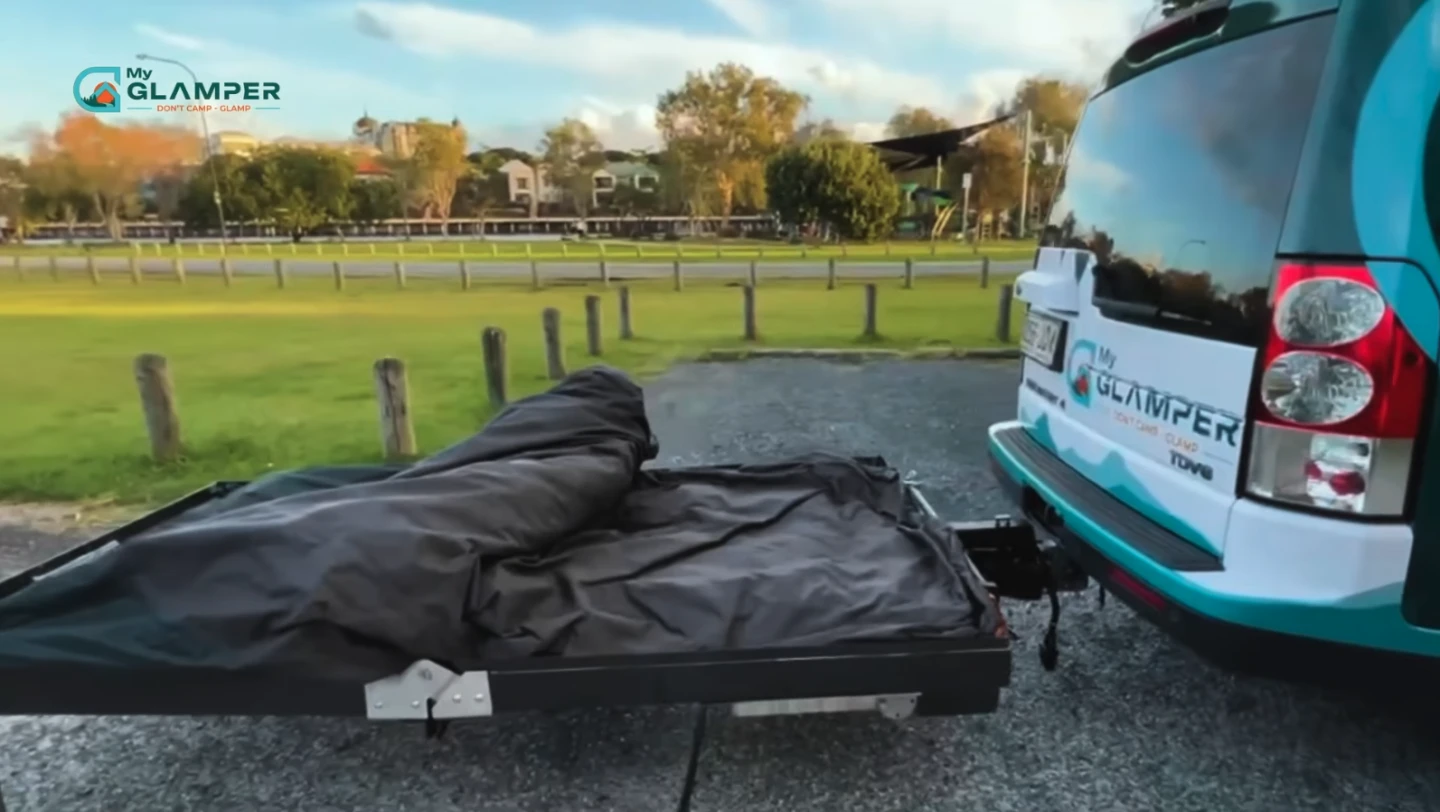
Once at camp, the MyGlamper folds out into the two box halves that contain the inflatable tent body. Campers can detach the tent from the vehicle and fold the legs out to support the two halves, which become the raised floor holding the master double bed above ground. The camper then unrolls the rest of the body onto the ground and lets the automatic inflation system air it up into form.
MyGlamper estimates a setup time of six minutes for the single-tent six-sleeper MyGlamper Lite base model. This unit pairs the double bedroom area with a larger sleeping/living room. The living area has a ground sheet tent floor but not a hard raised floor like the bedroom.
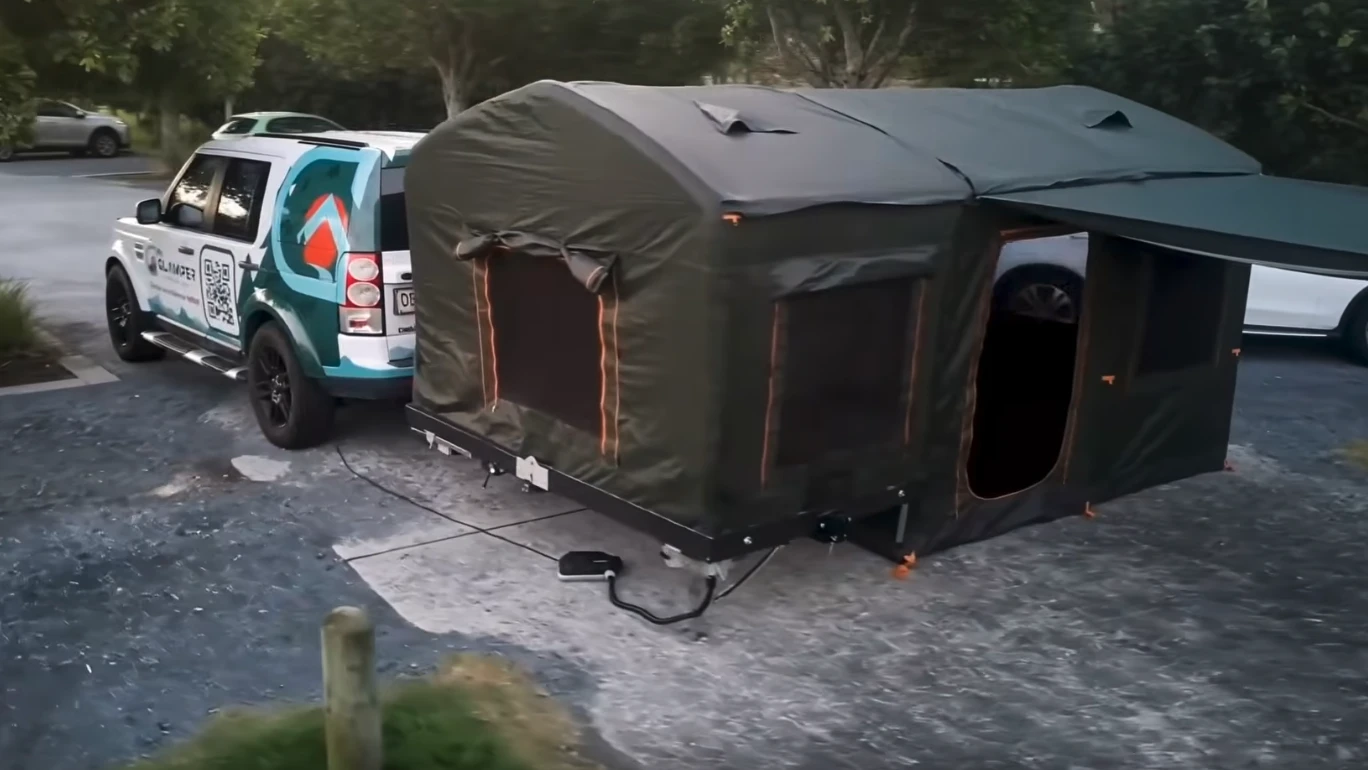
The Lite tent has an area of 14.8 x 14.6 feet (450 x 445 cm) and stands at an exterior height of 7.4 feet (225 cm), which promises to offer plenty of standing height in the living area. MyGlamper says that the weight of the solid master bed base is enough to hold the tent down from wind, but given how large and vertical the canvas structure is, we'd be inclined to stake it out come that first gust.
Both the mid-tier MyGlamper Plus and the MyGlamper Pro are larger designs that come with a second inflatable tent attached. Each one sleeps up to 12 people and houses more interior space that incorporates a kitchen area and an ensuite bathroom with hot recirculating shower and collapsible composting toilet. Each also includes a 100-Ah battery and 30-L fresh water tank.
The Pro model, of course, features the largest layout and highest standard equipment spec. It extends across an area of 15 x 15.7 feet (4.6 x 4.8 m) while standing at the same 7.4 feet as both other models. It comes equipped with an off-grid power system with solar charging, a large group kitchen, and a smart setup and equipment control system.
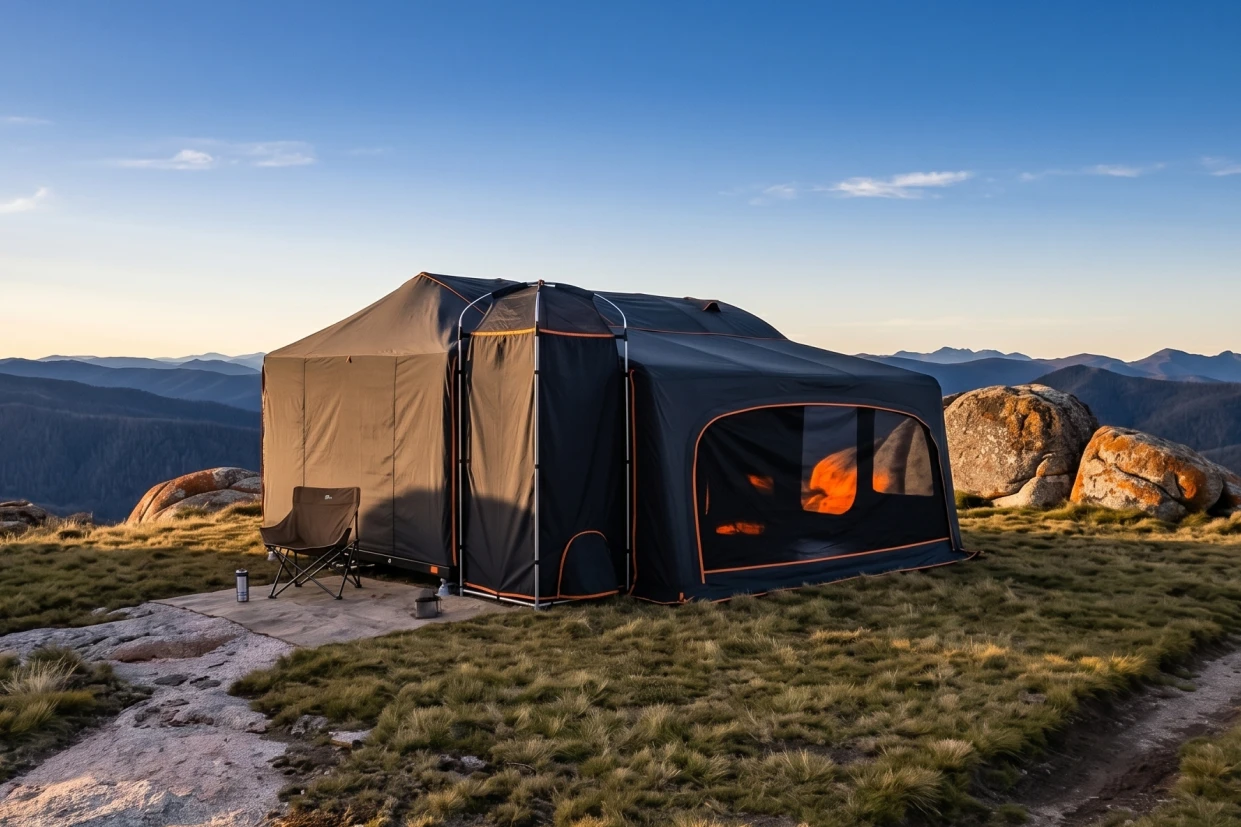
Given that all MyGlamper's actual images and footage show the Lite model, it looks like the Plus and Pro are still in development. Specs and features may change ahead of production.
All three MyGlamper models are available for preorder now at "founders pricing." The basic six-person MyGlamper Lite starts at AU$18,990, the Plus at AU$24,990 and the Pro at AU$29,990 (approx. US$13,350, $17,550 and $21,075). Those prices don't look so bad compared to inflatable Australian tent camping trailers like the AU$40K Opus OP4 or $38K Mavericks Matrix Limited V2 Inflatable, both six-person designs. The prices do look quite expensive when compared to large inflatable ground tents like the AU$5,600 Zempire Delta Force V2 14-person multi-room air tent or all-new 10-person Exod Base-01 (Aus base price converted from euros = AU$5,550). That's not even getting into some of the cheaper discount-brand inflatable tents out there.
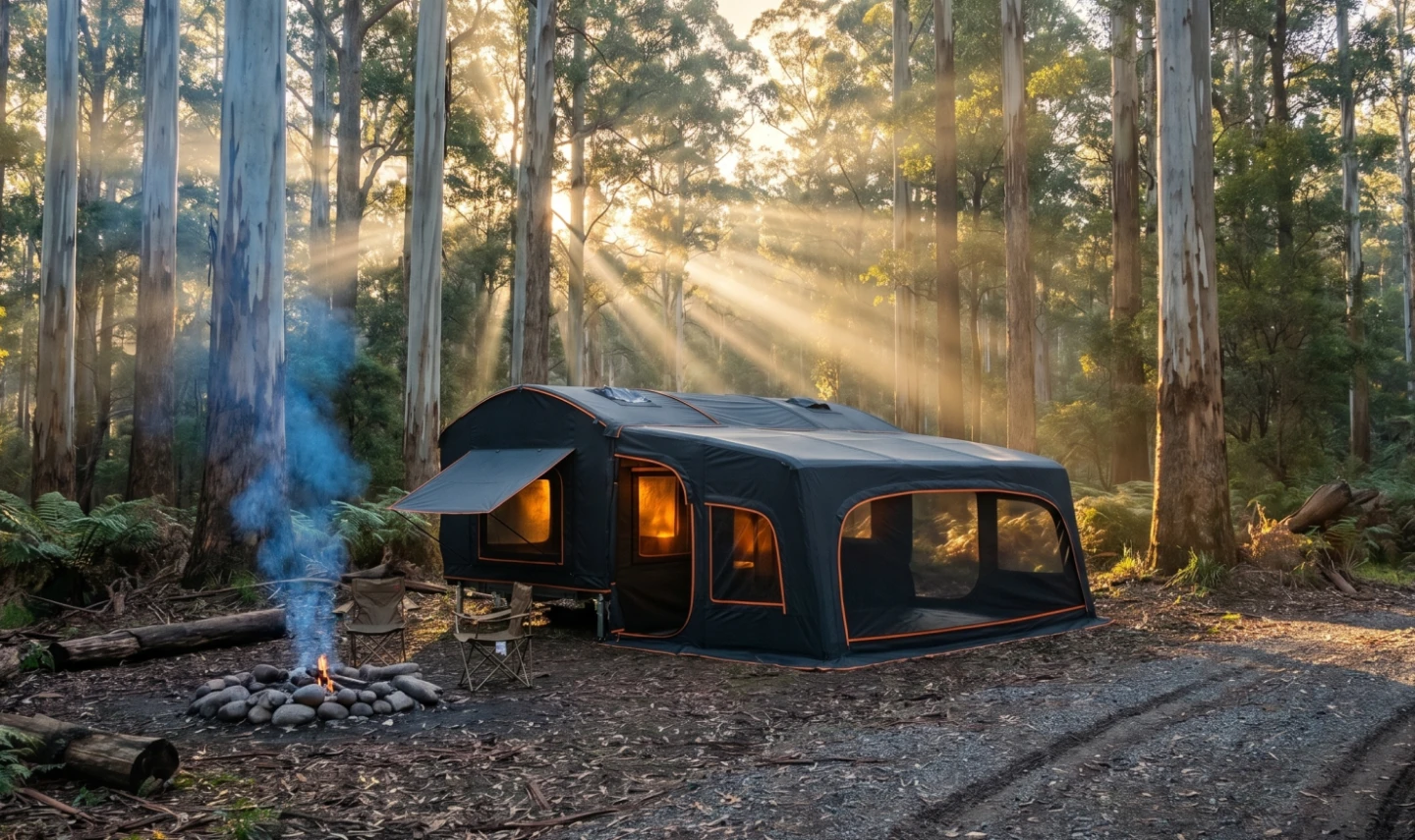
So we guess the question becomes: How much easier is MyGlamper setup compared to those other tents, if at all, and how much is the raised bed frame, included equipment and hitch-up design worth? You could equip those other large inflatable ground tents with a shower system, portable toilet, electrical power station and cots for raised sleeping much cheaper than you could buy a MyGlamper. You could probably also add a hitch-mounted cargo box in which to store components of that system without hitting the lower end of MyGlamper's price range. But then you'll be carrying more individual equipment and cases rather than hitching up a single box.
Is the neater packaging worth the extra price? We guess the market will have its chance to decide soon enough.
Source: MyGlamper


