

Materials
Whether it's the latest wonder material, such as graphene, or uncovering the secrets to the longevity of ancient Roman concrete, material science is the reason so much of our technology is more than the sum of its parts.
Random related stories from our 25-year archives
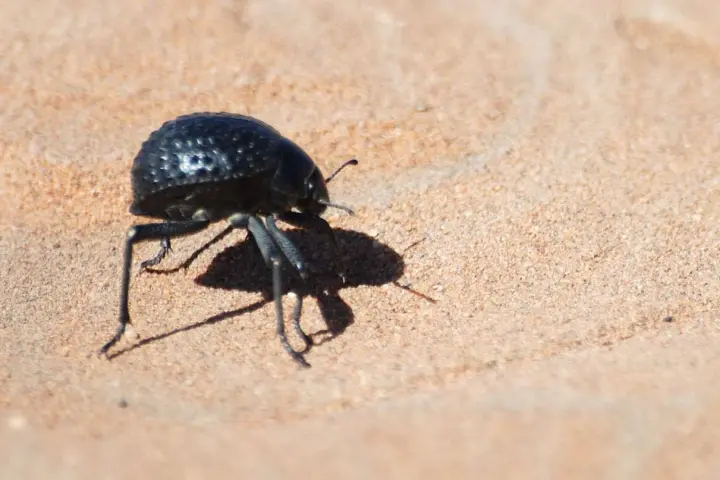
Taking inspiration from the a water-gathering desert beetle, scientists have developed a patterned surface on which the spread of ice can be controlled and prevented. They claim the material could be scaled up and applied to aircraft parts, heat pump coils and car windshields.
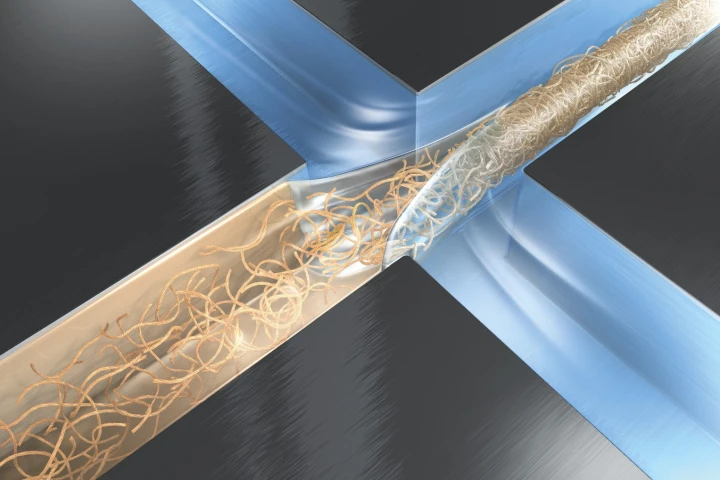
Silk may be strong, elastic and biodegradable, but unfortunately it's also expensive. With that in mind, scientists recently set out to produce lower-cost artificial silk. They've already succeeded in producing small quantities, using whey protein.

The natural wonder-brush that is a cat's tongue has provided scientists with the inspiration to develop a flexible, gripping surface that may find applications in fields ranging from wound cleaning to soft robotics.

The squid’s color-changing abilities have fascinated scientists for decades. Now, researchers have created a new squid-inspired artificial skin that can withstand extreme cold and kill microbes, opening the door to a range of potential uses.

A Maryland-based startup is set to begin mass producing Superwood, which is made from regular timber using a densification process, and exhibits strength greater than that of steel.

Vantablack, which is the world's darkest material, could be in for some competition. Canadian scientists have created a super-black substance that has the potential to be cheaper, hardier and easier to manufacture … and it's made out of wood.
Latest News
-
 November 08, 2026 | Mike McRaeA cloud of atoms has been brought within a whisker of absolute zero in a recent space experiment, shattering the previous record in pursuit of the lowest possible temperatures.
-
 October 29, 2026 | Maryna HolovnovaWhat if sandcastles could last for decades? Researchers at ETH Zurich are trying to turn ordinary sand into a strong building material comparable to concrete by adding living bacteria to it.
-
 October 25, 2026 | Maryna HolovnovaResearchers are developing a coating for fabric that will not only block dangerous chemicals from the skin, but deactivate them entirely. This technology could benefit soldiers, farmers, and people who are in contact with toxic substances at work.
-
 October 18, 2026 | Maryna HolovnovaSun and heat make garbage decompose faster and smell worse, and this is a serious problem in hot, humid countries. Chinese researchers may have found a cheap and sustainable way to use sunlight to fight the odor instead of making it worse.
-
 October 18, 2026 | Omar KardoudiAn emerging class of heat-storing gels is out to reduce the energy our buildings burn on heating and cooling. Initial tests look promising, so researchers are lining up roofs, walls, windows and even hot-water and AC modules as the next stops.
-
 October 18, 2026 | Ben CoxworthThere could be new hope in the fight against hospital-acquired infections. Spanish scientists have developed an experimental type of self-disinfecting cotton fabric, which is activated via ordinary white light.
-
 October 17, 2026 | Maryna HolovnovaResearchers have developed a 3D-knitted textile that protects plants from pests while allowing sunlight, air and rainwater to pass through. Shaped into greenhouse-like domes, the special fabric can triple strawberry yields.
-
 October 12, 2026 | Maryna HolovnovaResearchers have invented a new material that is as thin as a film, extremely stiff, and also an excellent thermal insulator – a combination not found in nature. This could change many industries, from electronics to space exploration.
-
 October 04, 2026 | Omar KardoudiYour walls might one day do more than hold up the building. Researchers at Binghamton University have created a wallpaper-style paper that generates electricity from indoor humidity, and it can soak up and release moisture to help regulate it.
-
 October 02, 2026 | Malcolm AzaniaVenus’ flower basket glass sponges can live many years far below the surface of the ocean. Composed of lightweight, durable silica structures, the pipe-shaped organisms are also providing a great opportunity for aircraft and architectural biomimicry.
-
 September 29, 2026 | Maryna HolovnovaWhat if wood could bend as easily as plastic and remain strong and durable after taking a new shape? A new eco-friendly treatment could make that possible in the near future.
-
 September 26, 2026 | Etiido UkoHumankind's colonization of Mars is approaching, and with it will come self-sustaining biospheres, autonomous rovers, and, perhaps, mud houses. Scientists have created a recipe for 3D-printing houses on Mars using Martian sand, yeast, and gelatin.
-
 September 25, 2026 | Abhimanyu GhoshalResearchers in Germany have developed a system for fabricating wood-based floor slabs that replace traditional reinforced concrete slabs in construction. They're impressively strong, and use only a third of the concrete needed in conventional slabs.
-
 September 21, 2026 | Etiido UkoFew things are more annoying than an adhesive that won't stick. A strong contender, though, is one that refuses to let go when you no longer need it. Scientists have now created two adhesives that are super strong but can also break down on command.
-
 September 20, 2026 | Etiido UkoThey say a drowning man is willing to grasp onto anything to stay afloat, but he would most likely think twice if you offered a titanium buoy. Yet, scientists have created a titanium structure that floats without compromising the metal’s strength.
Load More