






Coming off what might ultimately end up the world's cleanest Kia PV5 camper van conversion, we have yet another contender for "ultimate PV5 mini-camper van." Great Britain's Wellhouse Leisure is one of the world's preeminent crafters of both electric camper vans and tiny campers, so it's only natural it combines those talents to craft what appears to be the most versatile Kia PV5 mini-camper so far. Called the iCamper, the little battery-powered RV rearranges in ways that other PV5 e-campers don't, transitioning in mere seconds to support everything from solo bike camping getaways to full-on family holidays.
Just a few weeks ago, we were watching Wellhouse start work inside a Toyota kei van in a bid to bring Japanese-style micro-camping over to Great Britain. Days later, it started on the iCamper van, working to deliver Kia-badged Korean electric mini-camping to the good folks of the Isles. It hasn't finished its first PV5 conversion just yet, but it's released enough details to give us a very good idea of what it's cooking up.
Wellhouse starts its work with the PV5 Cargo, not the Passenger van that some other converters have targeted. It explains it chose the commercial cargo variant because it starts at a lower price point and is eligible for more UK government incentives. And since it didn't plan to use the factory rear seats, anyway, there was no good reason to pay extra just to pile up unused van seats in a corner of its garage.
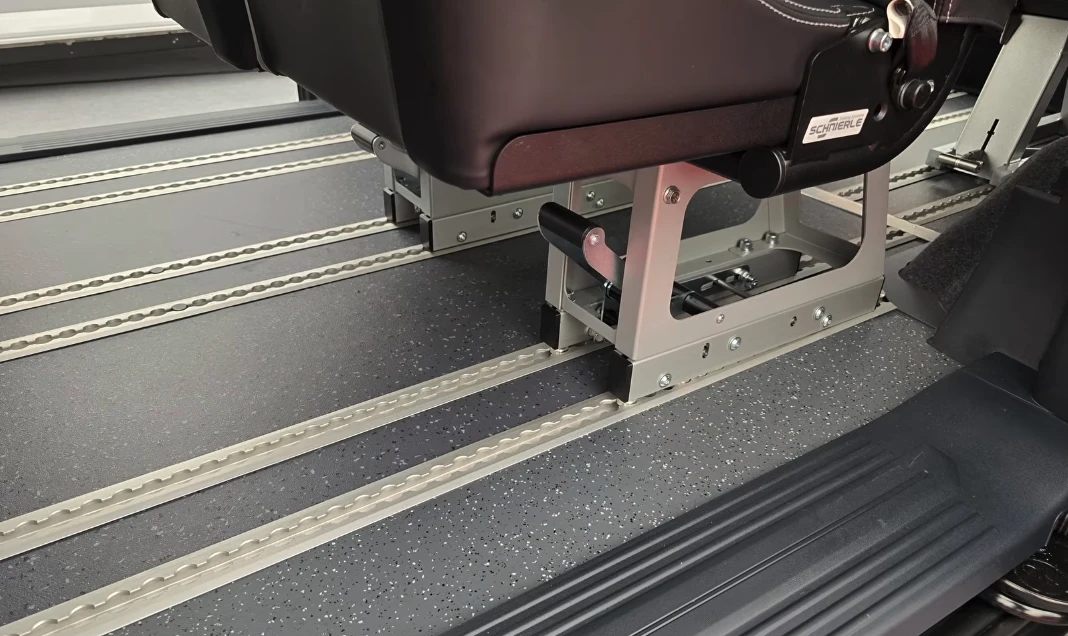
In place of factory seats, Wellhouse bases its conversion around the incredibly versatile Schnierle floor rail system it's long used in other small van conversions. In the past, we've seen Wellhouse use floor rails to create a sliding bench capable of fully adjusting camp/storage space – slide the bench all the way forward to load in cargo on the drive, then unload that cargo and slide the bench back for a spacious lounge area at camp.
The newer Schnierle hardware with which Wellhouse is working in the iCamper cranks this adjustability up considerably. In place of a single bench, individual captain's seats mount directly to the floor rails so each one can reposition and remove independently. This creates a more flexible cabin layout that adjusts precisely to what you want to do on any given day. The new Schnierle seats even have a simple lever at the base that you open to free movement along the tracks, so sliding one around or pulling it completely out of the van takes mere seconds.

For example, Wellhouse shows how you can easily remove one of the two rear seats and carry a complete bicycle next to the other seat. So someone doing a solo cycling or mountain biking trip could sleep on the single bed created via the folded rear seat and keep the bicycle stored safely inside the van.
The single, independently mounted seats add additional versatility and comfort at camp, as well. Beyond sliding around individually to different positions, each seat also reclines and has an extended leg rest for extra comfort. Each seat then flattens down individually, its headrest sliding outward to create space to drop in the extension cushion that stores on the back of the seat. So you can create a single bed or drop both rear seats down into a double. Wellhouse will also offer a mattress topper to better unify the single seat beds into a comfortable double.

Wellhouse plans to widen out the bed by installing a custom-fit cushion in the space between the edge of the seat and the passenger-side wall, giving campers as much sleeping space as possible. As for the space on the righthand driver's side, Wellhouse will be using that for a compact kitchen similar to the one it developed for Toyota Proace camper vans.
The kitchen area will equip travelers with an easy-clean induction cooktop, sink with electric-pumped faucet, and top-loading fridge that can be accessed even when the bed is set up – Wellhouse notes that the PV5 bed would ultimately block access to a door fridge like it uses in other camper vans.

The cabinets below and behind the countertop will include storage space for cookware, clothing and other provisions and will also house the lithium leisure battery in a dedicated compartment. That battery will allow campers to operate the cooktop, fridge and other electrical RV equipment without tapping into Kia's powertrain battery. A 200-W solar panel will help keep it powered up, and a shore power hookup will plug in at fully equipped campsites to power camping amenities while also slow-charging the traction battery.
Wellhouse plans to cut out openable windows on both sides of the panel van. The RV windows will include double-glazing, a tilt-open function, and integrated blinds and bug screens.

Wellhouse's first iCamper prototype and demo van also includes a pop-up roof ready to accommodate its own double bed. That gives the van even more versatility as an adventure camper. In addition to carrying a bicycle inside and camping solo on the folded Schnierle seat next to it, a single person or a couple could remove both lower seats to make more space for bicycles or alternative gear and cargo, sleeping in the pop-up roof.
Kia plans to work exclusively with PV5 models equipped with the long-range 71-kWh battery option, good for an estimated 247 miles (398 km) per charge. It's focusing on the PV5 Cargo for now but may work with the PV5 Passenger and the upcoming PV7 in the future. It also plans a second PV5 Cargo floor plan alternative.

Advertised pricing for the iCamper model under development starts at £59,995 (approx. US$79,995). Wellhouse notes that there may be small changes as it finalizes the production spec.
Note that the iCamper photos show the demo van under construction without all of its final components and trim, so it looks rougher than it will when it's complete. We'll take a closer look at the full package once the demo van is ready.
Source: Wellhouse Leisure


