

Materials
Whether it's the latest wonder material, such as graphene, or uncovering the secrets to the longevity of ancient Roman concrete, material science is the reason so much of our technology is more than the sum of its parts.
Random related stories from our 25-year archives

Adhesives that hold underwater are elusive, but could be useful for marine repairs or tissue healing. Researchers have now developed a new type of adhesive hydrogel that combines the underwater stickiness of mussels with the strength of spider silk.
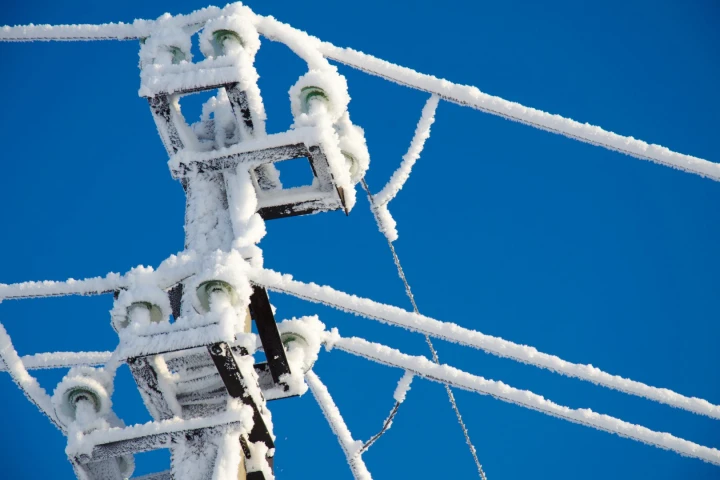
Researchers at MIT have come up with a de-icing system that is completely passive and relies only on the power of the sun, or artificial light, which means it can also work at night. The system could be used to prevent ice building up on aircraft wings, wind turbine blades, and powerlines.

Although there are coatings that kill harmful microbes on frequently touched surfaces, most of those substances either have to be frequently reapplied, or they take a long time to work. A new coating, however, is claimed to address both shortcomings.

In our increasingly noisy world, it can be hard to find some quiet time. Now, a team of mechanical engineers at Boston University has developed a new device that is specially designed to block up to 94 percent of incoming sound waves, while still letting air pass through.

In most grocery stores, all of the fresh produce is either pre-wrapped in plastic film or it gets placed in plastic bags – both of which are often discarded by consumers. A new bioactive paper bag, however, could serve the same purpose while being easily recyclable.

Scientists at the University of Maryland have developed a novel gel sheet material with excellent absorption abilities, which they imagine finding use everywhere from messy kitchens to operating theaters.
Latest News
-
 November 15, 2026 | Etiido UkoAluminum, once worth more than gold, is now the world's second-most used metal. Yet its carbon-emitting production process has remained the same for 140 years. Researchers say they have developed a new zero-emission aluminum production process.
-
 November 08, 2026 | Mike McRaeA cloud of atoms has been brought within a whisker of absolute zero in a recent space experiment, shattering the previous record in pursuit of the lowest possible temperatures.
-
 October 29, 2026 | Maryna HolovnovaWhat if sandcastles could last for decades? Researchers at ETH Zurich are trying to turn ordinary sand into a strong building material comparable to concrete by adding living bacteria to it.
-
 October 25, 2026 | Maryna HolovnovaResearchers are developing a coating for fabric that will not only block dangerous chemicals from the skin, but deactivate them entirely. This technology could benefit soldiers, farmers, and people who are in contact with toxic substances at work.
-
 October 18, 2026 | Maryna HolovnovaSun and heat make garbage decompose faster and smell worse, and this is a serious problem in hot, humid countries. Chinese researchers may have found a cheap and sustainable way to use sunlight to fight the odor instead of making it worse.
-
 October 18, 2026 | Omar KardoudiAn emerging class of heat-storing gels is out to reduce the energy our buildings burn on heating and cooling. Initial tests look promising, so researchers are lining up roofs, walls, windows and even hot-water and AC modules as the next stops.
-
 October 18, 2026 | Ben CoxworthThere could be new hope in the fight against hospital-acquired infections. Spanish scientists have developed an experimental type of self-disinfecting cotton fabric, which is activated via ordinary white light.
-
 October 17, 2026 | Maryna HolovnovaResearchers have developed a 3D-knitted textile that protects plants from pests while allowing sunlight, air and rainwater to pass through. Shaped into greenhouse-like domes, the special fabric can triple strawberry yields.
-
 October 12, 2026 | Maryna HolovnovaResearchers have invented a new material that is as thin as a film, extremely stiff, and also an excellent thermal insulator – a combination not found in nature. This could change many industries, from electronics to space exploration.
-
 October 04, 2026 | Omar KardoudiYour walls might one day do more than hold up the building. Researchers at Binghamton University have created a wallpaper-style paper that generates electricity from indoor humidity, and it can soak up and release moisture to help regulate it.
-
 October 02, 2026 | Malcolm AzaniaVenus’ flower basket glass sponges can live many years far below the surface of the ocean. Composed of lightweight, durable silica structures, the pipe-shaped organisms are also providing a great opportunity for aircraft and architectural biomimicry.
-
 September 29, 2026 | Maryna HolovnovaWhat if wood could bend as easily as plastic and remain strong and durable after taking a new shape? A new eco-friendly treatment could make that possible in the near future.
-
 September 26, 2026 | Etiido UkoHumankind's colonization of Mars is approaching, and with it will come self-sustaining biospheres, autonomous rovers, and, perhaps, mud houses. Scientists have created a recipe for 3D-printing houses on Mars using Martian sand, yeast, and gelatin.
-
 September 25, 2026 | Abhimanyu GhoshalResearchers in Germany have developed a system for fabricating wood-based floor slabs that replace traditional reinforced concrete slabs in construction. They're impressively strong, and use only a third of the concrete needed in conventional slabs.
-
 September 21, 2026 | Etiido UkoFew things are more annoying than an adhesive that won't stick. A strong contender, though, is one that refuses to let go when you no longer need it. Scientists have now created two adhesives that are super strong but can also break down on command.
Load More