



Safety is a double-edged sword on motorcycles. Between the thrill of being on a bike and ensuring you’re safe out on the road, it’s a subtle balancing act. This unique three-wheeled electric leaning motorcycle tries to redefine the boundaries of motorcycle safety.
We covered this idea when it was still in its pre-prototype form. Originally conceived by French transport designer Mathieu L'Hopitault, we were told that the next step was to have a rolling demonstrator prototype ready for testing. It took a while, but it’s now here, and we can actually see the thing in the real world.
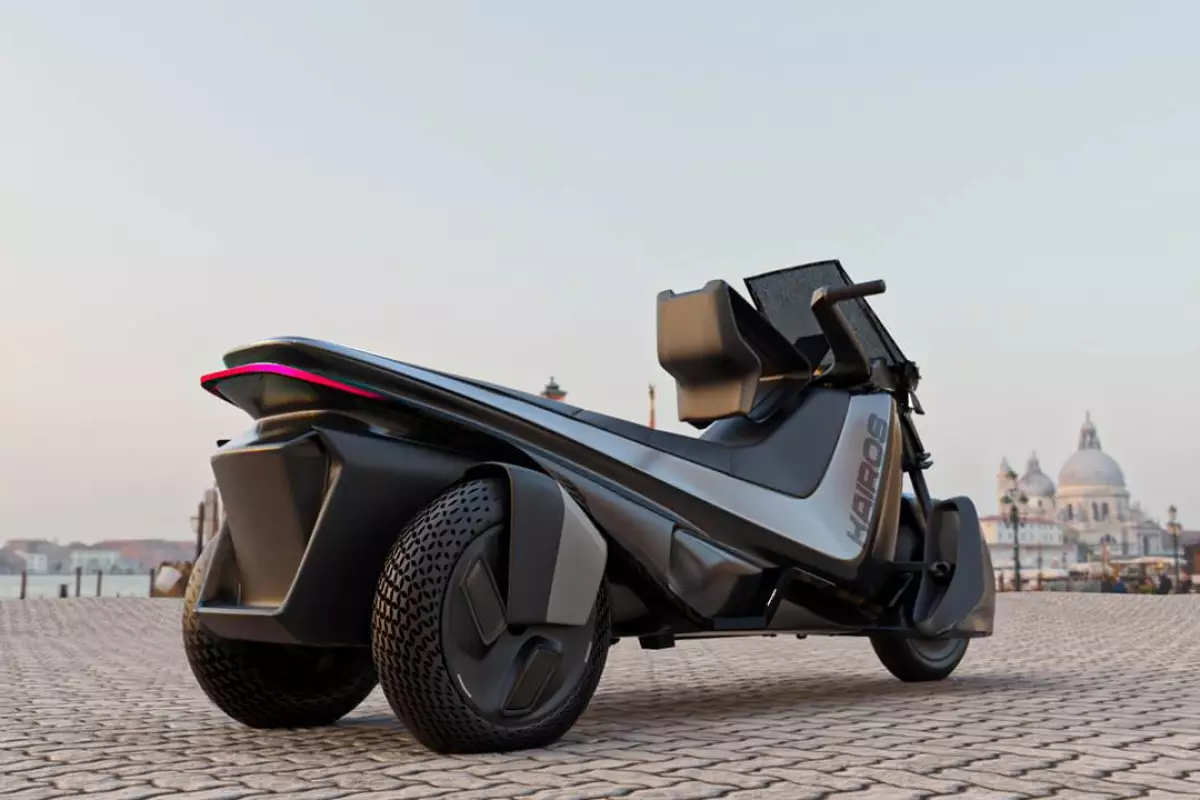
“Kairos belongs to no existing category: not a car, not a motorcycle, not a scooter, not a quadricycle.” So what is it then? It’s a trike unlike a conventional model from the likes of Harley-Davidson. When the Kairos corners, its rear wheels tilt too, enabling it to lean into bends.
It’s technically a motorcycle that offers car-like safety. How? Through two patented innovations.
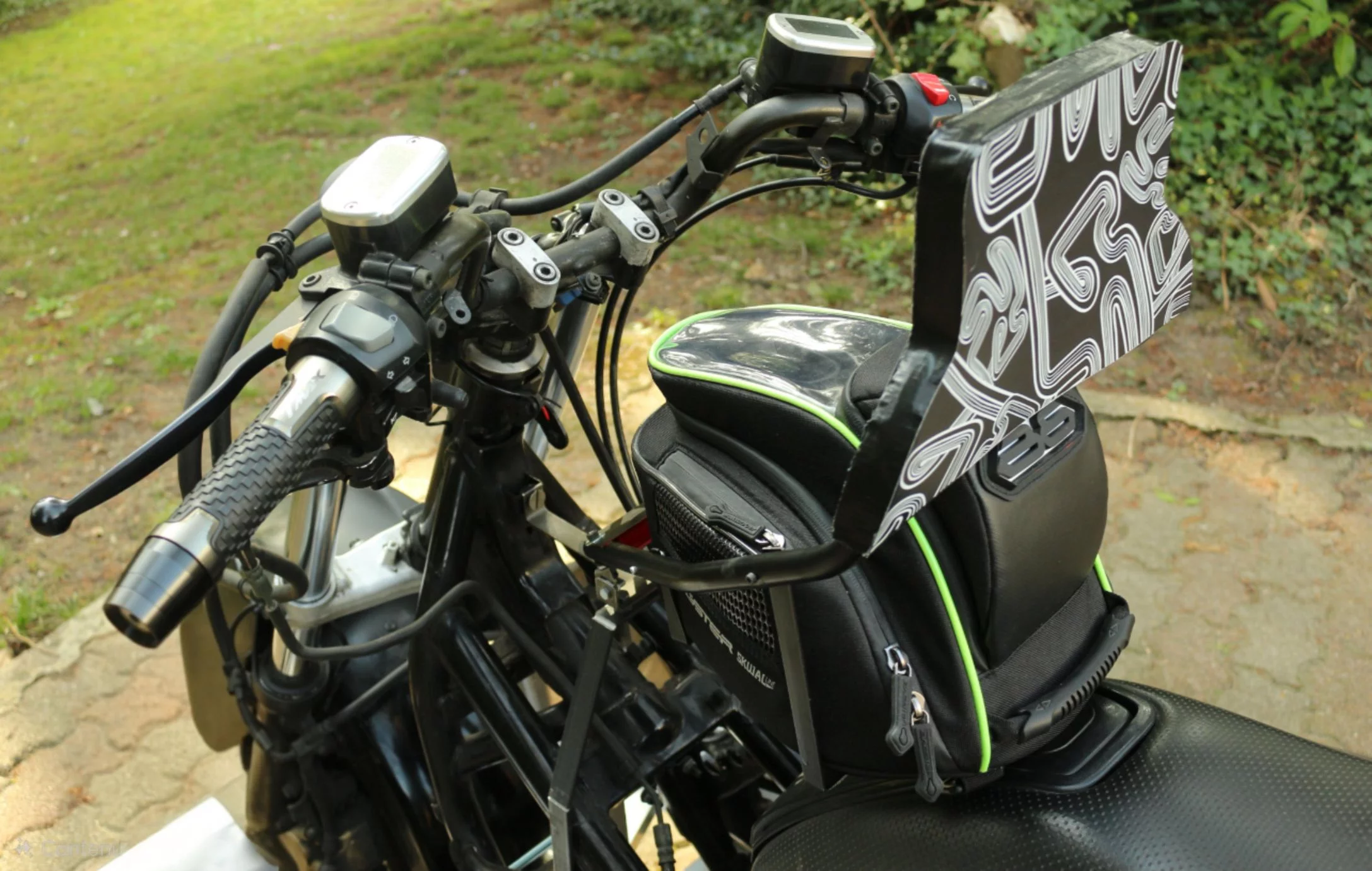
The first is called the Programmed Restraint Device (PRD). It is a tubular structure integrated into the front of the motorcycle that "partially" couples the rider to the chassis during a frontal impact. We say "partially" because it also decouples when needed – for instance, in the case of a higher-impact crash – releasing the rider at a speed significantly lower than it would have been otherwise.
The idea is for the PRD to absorb energy before releasing the rider, in the most extreme cases, at a considerably reduced speed. We’re told this device is more user-friendly than a seatbelt because it requires no human input. You can’t forget to put it on or ignore warnings. It’s all about “integrating protection directly into the vehicle structure.”
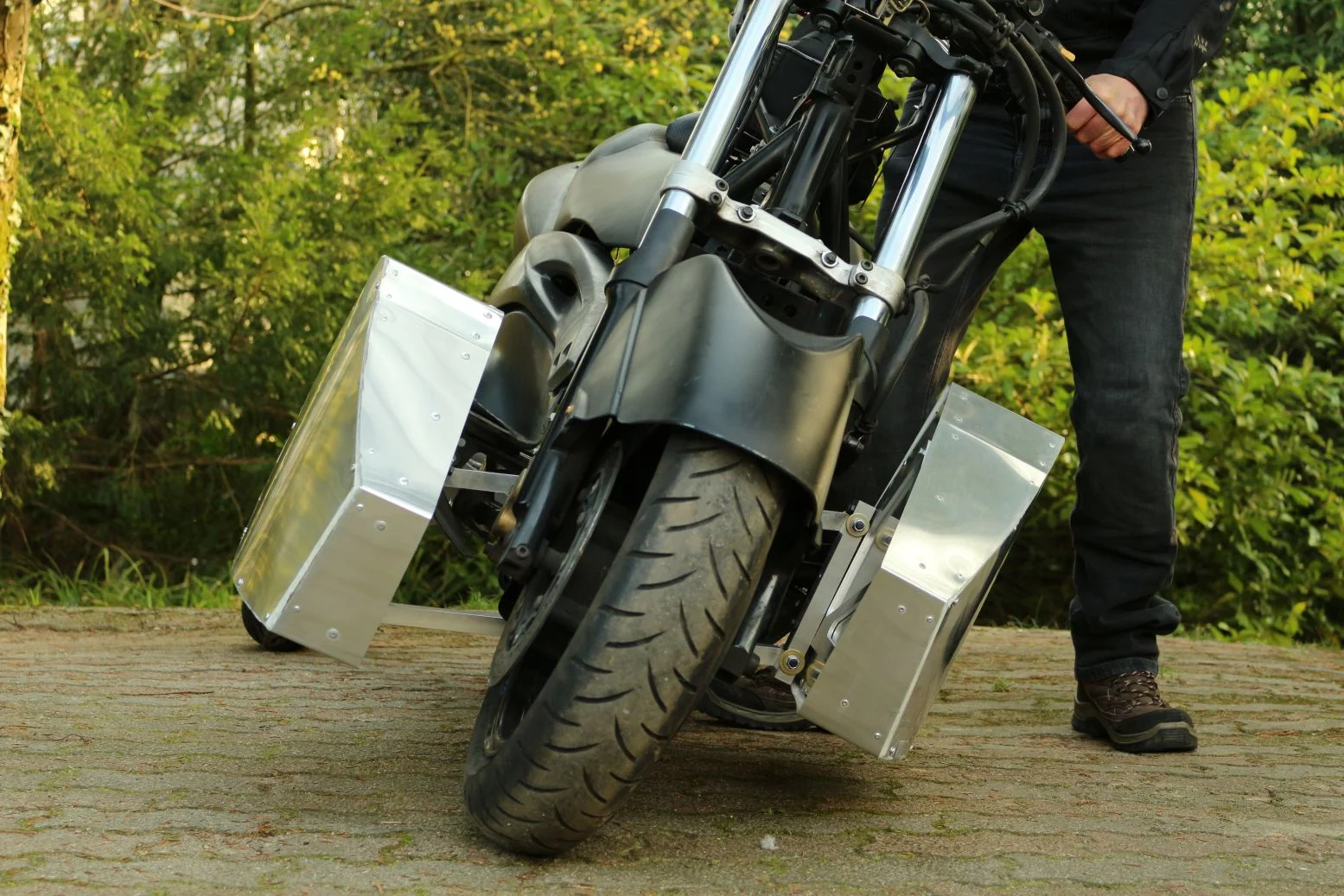
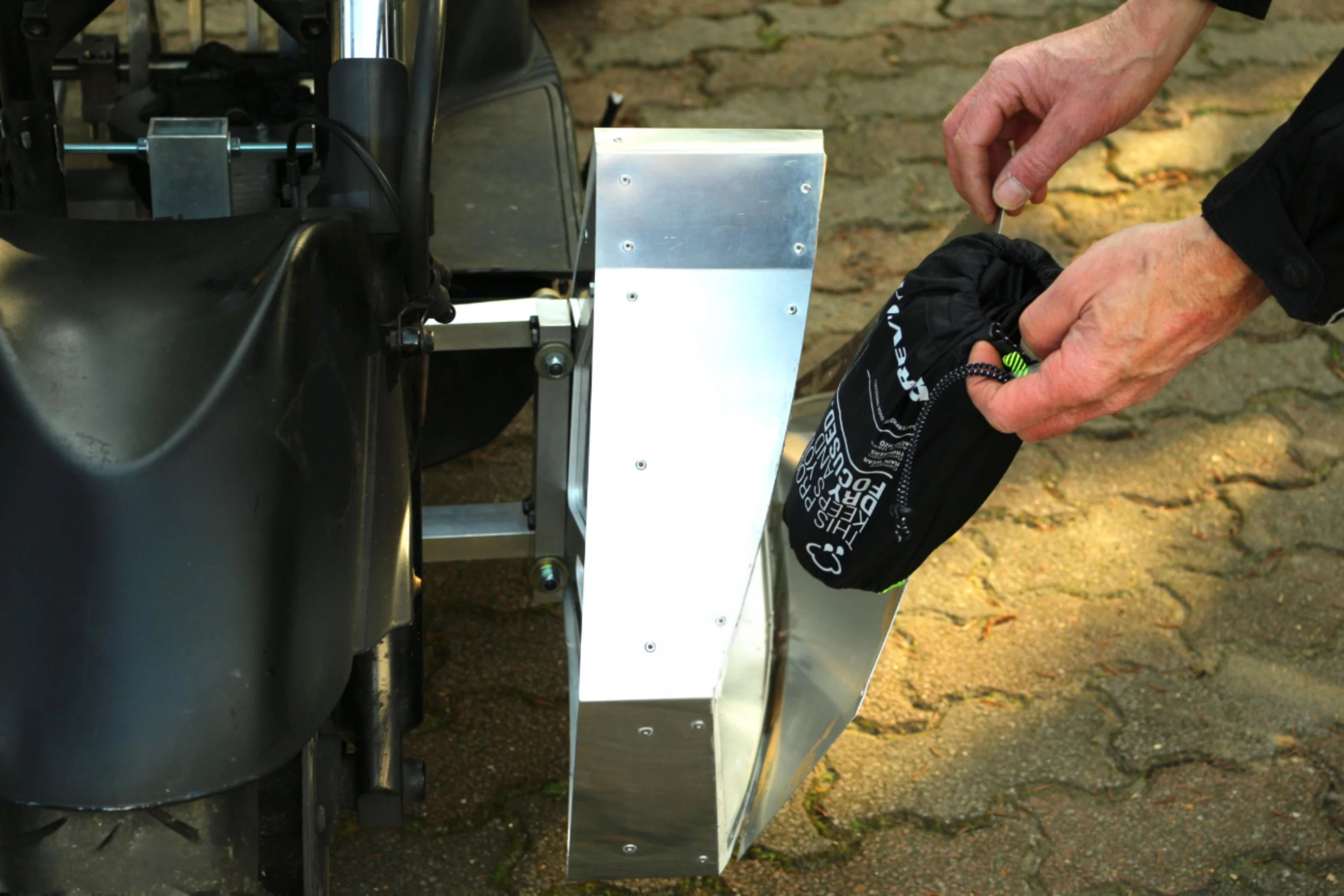
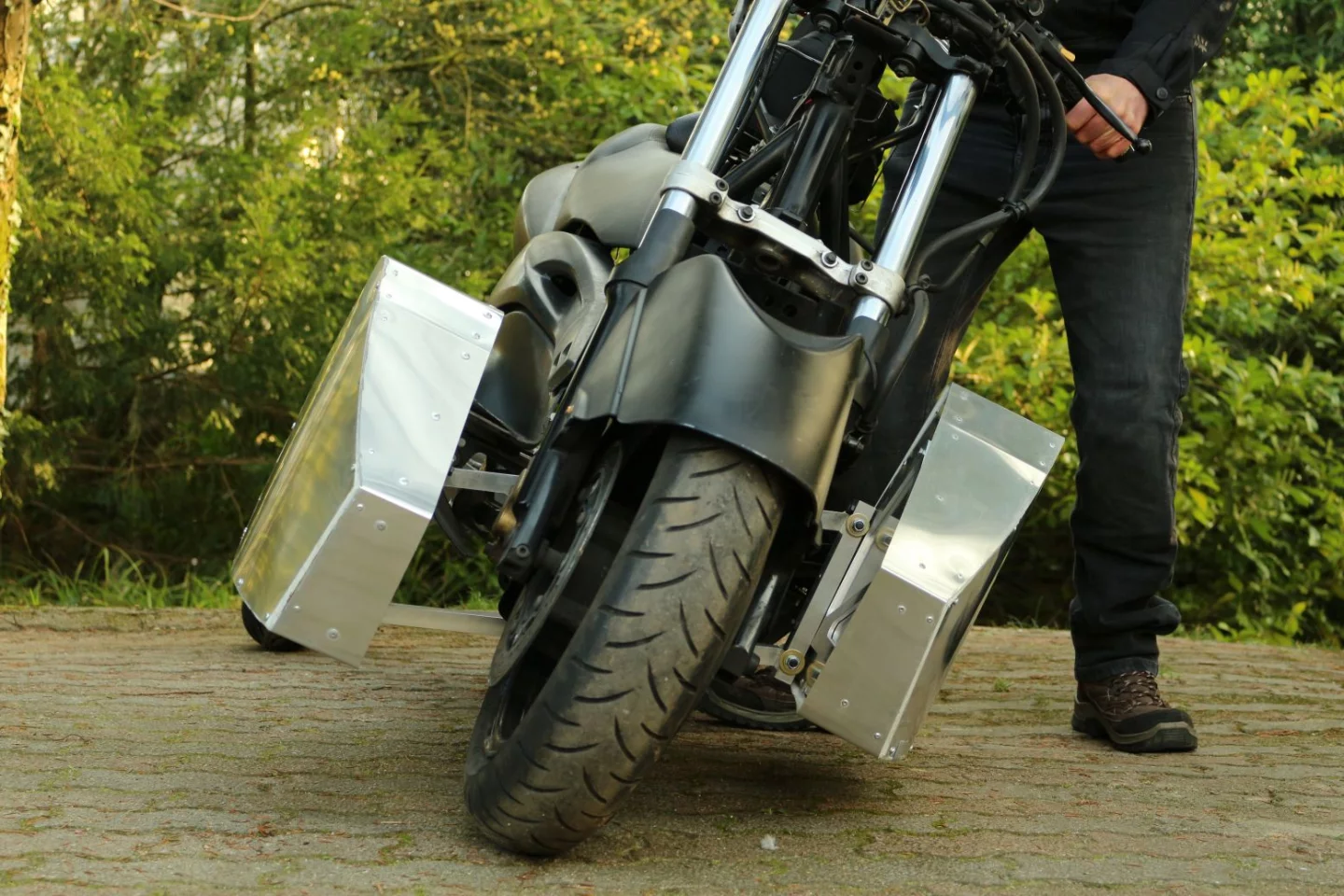
The second innovation is what the team calls Mobile Lateral Elements (MLE). These are wedge-shaped components on either side of the front wheel that tilt similarly to the rear wheels when the motorcycle leans into curves. This configuration purportedly allows the outer MLE to act as a counterbalance, helping prevent excessive tilt, while the inner MLE avoids contact with the road.

In the event of a crash, the MLEs brace against the ground, absorbing energy in frontal or lateral impacts and helping lower the bike’s center of gravity to improve road holding – thus keeping the bike from tipping over.
This setup is positioned as close to the ground as possible to keep the center of gravity low. It’s also servo-controlled in response to the vehicle's roll movements to avoid interfering with the road.
In addition to serving as a safety component, the MLEs also double as additional storage spaces. They don’t look like a conventional substitute for larger panniers or top boxes, but they appear suitable for storing smaller items.
“I designed Kairos around a simple conviction: safety cannot depend on a decision the rider may choose not to make. It must be in the vehicle – systematic, unconditional,” explains designer and project lead, Philippe Girardi.

But considering it’s still an early prototype, details on the components used are limited for now. All we know so far is that the Kairos uses 120/70-14 tires at the front and 130/70-13 tires at the rear. Not much to go on, I know.
Girardi does suggest that the production model will likely be powered by a 30-kWh solid-state battery and feature a rated power of 40 kW (53.6 hp), with a maximum output of 70 kW (93.8 hp), boasting a top speed of 93 mph (150 km/h). “The Kairos will be designed primarily to deliver excellent longitudinal and lateral acceleration,” he says.
All that sounds promising on paper, but we’re still far from seeing those numbers in reality – at least for now. The bike “must first complete a significant amount of validation work, which we hope to have finished – including certification – by 2029 or 2030,” Girardi tells us.
“By that time, we expect to be able to use new battery technologies better suited to two-wheelers than those currently available. Our goal is to match the range of a motorcycle with an internal combustion engine under real-world conditions.” A bold claim.

That said, the use of a solid-state battery also depends on how the electric motorcycle market evolves. “We believe we can incorporate a 30-kWh capacity using solid-state batteries, hoping they will become widely available soon,” adds Girardi.
The idea isn’t just to create a standalone motorcycle, but to offer this technology to other manufacturers to improve safety across the two-wheeler market.
As of today, Girardi and his team have filed patents, completed the design, and built a rolling demonstrator prototype. They are now seeking industrial partners and investors, with laboratory crash testing as the next step.
“We are currently reaching out to laboratories capable of conducting crash tests, which we can perform on conventional motorcycles.”

But as with most things, there are two sides to the coin. The Kairos EV appears almost too clever for its own good. A machine that leans like a bike, stabilizes like a car, deploys safety tech like a sci-fi prop, and still insists it’s here to “liberate the pleasure of driving.” Somewhere in all that engineering theater, you start to wonder if we’ve overcorrected.
The Kairos feels like it’s trying to remove the last remaining bits of risk, friction, and unpredictability from riding. No tipping over, no guesswork, no real consequence – just a carefully managed, algorithm-approved version of fun. And sure, that makes sense on a pitch deck. Urban safety, sustainability, accessibility – it ticks every box.
But out on an actual road, where instincts matter more than systems, it starts to feel like you’re not riding anymore – you’re being handled. As if the machine doesn’t trust you, so it’s taken over the thinking for you.
And maybe that’s the bigger question here. Not whether the Kairos EV works – it probably will, in some controlled, perfectly optimized slice of city life – but whether we actually want this version of mobility.
Because once you engineer out the danger, the balance, the tiny moments where things could go wrong, you also start erasing the moments that make riding worth it. At that point, you’re left with something safer, smarter, and probably more practical – but also a little … empty.
Source: Kairos