






The Kia PV5 has already set itself apart from the pack in terms of smart, capable, stylish camper vans and is proving to be the first really desirable camper base van of the electric era. Now it's being joined by the larger, roomier PV7, a modular e-van platform that promises to pave the way for more comfortable, flexible camper vans. And there's already confirmation of the first PV7 camper in the works.
As it announced a couple weeks ago, Kia debuted the production PV7 on Monday, the first day of IAA Transportation 2026 in Hanover, Germany – the Volkswagen California's town of origin, for what it's worth. The premiere van is a production-ready version of the PV7 concept the company showed in conjunction with the PV5 concept prior to launching the latter into production in 2025. Kia plans to launch the PV7 in mid 2027 for South Korea and Europe.
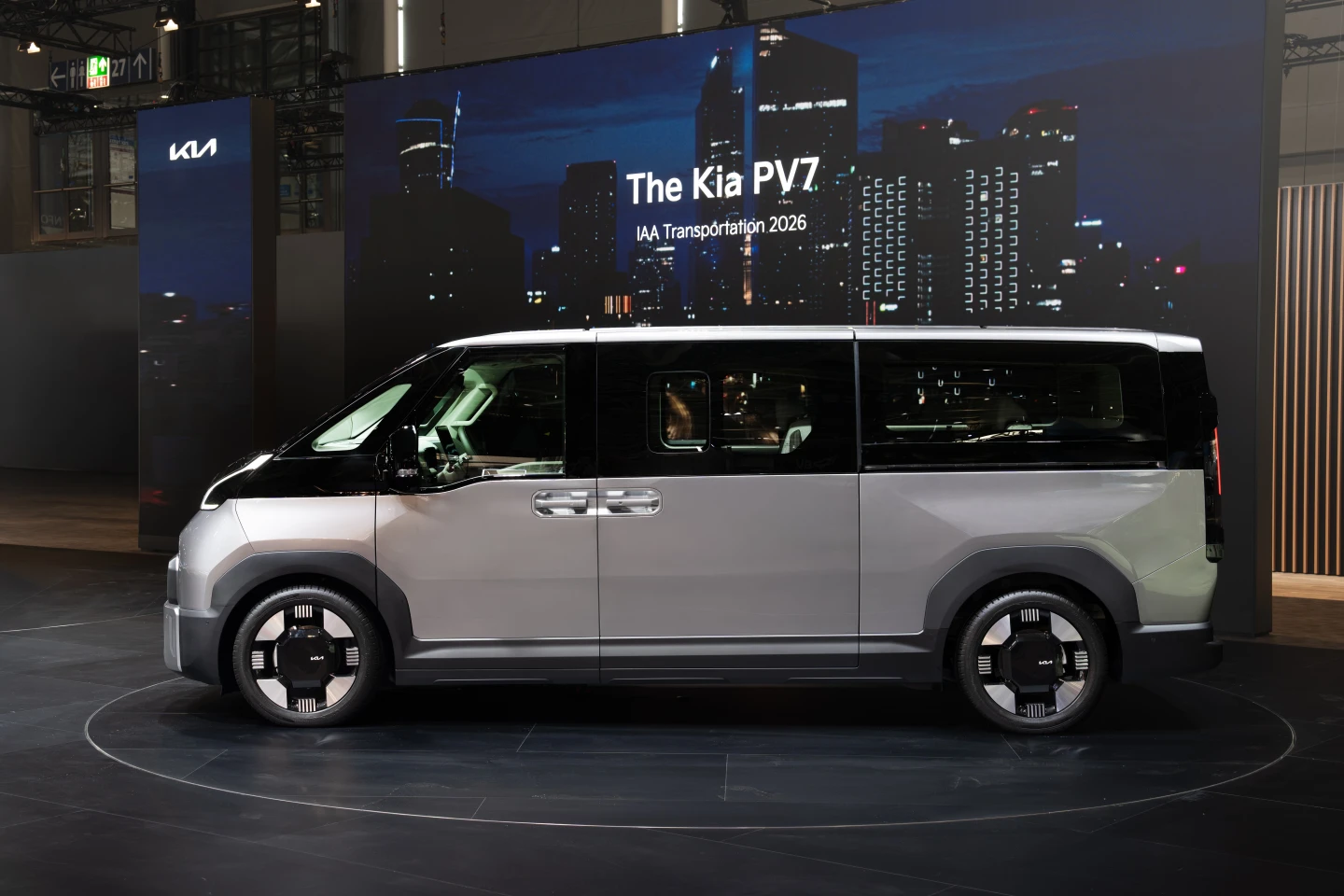
A van is nothing if not a big storage box on wheels, so extra size only helps it get things done. The debut PV7 Long vans measure in at 535 cm (211 in) long, about 66 cm (26 in) longer than the PV5 or 10 cm (4 in) shorter than the long-wheelbase Ford Transit Custom/Volkswagen Transporter that's highly popular for pop-up camper van conversions.
So the PV7 is squarely a midsize van, and Kia notes that while the PV5 was developed as an "Open Box" for navigating tight urban spaces, the PV7 is a "Tool Box" meant to bring more capability and payload in support of demanding commercial usage.
In addition to the long-body Passenger and Cargo variants on show in Hanover, Kia plans to add 23 different configurations in the future, starting with Compact versions of both Passenger and Cargo vans, a high-roof Cargo model, and a cab chassis that axes the rear cabin to open up the frame for custom body work. As part of its Hanover premiere event, it also invited 31 different conversion specialists from around the world to participate in its "2026 Global PBV Conversion Partners Day."
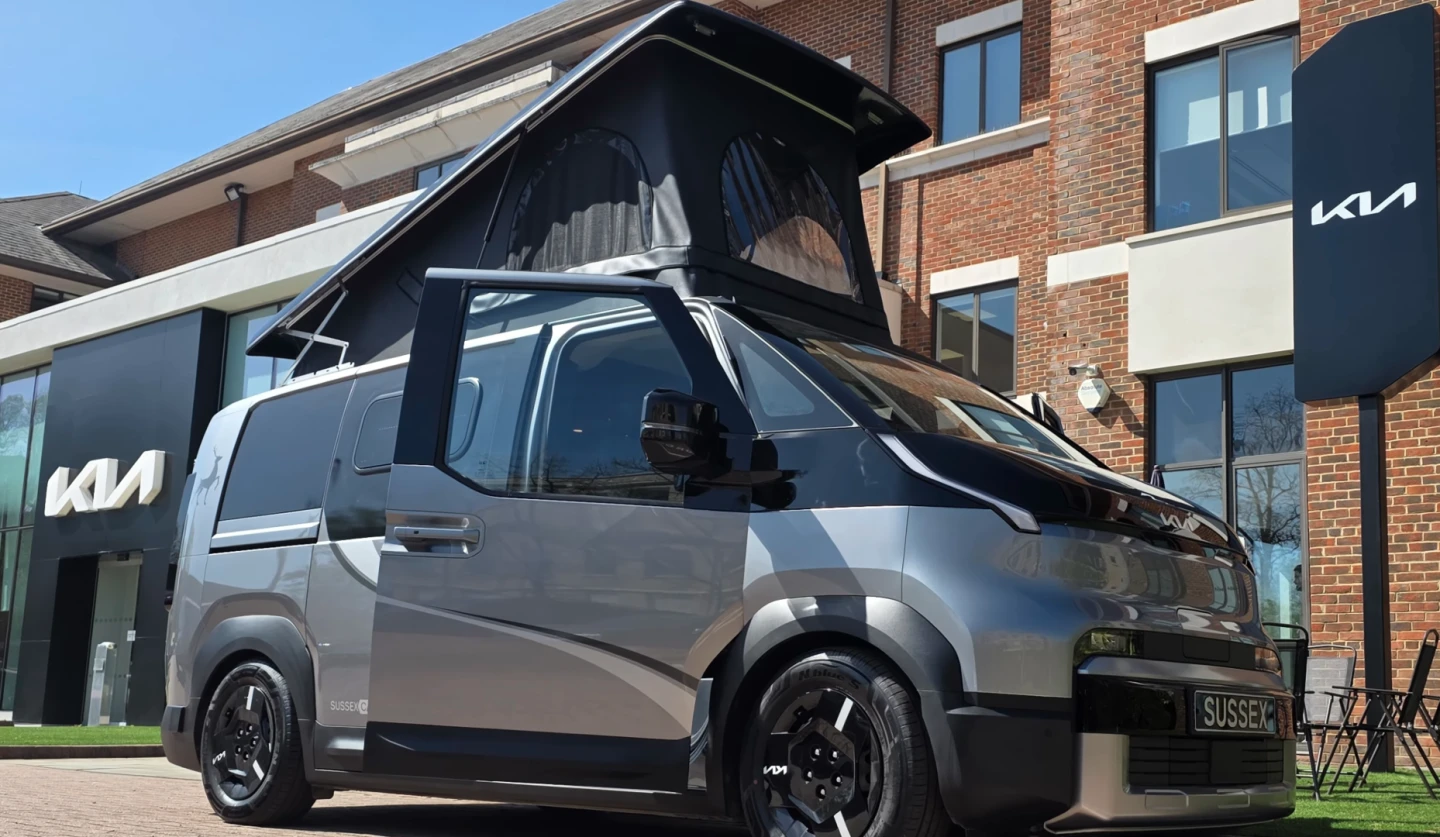
One converter that made the trip, Sussex Campervans didn't waste any time in announcing its plans to expand the Kingfisher camper van lineup with a larger PV7-based model. In fact, it released the announcement concurrently with the PV7's debut.
Earlier this year, the British shop was the first out of the gate with a pop-up PV5 camper van. And it ultimately developed what has to stand as the most thoroughly equipped PV5 camper van we've seen to date, even as other pop-ups have joined the Kingfisher on the market.
Not only does the Kingfisher include a specially prepared pop-up roof with available bed to complement the fold-down bed in sleeping a total of four campers, it has an extensive kitchen and storage unit that takes up the majority of the interior sidewall behind the driver's seat. The kitchen includes two hovering induction burners and a sink that can be used inside or outside, plus a microwave and 50-L fridge accessed from inside.
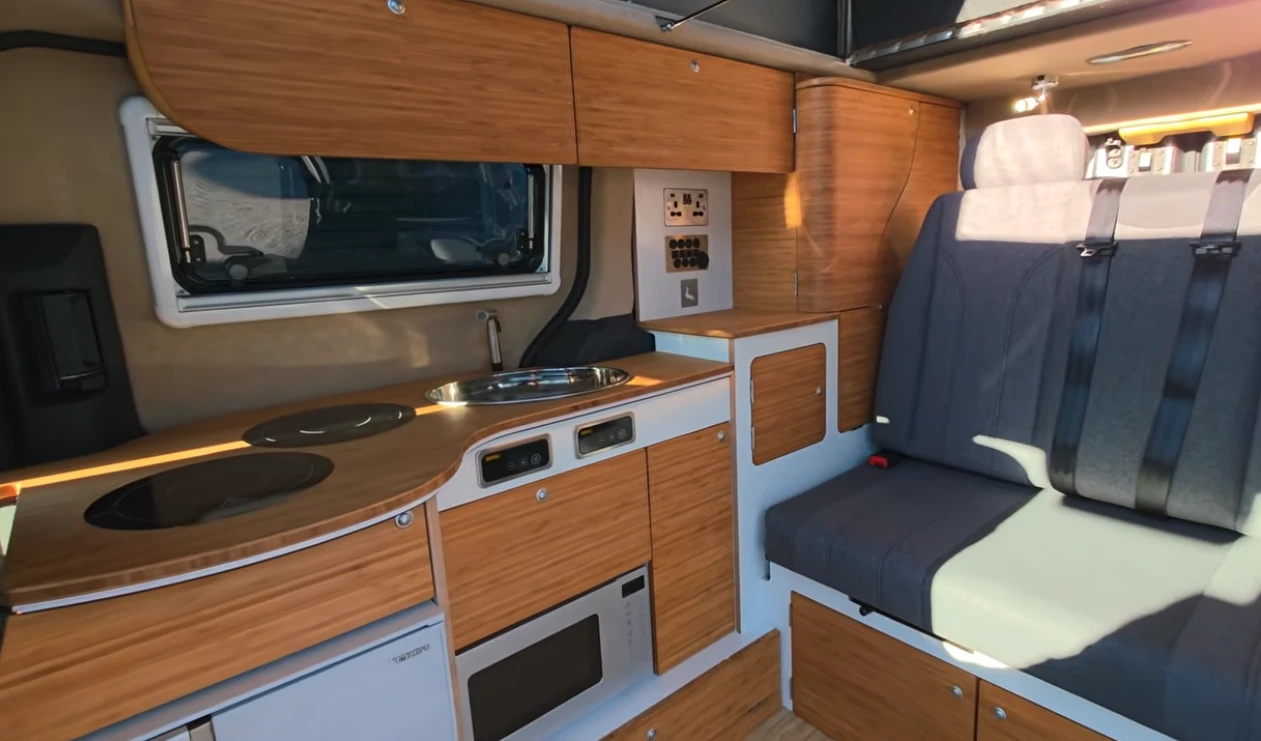
Those appliances are surrounded by storage cabinetry from in front, behind, below and above, and Sussex even squeezes in space for an available portable toilet under the rear bench.
It'll be hard to perfect upon the mini-camping genius of the PV5 Kingfisher, but the added space of the larger PV7 is certain to get the creative neurons firing in the keen minds at Sussex. Beyond the extra length, the PV7 is also 10 cm wider than the PV5 at 190 cm (75 in), excluding the mirrors. At the least, this extra width could help Sussex to widen either the kitchen or the bed while giving the cabin a little extra volume and elbow room for life on the road.
“Kia revolutionized the light commercial vehicle market with the PV5," said Sussex managing director Daniel Lopez. "Now with the advent of the PV7, Kia has brought a very strong product to market. We are already well advanced in our thinking around the camper van variants the PV7 could support. Class-leading warranty and exceptional support will ensure its success as the next all-electric camper van."
Beyond extra size, the Kia PV7 will add a touch more range with which camper vans of the future can work. It will be offered with a larger 96-kWh flagship NCM battery option that Kia estimates as capable of over 460 km (285 miles, WLTP) per charge. That's 44 additional kilometers (27 miles) more than the max rated range of the PV5 with high-capacity 71-kWh battery – not a huge leap but certainly better than losing range by relying on the same long-range battery capacity in a larger, heavier van.
Whether using that flagship battery or the entry-level 71.5-kWh pack, the PV7 is powered by a front-wheel drive that promises up to 268 hp and 310 lb-ft of torque. Kia also notes that an all-wheel drive is planned further down the line after the PV7 launch.
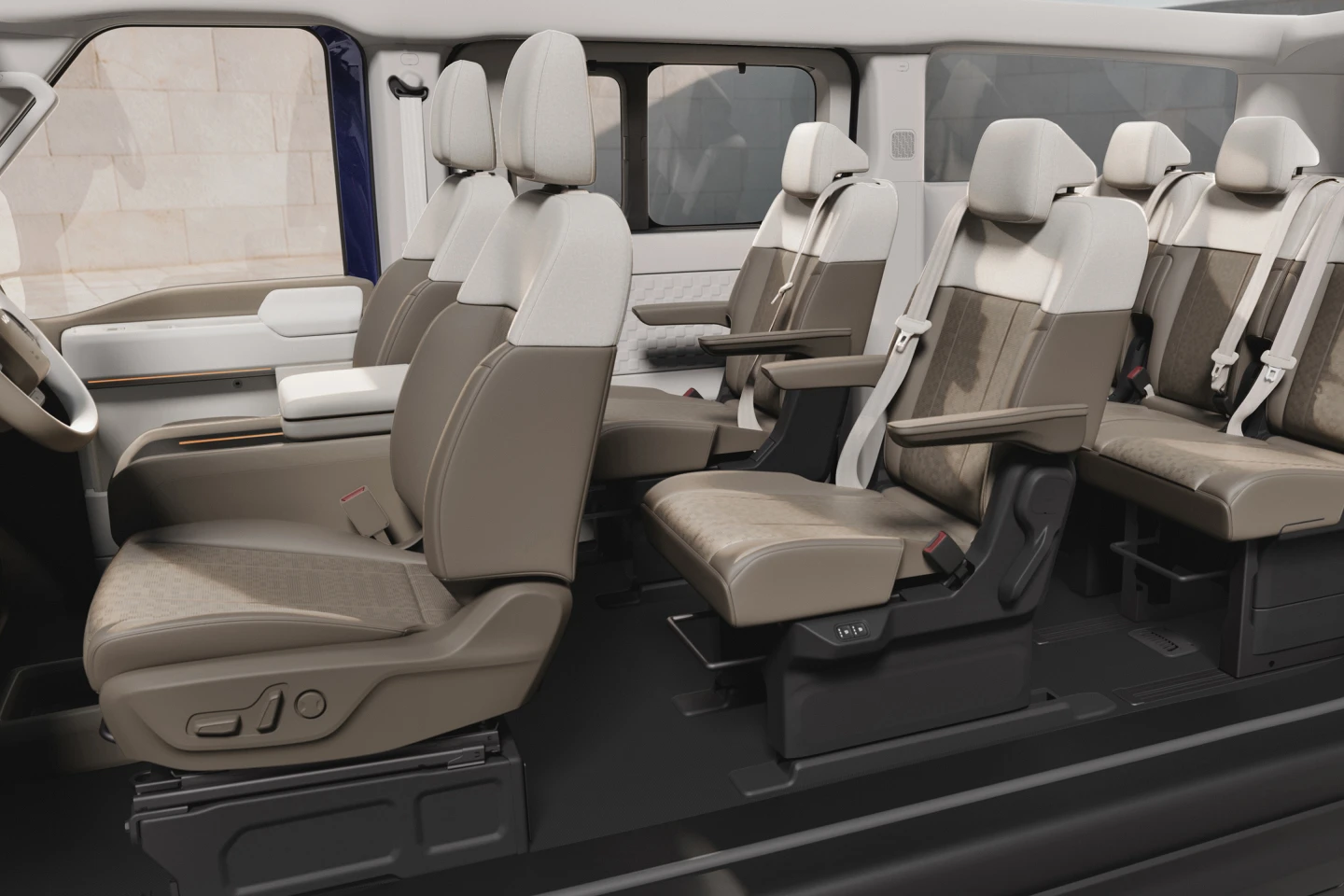
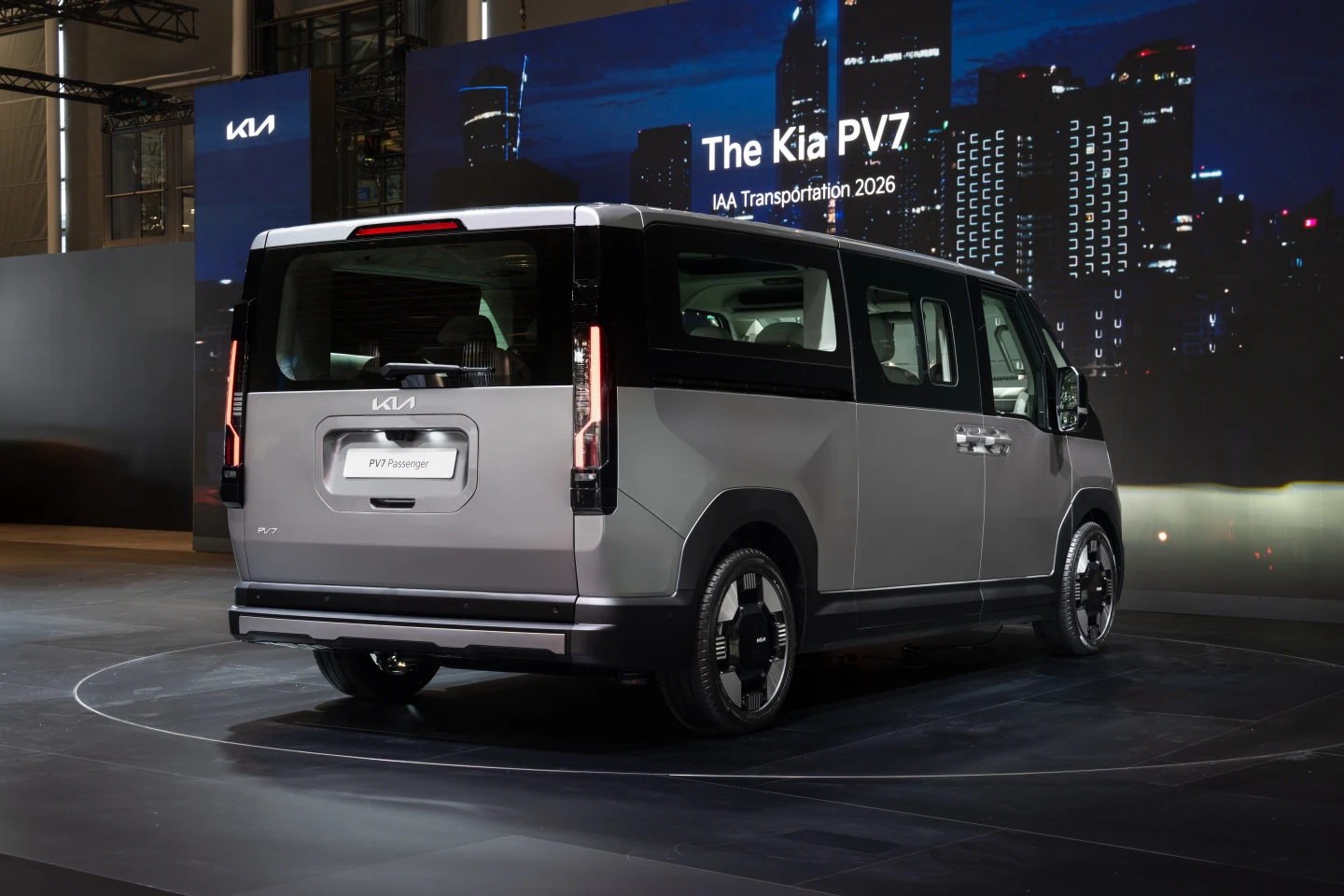
The Passenger variant Kia revealed in Hanover has nine seats, which will be the maximum offered in Europe. Kia will offer up to 11 seats in the Korean market. The available seven-seat version will include rail-mounted "Easy Remove" seats for added flexibility, which should be a boon for converters looking to create multipurpose daily driving camper van layouts.
Sussex has mentioned preliminary plans for PV7 camper vans with up to nine seats and a pop-up roof.
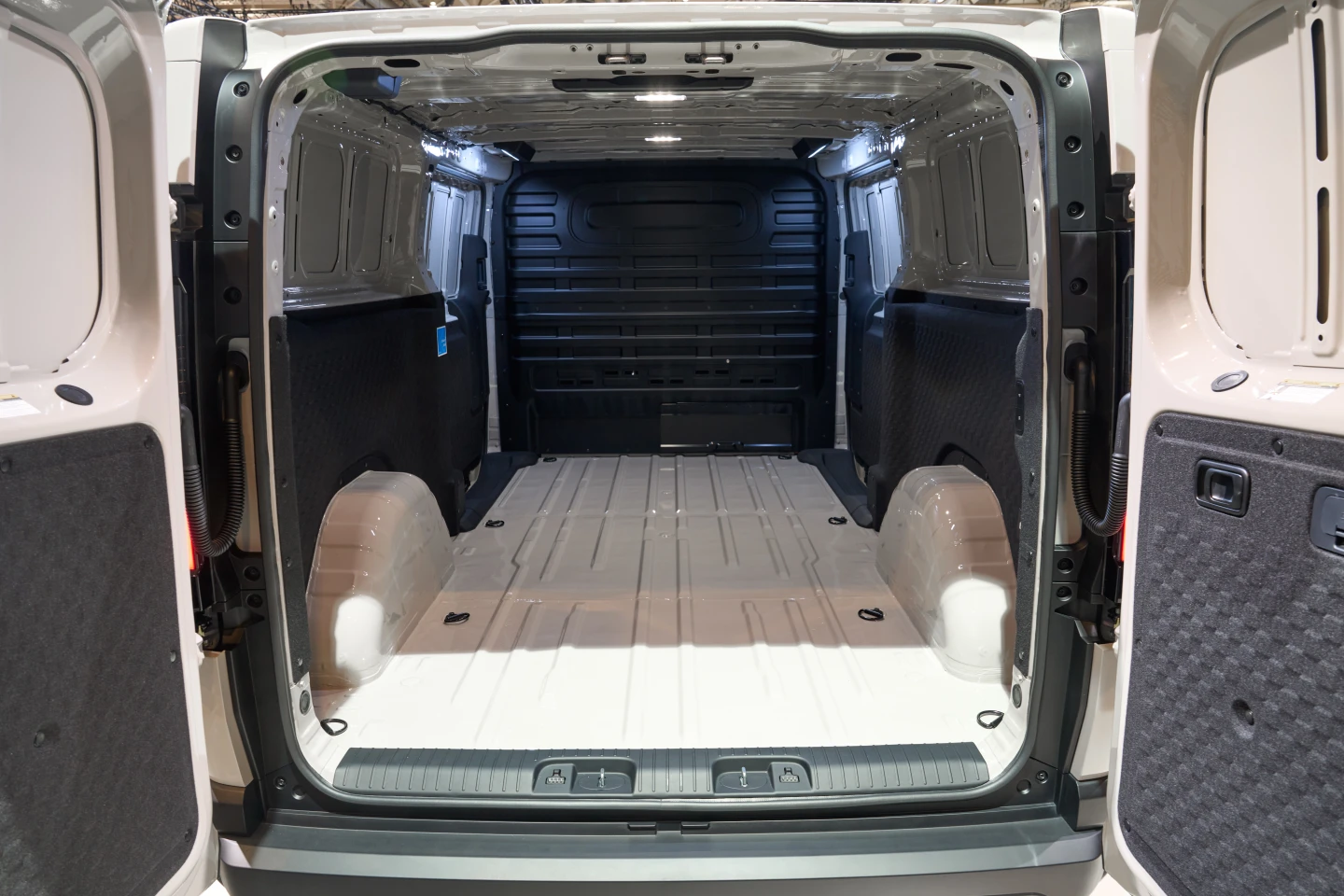
One of the two Cargo Long vans on show has three cab seats separated from the load area by a partition wall. The 6.1-cu m (215-cu ft) load area features a lot of bare sheet metal and beefy D-ring tie-downs spread around the floor. Kia estimates payload at up to 1,165 kg (2,568-lb) for the Long version and 1,200 kg (2,645-lb) for the Compact model.
PV7 models will include access to a slew of Kia's latest ADAS features, including pedal misapplication safety assist 2.0, forward collision avoidance, lane keeping assist 2.0, remote parking assist, highway driving assist 2.0, and navigation-based smart cruise control.
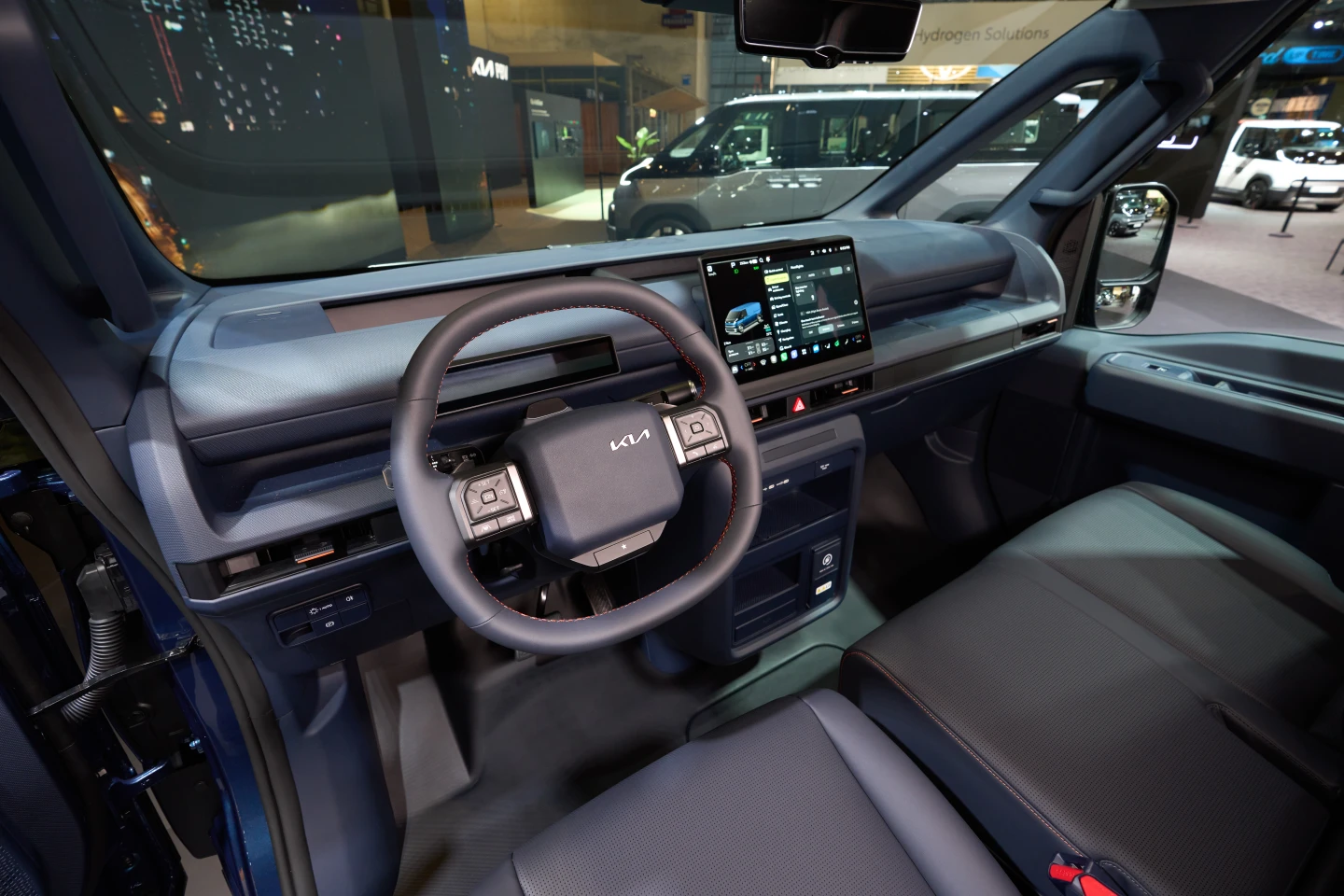
Kia has not yet released pricing information and points out that specs are preliminary and subject to change. We'll report back with more information as it becomes available leading to the PV7's mid-2027 launch.
Source: Kia


